SShortSingh.

Space

0
SpaceNASA ·

NASA-Backed Satellite Servicing Robot Heads to Geosynchronous Orbit After SpaceX Launch

A robotic spacecraft designed to service satellites in geosynchronous orbit lifted off from Cape Canaveral on July 21 aboard a SpaceX Falcon 9 rocket. The Mission Robotic Vehicle (MRV) carries the Robotic Servicing of Geosynchronous Satellites (RSGS) payload, a project developed with NASA support. The mission aims to use advanced robotics to service existing spacecraft already in geosynchronous Earth orbit. RSGS draws on NASA's expertise in in-space robotic systems to extend the operational life of satellites.

0
SpaceNASA ·

NASA Astronaut Williams, Two Cosmonauts to Return After 241 Days on ISS

NASA astronaut Chris Williams and Roscosmos cosmonauts Sergey Kud-Sverchkov and Sergei Mikaev are set to conclude their 241-day mission aboard the International Space Station. The crew will depart the orbiting laboratory aboard the Soyuz MS-28 spacecraft, undocking from the Rassvet module at 3:02 a.m. EDT on Sunday, July 26. A parachute-assisted landing is scheduled for 6:26 a.m. EDT following the undocking. The trio has spent roughly eight months conducting research and operations on the ISS before making their return to Earth.

0
SpaceNASA ·

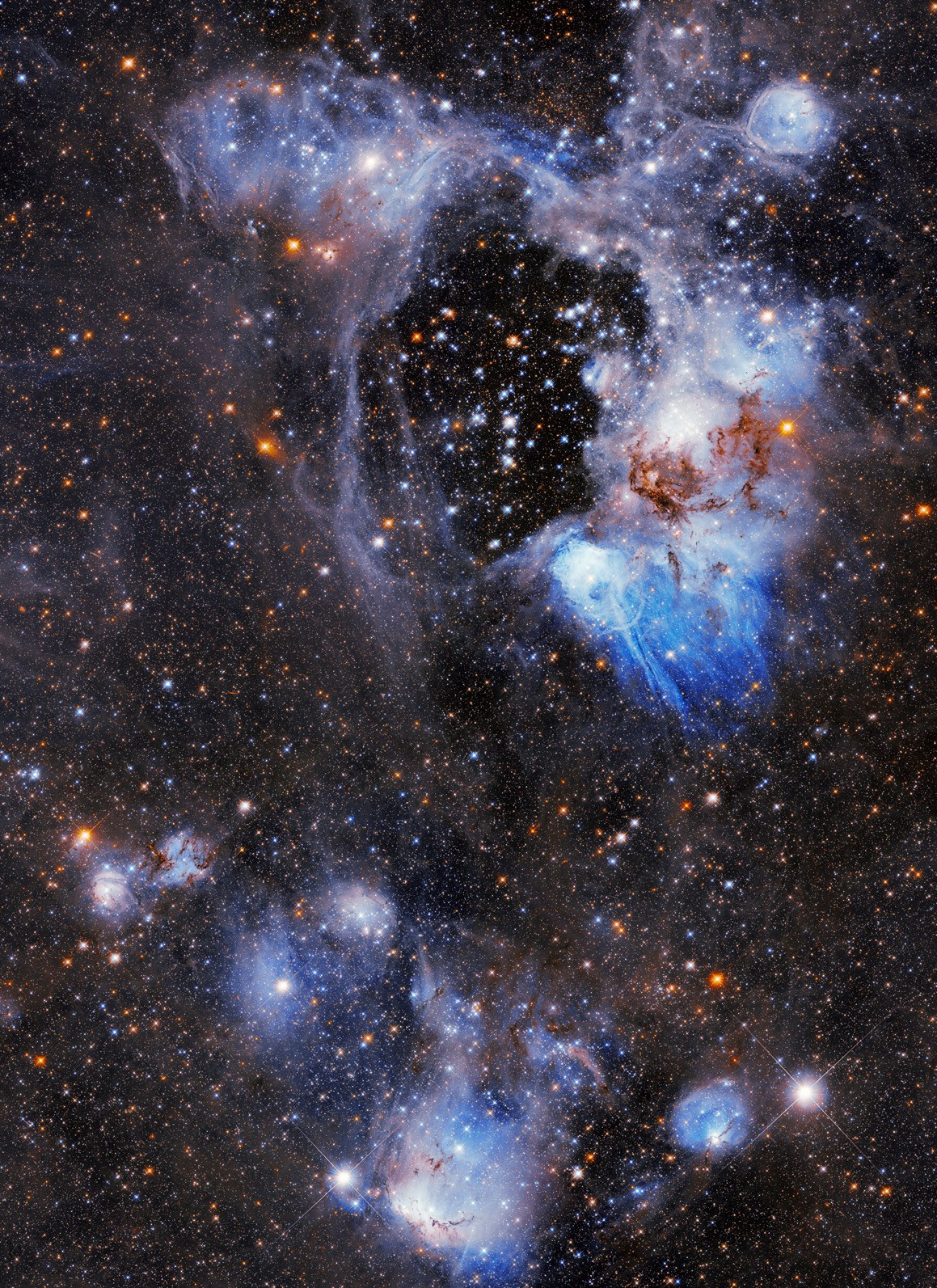
NASA's Chandra Observatory Reveals New X-ray View of Galaxy Messier 94

NASA's Chandra X-ray Observatory released a fresh look at the spiral galaxy NGC 4736, commonly known as Messier 94, on June 30, 2026. The galaxy is notable for its bright inner starburst ring, a region where new stars are actively forming. Scientists believe this star formation may be driven by gas channeled inward through the galaxy's distinctive oval-shaped structure. The new imagery offers deeper insight into the physical processes shaping this well-studied spiral galaxy.

0
SpaceNASA ·

NASA's Juno Maps Subsurface Heat Across Jupiter's Volcanic Moon Io

NASA's Juno spacecraft used its Microwave Radiometer instrument to map thermal activity beneath the surface of Jupiter's moon Io during two close flybys. The first pass, known as Perijove 57, took place on December 30, 2023, focusing primarily on Io's northern hemisphere. A second flyby, Perijove 58, followed shortly after and extended coverage to additional regions of the moon. Together, the two flybys produced overlapping footprint data that allow scientists to study heat distribution hidden below Io's surface. The findings aim to deepen understanding of the intense volcanic and thermal processes that make Io one of the most geologically active bodies in the solar system.

0
SpaceNASA ·

NASA's Juno Spacecraft Maps Heat Rising Below Jupiter Moon Io's Surface

NASA's Juno spacecraft has captured data revealing heat emanating from beneath the surface of Io, one of Jupiter's moons. The findings come from the Microwave Radiometer (MWR) instrument onboard the probe, which was used to generate a detailed heat map of the moon. Unlike infrared instruments that only measure surface temperature, the MWR's lowest frequency microwave channels — operating at 0.6 and 1.25 gigahertz — can penetrate several meters below Io's surface. This capability allows scientists to study subsurface thermal activity on the volcanic moon in a way that surface-level observations cannot. The data offers new insight into the internal heat processes driving Io's intense geological activity.

0
SpaceNASA ·

NASA Juno Probe Reveals Subsurface Heat Data from Jupiter's Volcanic Moon Io

NASA's Juno spacecraft has recorded the first-ever temperature measurements beneath the surface of Io, Jupiter's most volcanically active moon. The data was gathered during two close flybys of the moon. Findings indicate significant heat buildup within Io's shallow subsurface layers. The measurements also reveal that most of Io's surface is unusually smooth in composition. The discoveries offer new insights into the internal workings of the most volcanically active body in the solar system.

0
SpaceNASA ·

NASA Backs White House Genesis Mission to Advance AI in Science and Engineering

NASA has joined the Genesis Mission, a national initiative aimed at accelerating the use of artificial intelligence in scientific and engineering research. The mission was formally established by President Donald Trump through an executive order signed on November 24, 2025. The initiative seeks to harness AI to address complex challenges across multiple disciplines. NASA's participation signals the agency's commitment to integrating AI-driven tools into its broader discovery and research efforts.

0
SpaceNASA ·

Wildfire Brown Carbon Degraded Air Quality Across US and Canada for a Week

Wildland fires across North America released brown carbon that significantly worsened air quality in parts of the United States and Canada. NASA tracked the spread of this smoke-related pollutant over the course of a week in July 2026. Brown carbon, a byproduct of biomass burning, is known to reduce air quality and visibility over wide areas. The week-long tracking effort highlighted the regional impact of wildfire emissions on atmospheric conditions across both countries.

0
SpaceNASA ·

NISAR Satellite's L-Band Radar Captures Striking Ice Formation in East Antarctica

The joint U.S.-India NISAR satellite, developed by NASA and ISRO, has produced a detailed radar image of a remote East Antarctic landscape. The image features Nunatak Zaterjavshijsja, a mountaintop protruding through a northeast-flowing ice stream headed toward the ocean. The rocky obstruction creates significant mechanical stress on the surrounding ice, causing extensive fracturing of the surface. NISAR's L-band synthetic aperture radar was the instrument used to capture this data. The resulting image visually resembles a hummingbird, drawing attention to the satellite's capability to reveal fine structural details of polar terrain.

0
SpaceNASA ·

NASA Holds Media Briefing July 29 Ahead of Roman Telescope August Launch

NASA will host a virtual media briefing on Wednesday, July 29, at 2 p.m. EDT to preview the Nancy Grace Roman Space Telescope mission. The telescope is scheduled to launch from Kennedy Space Center in Florida on Sunday, August 30. The event will be streamed live across multiple platforms. The briefing aims to give journalists and the public an advance look at the mission's goals and details ahead of liftoff.

0
SpaceNASA ·

NISAR Satellite Data Now Public, Captures Antarctic Ice Movement

NASA and ISRO have made data from the NISAR satellite publicly available starting July 20. The joint US-India Earth observation satellite carries two radar instruments — an L-band and an S-band radar — whose processed data files are being released on an ongoing basis. The data is intended to help researchers and other users monitor changes across Earth's surface, including ice movement. Among the early findings, the satellite's imagery has revealed a hummingbird-shaped pattern in Antarctica, highlighting the instrument's high resolution and capability.

0
SpaceNASA ·

NASA Langley Hosts Symphony Event to Mark US 250th Anniversary

NASA's Langley Research Center held its 'Stars, Stripes, and Supernovas – Symphony Under the Stars' event on July 16 to celebrate the 250th anniversary of the United States. The outdoor gathering brought together NASA employees, their families, and local community members for a shared evening of live music. The event featured orchestral performances as its centerpiece entertainment. It was organized as both a patriotic commemoration and a community-building occasion for those connected to the Langley facility.

0
SpaceNASA ·

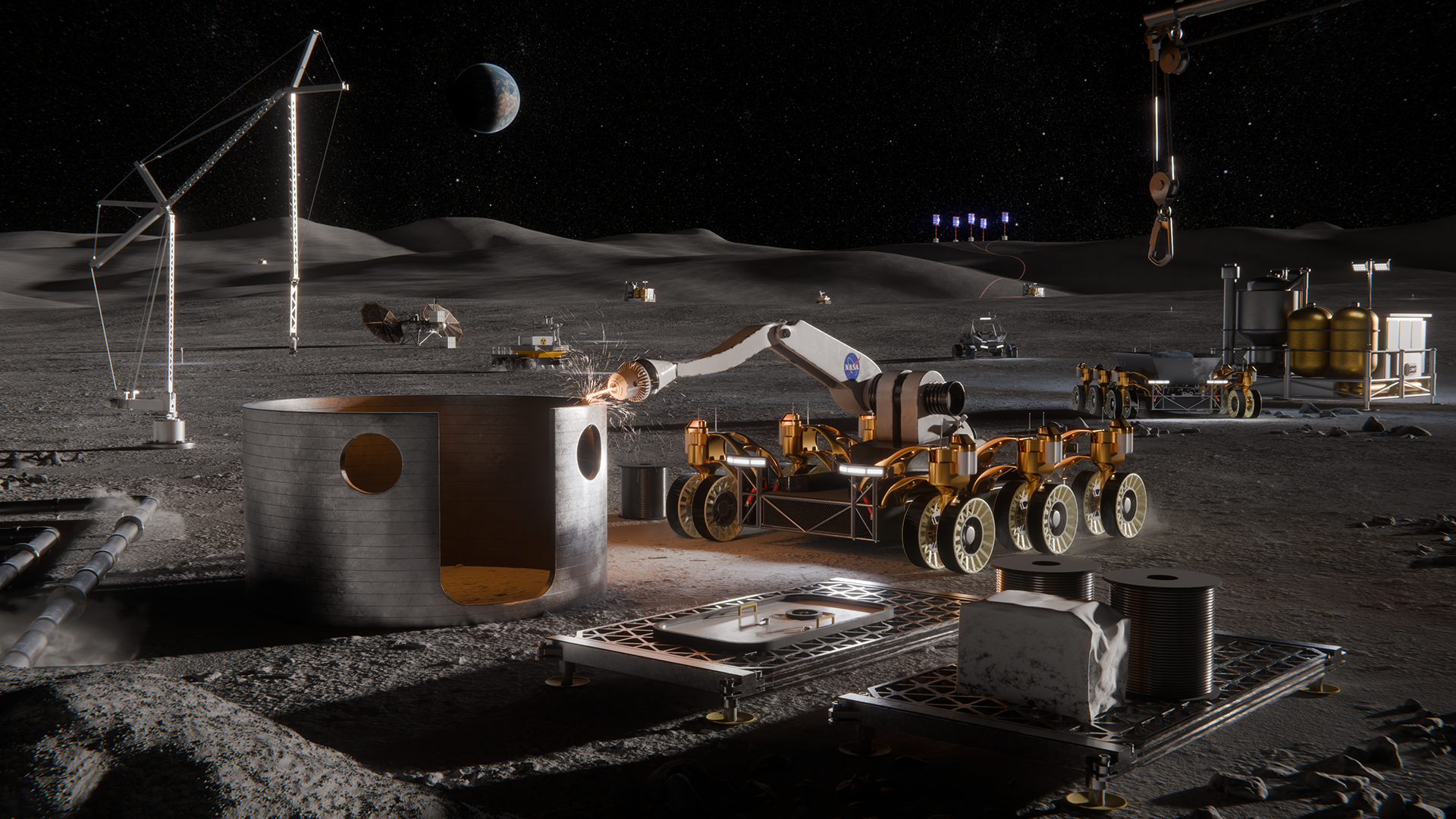
NASA Selects 2026 NIAC Phase I Projects Including Venus Rover and Sun-Dimming Concepts

NASA has announced its 2026 selections for the NASA Innovative Advanced Concepts (NIAC) Phase I program, funding early-stage research into bold space technologies. One project, led by Saptarshi Bandyopadhyay at JPL, proposes using a controllable dust cloud to reduce solar insolation in a concept called DimSun. Another JPL proposal by David Bugby, named CANVAS, aims to develop a mobile, survivable architecture capable of operating on the surface of Venus. A third selection from the University of Central Florida, led by Anish Damodaran, seeks to advance submillimeter space interferometry using photonic technologies. The NIAC program supports visionary research that could eventually shape future NASA missions.

0
SpaceNASA ·

NASA Explores Spacecraft-Based Astrometry to Detect Low-Frequency Gravitational Waves

Researchers at Brookhaven Science Associates are developing a new method to detect gravitational waves at low frequencies using precision astrometry. The approach relies on the fact that gravitational waves passing near Earth cause a tiny but coordinated apparent shift in the positions of all objects across the sky. The proposed innovation involves deploying optically independent spacecraft to measure these minute positional changes with high precision. This astrometric technique offers an alternative observational strategy to existing gravitational wave detection methods. The project aims to open a new window into low-frequency gravitational wave astronomy.

0
SpaceNASA ·

NASA Proposes Optical VLBI Technique to Image Surface Features of Exoplanets

NASA researcher Paul Stankus of Brookhaven Science Associates is working toward capturing visible-light images of Earth-like exoplanets orbiting nearby stars. The project aims to resolve actual surface features — such as continents — on distant worlds, a capability far beyond current technology. The approach involves two key innovations, the first being a new type of nulling interferometer called 'dynamic hierarchical nulling,' which combines multiple telescope inputs to suppress overwhelming starlight. The second stage applies optical Very Long Baseline Interferometry (VLBI) principles to achieve the extreme resolution needed for exoplanet surface mapping. If successful, the technique could mark a landmark advance in humanity's ability to directly study potentially habitable worlds beyond our solar system.

0
SpaceNASA ·

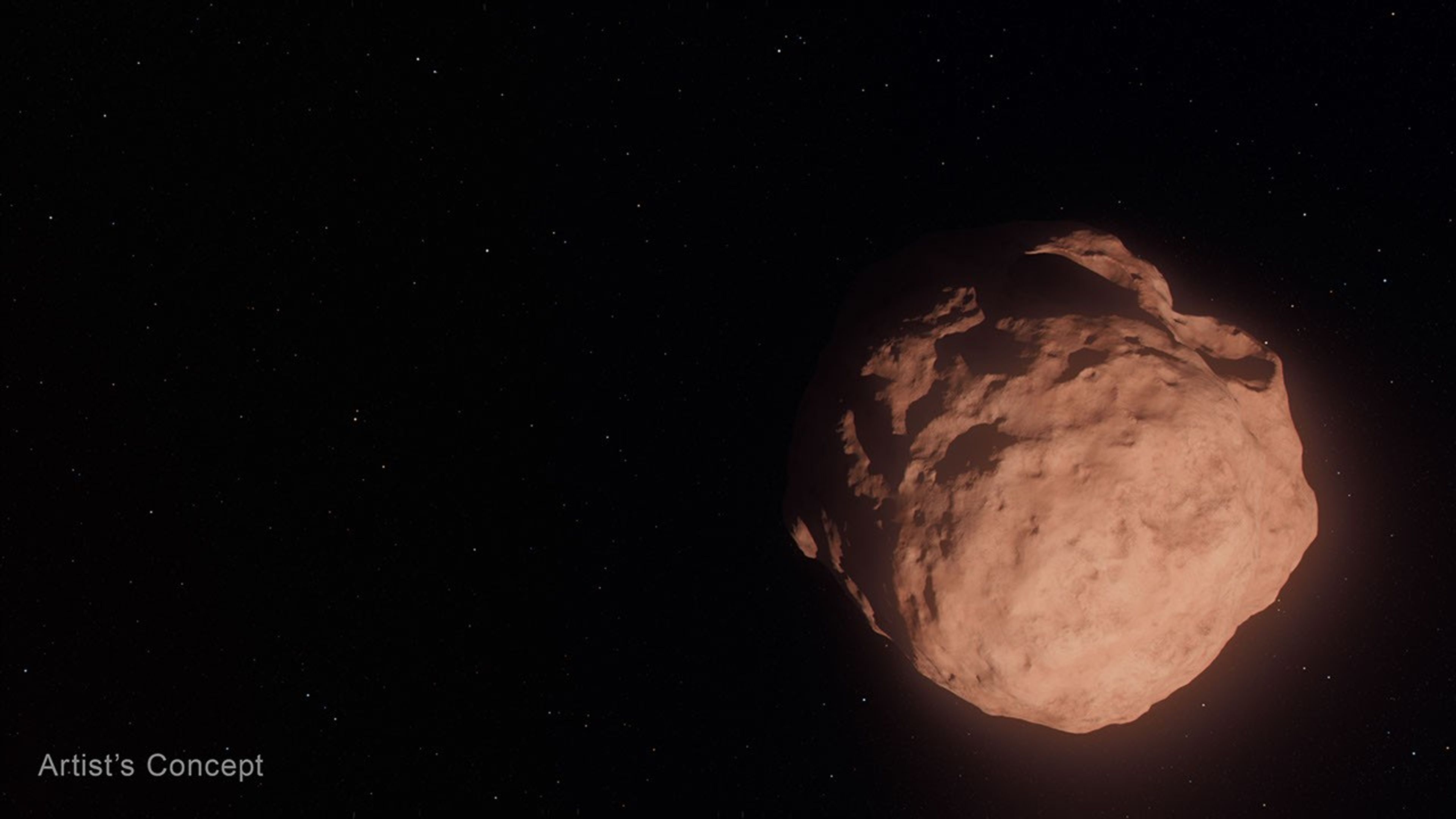
NASA Explores High-Speed Flyby Spacecraft to Map Minerals Across Solar System

NASA is evaluating a new concept for reconnaissance spacecraft capable of mapping mineral resources on planetary bodies during rapid flybys, without landing or collecting samples. The proposal, led by Pablo Sobron Sanchez of the SETI Institute, relies on Raman spectroscopy to identify minerals at high speed from orbit. Target bodies include the Moon, asteroids, and the moons of Mars, where ice, ilmenite, ores, and volatile-bearing minerals would be surveyed. The concept aims to expand NASA's resource assessment capabilities across the solar system in a cost-effective and efficient manner.

0
SpaceNASA ·

Duke University Develops Robotic Metamaterial Antennas to Boost Space Object Tracking

Duke University researcher David Smith is developing robotically assembled electromagnetic metamaterial systems aimed at improving space situational awareness (SSA). The project addresses the growing challenge of tracking the rising number of satellites and spacecraft in orbit. Current US Space Surveillance Network infrastructure, including the upgraded Space Fence, can detect objects as small as four inches but remains limited to ground-based installations. The new metamaterial-based approach seeks to overcome these constraints by enabling more powerful, potentially space-deployable tracking capabilities. The research is backed by NASA as part of broader efforts to enhance long-range detection of orbital objects.

0
SpaceNASA ·

NASA Eyes Light-Levitating Tracers to Sense Atmosphere 30–100 km Up

Rarified Technologies has proposed a novel atmospheric sensing method targeting the largely under-monitored 30–100 km altitude range. The concept involves deploying lightweight tracers that use photophoresis — a process where sunlight exerts force on particles — to remain suspended for potentially months at controlled heights. Unlike natural aerosols, these engineered tracers are designed to produce strong, trackable signals. They would be monitored remotely using satellite-based lidar or radar systems. The proposal was submitted to NASA as part of efforts to improve data collection in a region of the atmosphere that is difficult to study with conventional tools.

0
SpaceNASA ·

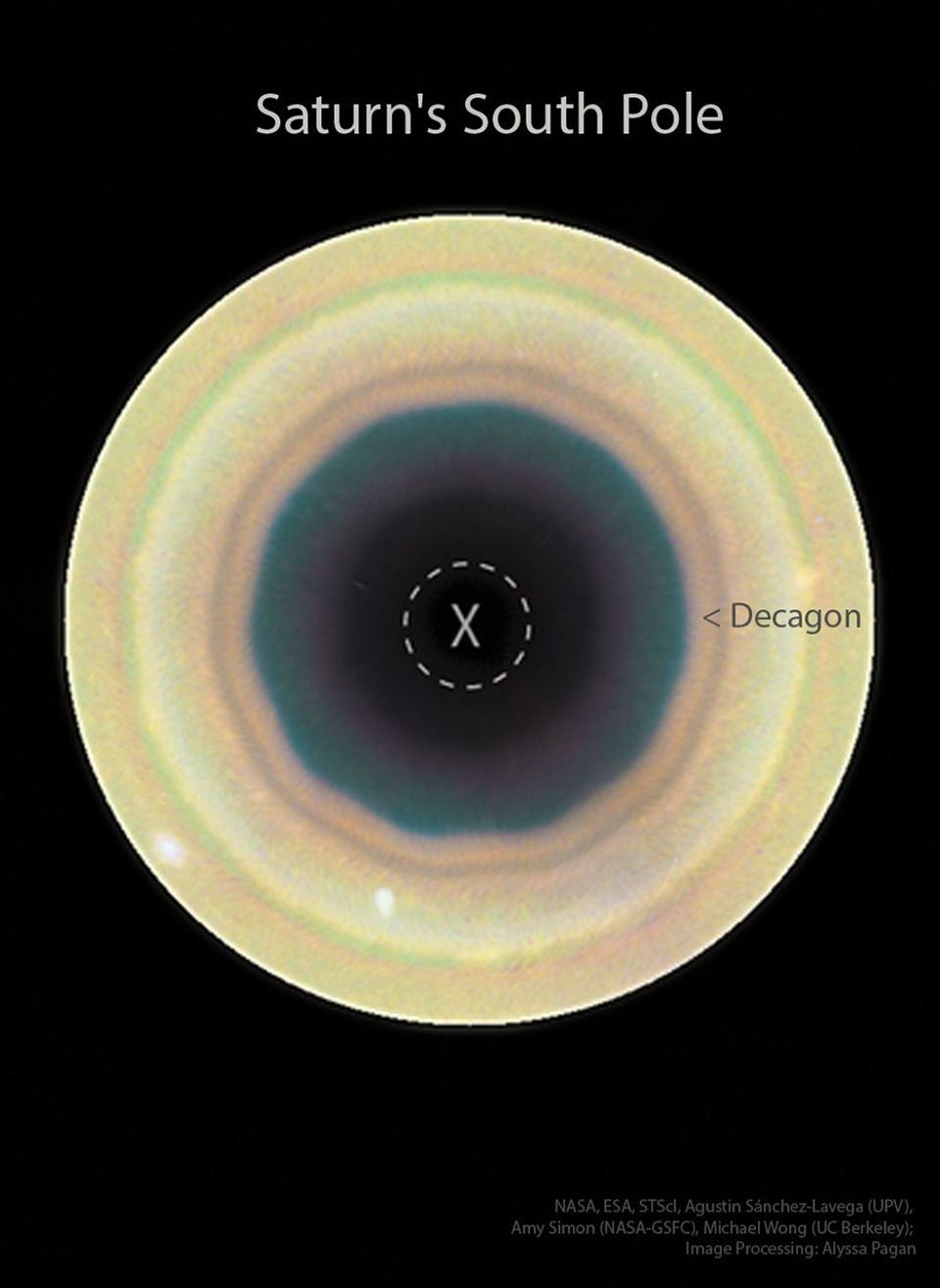
NASA Backs Plan to Deploy 10,000 Tiny Steerable Satellites Around Saturn

Northwestern University researcher Michael Rubenstein has proposed a NASA mission to deploy approximately 10,000 actively steerable femtosatellites around Saturn. The miniature spacecraft would conduct in-situ surveys of the planet's ring composition, atmospheric density, and magnetic field distribution. The proposal argues that relying on a single large flagship mission, like the Cassini spacecraft, poses an unacceptably high risk of total mission failure. Spreading the workload across thousands of small satellites would provide redundancy and far broader coverage of Saturn's complex environment.

0
SpaceNASA ·

NASA Concept Aims to Autonomously Sample Planetary Ring Particles In Situ

NASA's Jet Propulsion Laboratory is developing a concept called PRAXIS — Planetary Rings Autonomous EXploration with In-situ Sampling — designed to physically collect particles from planetary rings. No spacecraft has ever directly sampled ring material, making this a potential first in space exploration. The mission targets rings across the solar system, including Saturn's dense rings and the tenuous rings of Uranus and Neptune. Smaller bodies such as Centaurs Chariklo and Chiron, which also possess rings, are among the candidate targets. Scientists believe direct sampling could fundamentally transform understanding of how planetary rings form and are structured.

← NewerPage 5 of 11Older →