SShortSingh.

Space

0
SpaceNASA ·

NASA Captures Rare Black Hole Devouring Star Far Outside Galaxy's Core

NASA's Neil Gehrels Swift Observatory has detected an unusual event involving a wandering black hole destroying a nearby star on the fringes of a distant galaxy. The phenomenon, known as a tidal disruption event, occurs when a star passes too close to a black hole and gets torn apart. While such events have been observed before, this marks the first time one has been recorded so far from a galaxy's central region. The black hole involved is described as an 'orphan' or 'wandering' mega black hole, drifting far from its galaxy's core. Scientists had been actively searching for such star-shredding events as a method to detect and study isolated black holes in the universe.

0
SpaceNASA ·

NASA Plans Three ISS Spacewalks in August to Upgrade Solar Arrays and Systems

NASA astronauts are scheduled to conduct three spacewalks outside the International Space Station in August 2025. The missions will focus on upgrading solar arrays, replacing a communications antenna, and connecting power and data cables. These activities are aimed at supporting ongoing space station operations. NASA experts held a preview news conference on Thursday, July 30, at 2 p.m. EDT to brief the public ahead of the planned excursions.

0
SpaceNASA ·

Hubble Telescope Reveals Star Formation in Andromeda Galaxy in 500M-Year Decline

NASA's Hubble Space Telescope has uncovered evidence that star formation in the Andromeda galaxy has been steadily declining over the past 500 million years. Andromeda, the nearest large spiral galaxy to our Milky Way, appears to be gradually winding down its stellar birth activity. The findings were made possible through Hubble's powerful observational capabilities, which allow scientists to study galactic evolution in detail. This prolonged decline suggests that Andromeda may eventually cease producing new stars altogether. The discovery offers valuable insights into the life cycles of galaxies and the long-term fate of our cosmic neighborhood.

0
SpaceNASA ·

NASA Astronaut Chris Williams Returns to Earth After 8-Month ISS Mission

NASA astronaut Chris Williams has returned to Earth following an eight-month science mission aboard the International Space Station. He was accompanied by Roscosmos cosmonauts Sergey Kud-Sverchkov and Sergei Mikaev on the journey home. The crew departed the ISS at 2:03 a.m. CDT and completed a parachute-assisted landing at 5:27 a.m. CDT on Sunday. The spacecraft touched down southeast of Dzhezkazgan, Kazakhstan, at 3:27 p.m. local time.

0
SpaceNASA ·

NASA's ESCAPADE Spacecraft Photographs Earth and Moon from Deep Space

On July 3, one of NASA's two ESCAPADE spacecraft captured images of Earth and the Moon while en route to Mars. The probe photographed both celestial bodies in visible light and thermal infrared wavelengths. At the time of imaging, the spacecraft was approximately 363,250 miles from Earth and 115,600 miles from the Moon. ESCAPADE, which stands for Escape and Plasma Acceleration and Dynamics Explorers, is a dual-spacecraft mission ultimately destined for Mars.

0
SpaceNASA ·

Three Astronauts Join ISS Crew After Baikonur Launch in July 2026

Three new crew members have joined the International Space Station as part of Expedition 74. NASA astronaut Anil Menon and Roscosmos cosmonauts Anna Kikina and Pyotr Dubrov arrived at the ISS on July 14, 2026. The trio launched from the Baikonur Cosmodrome prior to their docking with the station. A photo taken on July 18, 2026, shows the three flight engineers celebrating their arrival with a cake aboard the ISS.

0
SpaceNASA ·

NASA Awards Contract for CAPSTONE 02 Moon Mission to Test Cislunar Tech

NASA has announced the CAPSTONE 02 mission, awarding a contract to Advanced Space to advance cislunar infrastructure development. The mission is part of the agency's broader Artemis program and Moon Base initiative. CAPSTONE 02 will demonstrate key capabilities including rendezvous and proximity operations, autonomous navigation, and cislunar communications. The mission builds on earlier cislunar work and is aimed at developing orbital assets critical to future lunar operations.

0
SpaceNASA ·

NASA to Host Blue Origin New Glenn Second Stage Tests at Stennis Center

NASA and Blue Origin have agreed to conduct second stage hot fire testing for the New Glenn rocket at the B-2 test stand at NASA's Stennis Space Center in Bay St. Louis, Mississippi. The agreement was formalized through an annex to a reimbursable Space Act Agreement signed earlier this month. The collaboration underscores NASA's broader commitment to supporting commercial launch capabilities. The arrangement also aligns with the agency's ongoing Artemis program goals of advancing rocket testing infrastructure.

0
SpaceNASA ·

Utah Opens One of the Region's Largest Solar and Battery Storage Facilities

Utah has inaugurated a major new solar power and battery storage facility, described as one of the largest of its kind in the region. The project features approximately one million solar panels, reflecting its significant scale. The facility combines solar energy generation with battery storage technology, allowing power to be stored and distributed as needed. NASA highlighted the project as a notable milestone in large-scale renewable energy infrastructure in the area.

0
SpaceNASA ·

Curiosity Rover Team Marks Engineers' Contributions in Latest Mars Science Run

NASA's Curiosity rover science team conducted planning operations across sols 4954 to 4960, as reported by Senior Research Scientist Lucy Thompson of the University of New Brunswick on July 27, 2026. The update highlighted the collaborative work between scientists and rover engineers who support daily Mars surface operations. Thompson, serving as an APXS uplink lead and strategic planner, noted that the Alpha Particle X-Ray Spectrometer is used to analyze the chemical composition of rocks and loose surface materials. The blog post paid tribute to both current and past rover engineers whose technical expertise keeps the mission running. Curiosity continues its long-term exploration of the Martian surface, with science and engineering teams working in close coordination to plan each activity.

0
SpaceNASA ·

NASA+ Streaming Service Now Available on Amazon Fire TV

NASA has expanded its streaming reach by launching NASA+ on Amazon Fire TV Channels. The announcement was made on Thursday as part of the agency's ongoing effort to make space content more accessible to the public. Fire TV users can access NASA+ content by using Alexa voice commands on compatible devices. Future content on the platform is expected to include science mission launches and test flights.

0
SpaceNASA ·

NASA Moves Artemis IV Liquid Hydrogen Tank to Test Facility in New Orleans

NASA crews at the Michoud Assembly Facility in New Orleans relocated the Artemis IV liquid hydrogen tank on May 15, 2026. The towering 130-foot structure was transported from its production cell inside the main factory building to a separate test building on the sprawling 829-acre site. The tank is a key component of the core stage for the Artemis IV mission. The move marks a significant step forward in the manufacturing and testing process for the upcoming lunar mission.

0
SpaceNASA ·

NASA's MAVEN Mission Reveals Mars Auroras Form Like Earth's

NASA scientists using the MAVEN spacecraft have made a significant breakthrough in understanding how certain auroras form on Mars. A study published Thursday in Nature Communications found that the same mechanism responsible for producing auroras on Earth is also occurring on Mars. This process involves the circulation and acceleration of charged particles into the planet's atmosphere. The discovery adds an important piece to the puzzle of Martian atmospheric science and deepens our understanding of aurora formation across different planets.

0
SpaceNASA ·

NASA Astronaut Chris Williams Returns After 8-Month Space Station Mission

NASA astronaut Chris Williams is preparing to return to Earth after completing his first mission aboard the International Space Station, which lasted approximately eight months. During his stay, Williams contributed to medical research aimed at developing new cancer treatments. He also worked on advancing the production of materials intended to improve computers and electronics. Williams performed two spacewalks, venturing outside the station into open space as part of his duties. His departure marks the conclusion of a wide-ranging scientific and technical assignment on the orbiting laboratory.

0
SpaceNASA ·

NASA Image Captures Snow-Capped Olympic Mountains of Northwest Washington

NASA has released an image showcasing the dramatic landscape of northwestern Washington state. The photograph highlights snow-capped mountain peaks that dominate the region's terrain. Deep river valleys carve through the mountains, adding to the striking visual contrast. The Olympic Mountains are a defining geographical feature of the Pacific Northwest. The image underscores the rugged natural beauty preserved in this part of the United States.

0
SpaceNASA ·

NASA-Backed Satellite Servicing Robot Heads to Geosynchronous Orbit After SpaceX Launch

A robotic spacecraft designed to service satellites in geosynchronous orbit lifted off from Cape Canaveral on July 21 aboard a SpaceX Falcon 9 rocket. The Mission Robotic Vehicle (MRV) carries the Robotic Servicing of Geosynchronous Satellites (RSGS) payload, a project developed with NASA support. The mission aims to use advanced robotics to service existing spacecraft already in geosynchronous Earth orbit. RSGS draws on NASA's expertise in in-space robotic systems to extend the operational life of satellites.

0
SpaceNASA ·

NASA Astronaut Williams, Two Cosmonauts to Return After 241 Days on ISS

NASA astronaut Chris Williams and Roscosmos cosmonauts Sergey Kud-Sverchkov and Sergei Mikaev are set to conclude their 241-day mission aboard the International Space Station. The crew will depart the orbiting laboratory aboard the Soyuz MS-28 spacecraft, undocking from the Rassvet module at 3:02 a.m. EDT on Sunday, July 26. A parachute-assisted landing is scheduled for 6:26 a.m. EDT following the undocking. The trio has spent roughly eight months conducting research and operations on the ISS before making their return to Earth.

0
SpaceNASA ·

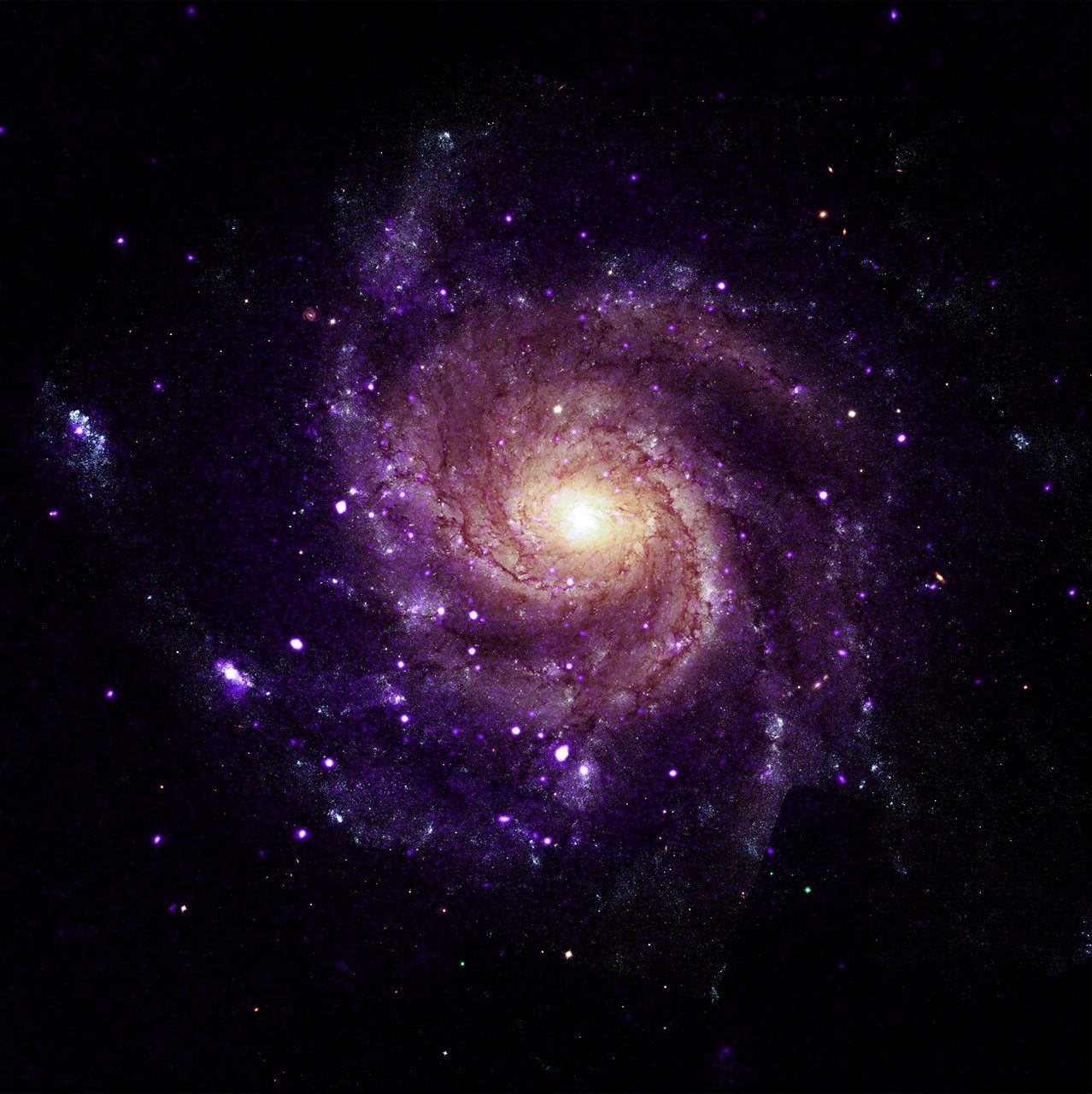
NASA's Chandra Observatory Reveals New X-ray View of Galaxy Messier 94

NASA's Chandra X-ray Observatory released a fresh look at the spiral galaxy NGC 4736, commonly known as Messier 94, on June 30, 2026. The galaxy is notable for its bright inner starburst ring, a region where new stars are actively forming. Scientists believe this star formation may be driven by gas channeled inward through the galaxy's distinctive oval-shaped structure. The new imagery offers deeper insight into the physical processes shaping this well-studied spiral galaxy.

← NewerPage 4 of 11Older →