SShortSingh.
Back to feed

NASA's NEO Surveyor Sunshade Inspected Ahead of Testing

0
·3 views

A technician at BAE Systems in Boulder, Colorado, inspected the large sunshade of NASA's Near-Earth Object (NEO) Surveyor mission in late July. The sunshade structure was built by Applied Aerospace in Stockton, California. In January, SolAero Technologies in Albuquerque, New Mexico, equipped the structure with its solar cells. The article goes on to describe environmental testing, but the full text was cut off in the source material.

Read the full story at NASA

This is an AI-generated summary. ShortSingh links to the original source for the complete article.
Discussion (0)

Log in to join the discussion and vote.

Log in

Related stories

0
SpaceNASA ·

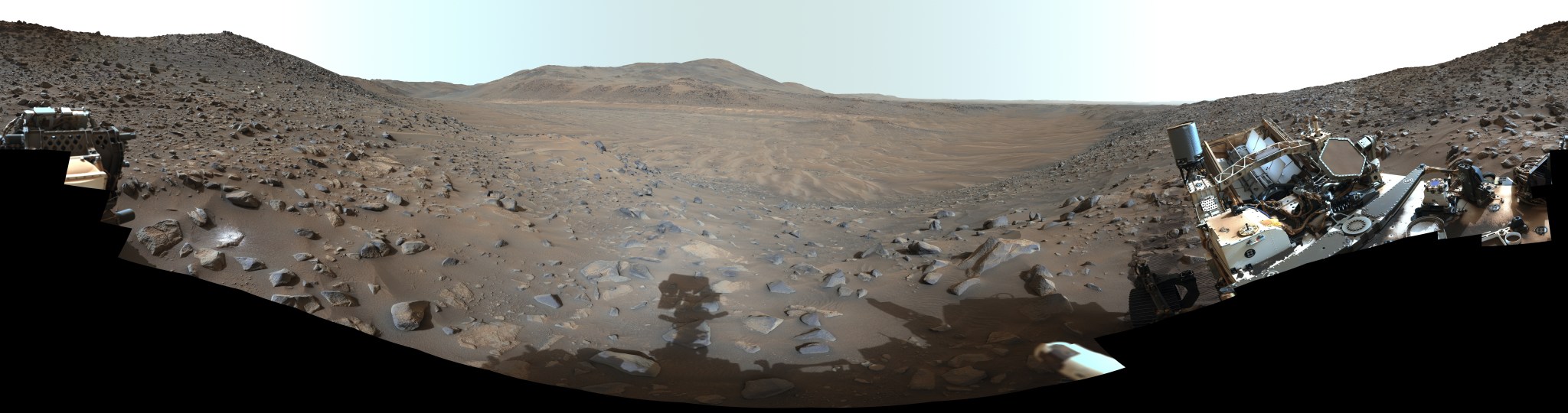
Perseverance Rover Data Points to Ways to Shield Astronauts From Martian Dust

NASA's Perseverance rover tracked fine and ultrafine dust on Mars over 1,645 Martian days. It measured particles clinging to spacesuit material samples carried on the rover. Some of the particles are small enough to reach the lungs and enter the bloodstream. The results are set to be published on October 27 in the Proceedings of the National Academy of Sciences. The findings are intended to inform how future crews can be protected from Martian dust.

0
SpaceNASA ·

NASA's NEO Surveyor Sunshade Undergoes Inspection in Colorado Clean Room

NASA's Near-Earth Object (NEO) Surveyor sunshade is being inspected while mounted on an assembly ring in a clean room at BAE Systems Space & Mission Systems in Boulder, Colorado. The photographed inspections took place in July 2026. The sunshade structure stands about 20 feet (6 meters) tall and is roughly 8 feet (2.4 meters) wide at its base. The article description notes the structure's dimensions and mounting, while the remaining details of its flat panels were cut off in the source text.

0
SpaceNASA ·

NASA SEES Interns Work on Real Lunar Exploration Challenges

NASA's STEM Enhancement in Earth Science (SEES) Internship Program, hosted at the University of Texas Center for Space Research, places high school students on small research teams focused on specific missions. These teams are guided by mentors from NASA, universities, and industry. During summer 2026, the SEES Mission Architecture Tool for Research, Integration, and eXploration (MATRIX) team is working on problems tied to lunar exploration. The program gives students hands-on experience with challenges that professional space researchers face.