0

0
TechnologyArs Technica ·
LG TV shown scanning LAN for third-party phones and other devices
“It doesn’t cost a lot to store text forever.”

0
TechnologyThe Verge ·
Sony clarifies disc production will drop only 10%, not 90%, by 2028
Sony has corrected a widely circulated misreport about the pace of its disc manufacturing wind-down. The company's disc division clarified that its Thalgau plant will produce only 10 percent fewer discs in 2028, not 90 percent fewer as was previously reported. The correction was shared by an unnamed Sony DADC spokesperson with games journalist Brian Crecente, two months after initial reports suggested the facility was already being repurposed. Sony's broader plan to phase out physical video game discs by January 2028 remains unchanged. The clarification suggests the transition away from disc production will be more gradual than earlier coverage implied.

0
ProgrammingDEV Community ·
IonQ Launches Superion 256, a Rack-Compatible Quantum System Built for Mass Production
IonQ has unveiled the Superion 256, its sixth-generation quantum computing platform, designed to move quantum hardware from laboratory settings into commercial data centers. Built using trapped-ion technology and standard semiconductor fabrication in partnership with foundry SkyWater, the system fits within a standard server rack and consumes less power than a typical GPU rack. The shift to foundry-based production cut the design cycle from nine months to two months, enabling twelve times more wafer lots to be processed in a six-month period. The platform uses Electronic Qubit Control to manage qubits directly on-chip, replacing complex laser systems with standardized electronics. IonQ also has the Superion 10K in development, which aims to integrate CMOS technology onto the quantum chip and scale toward millions of qubits using the same underlying architecture.
0
IndiaTimes of India ·
Serena Williams sold Bel-Air estate for $8.1M, below her $12M asking price
Tennis legend Serena Williams sold her Bel-Air estate in 2019 for $8.1 million, significantly below its 2017 listing price of nearly $12 million. She had originally purchased the 2.7-acre property in 2006 for $6.612 million. The 6,101-square-foot home featured six bedrooms, seven bathrooms, a swimming pool, private trails, and a full-service hair salon. Despite selling for less than the asking price, Williams still walked away with a gross profit on the sale.
0
ProgrammingDEV Community ·
Myna 0.15.0 adds self-update command with checksum verification and safe staging
The myna CLI tool has released version 0.15.0, introducing a built-in 'myna update' command that allows the binary to update itself in place. The update process performs numerical version comparison to avoid ordering errors, selects the correct architecture-specific build before downloading, and verifies the file against published SHA256 checksums before installation. To ensure safety, the new binary is staged in the destination directory and atomically renamed over the existing file, leaving the original untouched if a download fails. A '--check' flag exits with code 1 when an update is available, enabling scriptable cron-based checks, while '--version' allows installing any specific release in either direction. Users on version 0.14.0 or earlier must still use the curl installer for the initial upgrade to 0.15.0, after which 'myna update' becomes the standard upgrade path.
0
ProgrammingDEV Community ·
Confluence Cloud Cannot Sum Table Columns — Here Are Your Three Workarounds
Confluence Cloud's standard tables have no formula engine, meaning any totals must be entered manually and will not update automatically when values change. Confluence Databases, a newer structured-data feature, do support aggregate calculations such as Sum, Average, Min, and Max at the bottom of number fields, but are unavailable in Atlassian Government environments. Neither tables nor databases support per-row calculated columns, such as multiplying price by quantity, and open feature requests for this capability remain unresolved. Teams needing calculated columns within Confluence can turn to third-party Marketplace apps, which offer spreadsheet-like behaviour including computed rows and grouped sums, though these come with additional licensing costs. Choosing the right approach depends on how frequently data changes and whether the content is a structured list of records or a custom-shaped layout.
0
ProgrammingHacker News ·
Insufficient source content to generate a reliable headline
The provided source material contains no readable article text, only redirect URLs and Hacker News metadata. No factual claims can be extracted or verified from this submission. A summary cannot be responsibly generated without access to the underlying research content. Please provide the full article text for accurate reporting.
0
ProgrammingDEV Community ·
Four security problems that emerge when you move a SQL client to a server
Running a database client on a server eliminates the need for per-user VPN access and scattered credentials, but it transforms the tool into a multi-tenant network service with new security challenges. The developers of LibreDB Studio encountered all four problems firsthand, getting two of them wrong initially. A key issue is that middleware session checks act as a convenience layer, not a true security boundary, so every sensitive route must independently verify the caller. Non-human callers like agent runtimes cannot present session cookies, requiring short-lived, narrowly scoped tokens derived from — but cryptographically separate from — the main JWT secret. Browser-based clients also introduce risks from ambient authority, making origin validation and strict CSRF protections necessary additions beyond standard session cookies.

0
ProgrammingDEV Community ·
OpenAI Launches GPT-6 Astra With Phased Rollout Across ChatGPT, API, and Cloud Platforms
OpenAI has announced GPT-6 Astra, its new flagship AI model, with a staged release beginning September 3, 2026. The model is designed to deliver stronger performance in areas such as computer use, web browsing, software engineering, cybersecurity, and professional tasks. OpenAI says Astra combines advances in pre-training, reinforcement learning, and alignment, and reports improvements over its previous model, GPT-5.6 Sol, on select benchmarks. Access will initially be limited before expanding to ChatGPT Plus, Pro, Business, and Enterprise subscribers, as well as through the OpenAI API, Microsoft Azure, and AWS Bedrock. Full pricing details and platform-specific controls have not yet been disclosed.
0
0
ProgrammingDEV Community ·
189 Automated Tests Added for XLS-56 Batch Transaction Feature on XRPL
A comprehensive automated test suite covering the Batch transaction feature (XLS-56) has been developed, comprising 189 individual test cases. The tests are organized into six categories, including execution modes, multi-account and multi-sign scenarios, security and adversarial checks, and cross-feature interactions. Key execution modes tested include all-or-nothing, only-one, until-failure, and independent batch processing. The suite validates edge cases such as atomic swaps, ticket-based transactions, deep rollbacks, fee calculations, and adversarial exploit attempts. This coverage aims to ensure correctness, security, and reliability of the Batch transaction feature before broader deployment.
0
ProgrammingDEV Community ·
Developer builds intentionally frustrating AI date-picker to parody over-reliance on bots
A developer created 'Date Slop', a deliberately bad date-picker that uses an AI chatbot to intercept user input and extract a date of birth through tedious, roundabout questioning instead of accepting direct answers. The project was originally built for a Bad UX competition, where the worst date-picker design would win, though the entry did not take the prize. Built using the OpenAI API and gpt-4o-mini, the app maintains conversation history on a server to simulate a persistent, frustratingly unhelpful assistant. The developer faced challenges including cold-start delays on the free API tier, which were mitigated by pre-loading the serverless function in the background on page open. The project was intended as a parody of a future where AI assistants are so pervasive that they become obstacles rather than aids to everyday tasks.

0
ProgrammingDEV Community ·
French CMS SPIP Ported to Fully Serverless Architecture on AWS
A French developer has released spip-serverless, an open-source project that runs the veteran PHP-based CMS SPIP on a fully serverless AWS infrastructure. The project was born from a client request requiring SPIP as a mandatory backend while avoiding round-the-clock server costs. Key technical challenges included SPIP's reliance on local persistent storage and a continuously running database, neither of which is compatible with serverless by default. These were resolved by routing sessions to DynamoDB, storing media on S3, running PHP via the Bref Lambda runtime, and caching content through CloudFront. The project is publicly available on GitHub under the MIT license, with a live demo site already running at negligible hosting cost.
0
IndiaNDTV ·
Ukraine Securing Around 1,000 Patriot Missiles from Allies, Most Deliveries Years Away
Ukraine is in the process of contracting approximately 1,000 US-designed Patriot missiles from its allies, according to a Ukrainian defense official. Yevhenii Khmara of the Ukraine Defense Contact Group confirmed the procurement effort. However, he noted that most of the missiles are not expected to be delivered until the coming years. Khmara stressed the need for more urgent assistance, highlighting the gap between current needs and future supply timelines.

0
ProgrammingDEV Community ·
OpenAI Integrates Adobe Express Into ChatGPT for Template-Based Marketing Design
OpenAI has launched an Adobe Express plugin for ChatGPT that lets users create marketing visuals using professional templates. The integration supports common formats such as social posts, flyers, posters, and invitations, with options to customize text, colors, and images. Unlike standard AI image generation, the workflow starts with structured templates, making it more suitable for assets that require clear messaging and consistent branding. The tool is aimed at businesses and individuals who need campaign materials quickly without requiring design expertise. Pricing details and full availability information for the plugin have not yet been disclosed by OpenAI.
0
ProgrammingDEV Community ·
How to Migrate CI/CD Pipelines from Azure DevOps to GitHub Actions Using OIDC
A developer built a practice project to explore migrating CI/CD pipelines from Azure DevOps to GitHub Actions before applying the process to a real application. The exercise involved building a Go REST API, containerizing it with Docker, and pushing the image to Azure Container Registry (ACR). Rather than using traditional client secrets, the workflow used OpenID Connect (OIDC) to authenticate GitHub Actions securely with Microsoft Entra ID and Azure. The pipeline was configured to trigger on pull requests, running Go build and test steps before authenticating to Azure and pushing the Docker image to ACR. Kubernetes and AKS deployment were intentionally left out of scope for this phase of the project.

0
TechnologyArs Technica ·
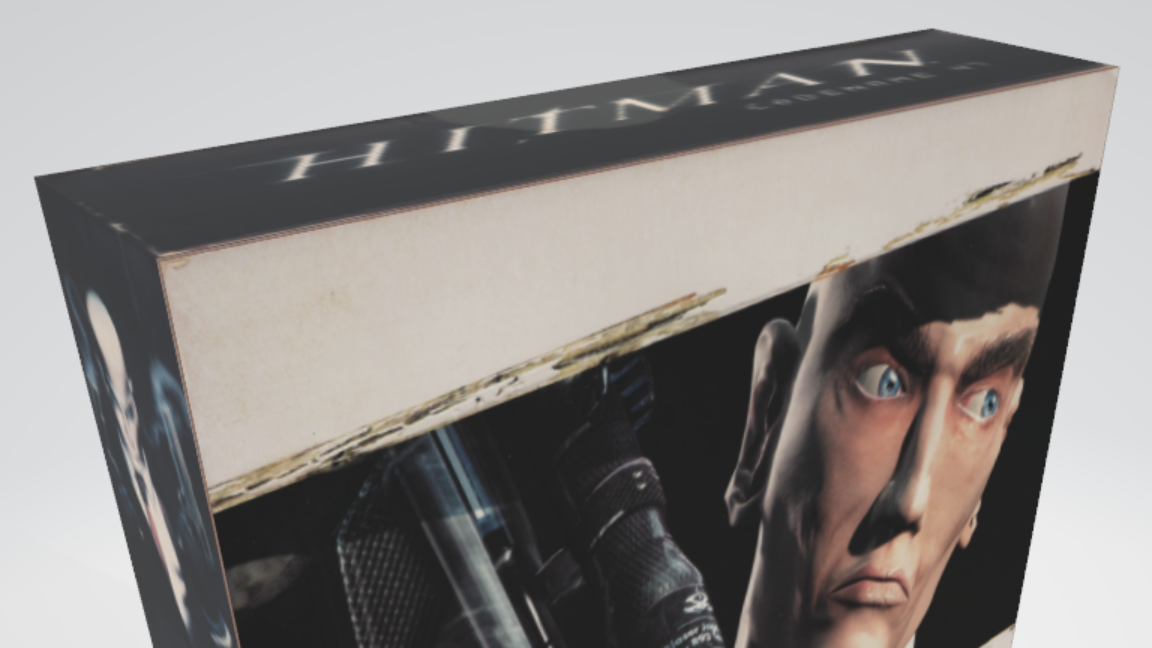
GOG offers printable big box templates to preserve classic PC game packaging
GOG has launched a preservation initiative allowing users to recreate classic 'big box' PC game packaging at home. The platform is offering downloadable printable templates that replicate the iconic oversized boxes once common in physical PC game retail. The initiative also includes downloadable 3D models of classic game boxes for digital desktop display. The move is aimed at celebrating and preserving gaming history for collectors and enthusiasts. No physical products are being sold — all materials are available digitally through the GOG platform.
0
ProgrammingHacker News ·
How to Build a Printer
Article URL: https://nishantjosh.dev/blogs/how-to-build-a-fking-printer/ Comments URL: https://news.ycombinator.com/item?id=49617255 Points: 5 # Comments: 0