SShortSingh.
0
ProgrammingDEV Community ·

Platform Team Rates Switch From Sprints to Kanban a 'B' After One Year

A nine-person platform engineering team supporting 36 production services formally abandoned sprint-based planning on 19 August 2025, completing a year-long transition to a Kanban system with strict work-in-progress limits. The team had found that sprints created an illusion of order, with unplanned interruptions — incidents, access requests, urgent deployments — consistently overwhelming planned work while remaining invisible in leadership reports. By adopting Kanban, the team enforced a hard WIP limit of eight active standard tickets plus a dedicated expedite lane for production incidents or imminent security deadlines. The shift changed how engineers prioritized and discussed work, surfacing previously hidden blockers and prompting the team to focus on finishing tasks rather than starting new ones. After 12 months, the team grades the decision a B, crediting the board with greater transparency but acknowledging it introduced new overhead that had not been accounted for in capacity planning.

0
IndiaTimes of India ·

US-Canada trade talks collapse as 50% tariffs trigger dollar-for-dollar retaliation

Trade negotiations between the United States and Canada broke down after three days of failed discussions. Canada halted the talks, accusing the US of putting forward proposals it deemed unfair and harmful to Canadian interests. The US then imposed steep 50% tariffs on Canadian goods, prompting Ottawa to announce an equal retaliatory response. The breakdown marks a significant escalation in trade tensions between the two neighboring countries. The standoff raises serious concerns about the stability of North American trade relations going forward.

0
ProgrammingDEV Community ·

Tech Team Documents Six Leadership Failures Hidden Inside Routine Code Reviews

A software engineering team has published an account of six management missteps that quietly degraded productivity alongside routine infrastructure changes. A key failure involved overly broad CODEOWNERS rules that funneled nearly all infrastructure pull requests to just two platform leads, creating bottlenecks that delayed even trivial fixes. Between August 4 and 15, 31 pull requests waited more than two business hours for a required reviewer, including urgent alert fixes and a minor retry-timeout change. The team also identified a cultural problem where heroic incident responses were publicly praised while the less visible work of documenting root causes went unrecognised. Corrective steps included redistributing code ownership to service-level teams and reserving lead approval only for genuinely high-risk paths such as identity, network boundaries, and production deletion.

0
ProgrammingDEV Community ·

What Really Happens When You Type a URL and Press Enter

Entering a URL triggers a complex chain of events that typically completes in under a second. The browser first checks local caches for a stored IP address before querying DNS servers to resolve the domain name into a numeric address. A TCP three-way handshake establishes a reliable connection, followed by a TLS handshake that encrypts all data exchanged with the server. The browser then sends an HTTP request, which the server processes through layers such as load balancers, application logic, and databases before returning a response. Finally, the browser parses the HTML and CSS into structured models, fetches additional resources, and passes through rendering steps including layout, paint, and compositing before the page becomes visible.

0
ProgrammingDEV Community ·

How One Team Rebuilt Service Reliability Around Real User Actions, Not Metrics

A software engineering team overhauled their approach to site reliability after a payment-api incident exposed a critical blind spot: healthy infrastructure metrics had masked an 18-second delay on fraud provider calls, blocking actual customer payments. The team adopted SRE practices not as a job title but as a working discipline, anchoring monitoring around concrete user actions such as submitting a payment or running a nightly bank settlement. They defined success for payment requests as a 2xx HTTP response within five seconds, a threshold derived from 30 days of real request-timing data and correlated support ticket patterns. Each measurable indicator — termed a service level indicator — was tied directly to user-facing outcomes rather than internal system health signals like pod status or CPU usage. The shift was driven by the April incident, where every infrastructure check showed green while customers were effectively unable to complete transactions.

0
ProgrammingDEV Community ·

Lessons from Migrating 28 Hosts to Debian 12 Using Ansible

A team migrated 28 application and utility hosts from Debian 11 to Debian 12 over three evenings using ansible-core 2.17.7 in a pinned Python 3.12 environment. The cutover hit an unexpected snag at 02:13 when the last Debian 11 VM in the payments group stopped accepting the old OpenSSH cipher list mid-run. The exercise challenged common misconceptions about Ansible, including the belief that it is merely SSH with extra indentation, which the team argued obscures its real capabilities around idempotent modules, handlers, and inventory management. The varied host types — API nodes, Celery workers, reporting boxes, and Redis replicas — each had distinct configurations that benefited from Ansible's structured approach over ad-hoc shell scripts. Despite Ansible's strengths, the team noted it does not eliminate SSH pitfalls such as stale known_hosts entries or expired certificates, all of which were encountered in the weeks prior.

0
ProgrammingDEV Community ·

GitHub Actions beats Jenkins for most CI, but Jenkins holds its ground for edge cases

A software team managing 34 repositories and around 280 daily builds hit a breaking point when 19 builds queued behind a Jenkins controller for up to 43 minutes on a Tuesday morning. After evaluating Jenkins on Kubernetes, GitHub Actions, and GitLab CI, they concluded GitHub Actions was the best fit for standard application CI due to faster startup times of 15–60 seconds versus 2–8 minutes on their cluster. Jenkins was retained for jobs requiring custom network access, legacy scripted workflows, or connections to vendor hardware through jump hosts. GitLab CI was deemed viable only for teams already using GitLab for source control, not as a standalone Jenkins replacement alongside GitHub. Notably, their GitHub Actions bill jumped from roughly $180 to $1,460 in the first month after migration, largely because they initially replicated inefficient Jenkins pipeline behaviour rather than optimising for the new platform.

0
SportsESPNcricinfo ·

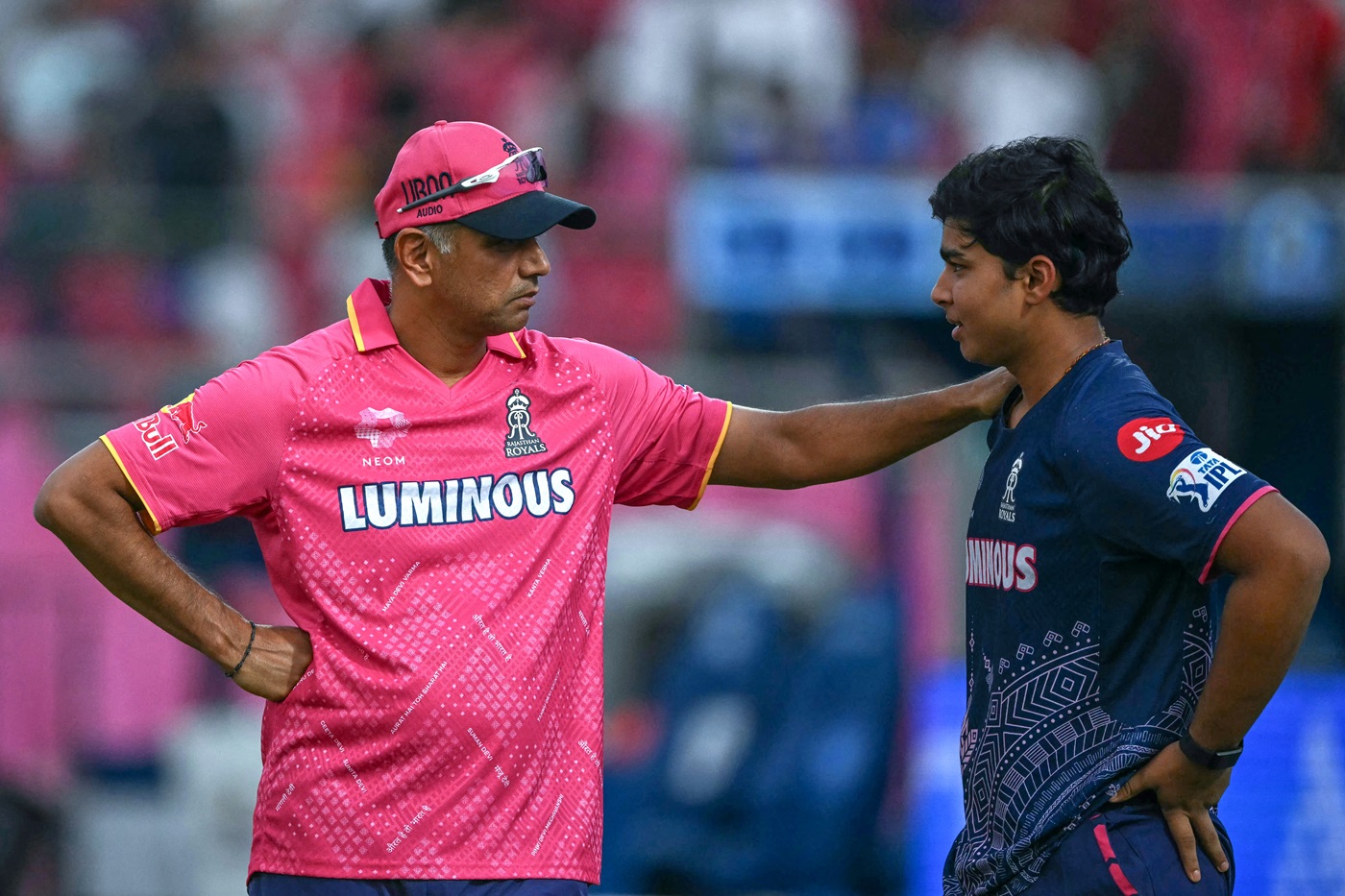
Dravid urges balanced format exposure for teen prodigy Sooryavanshi

Former India head coach Rahul Dravid has stressed the importance of nurturing young talent Vaibhav Sooryavanshi across all formats of the game. Dravid believes that players like Sooryavanshi are crucial for the long-term growth and sustainability of Test cricket. He cautioned that the teenager's development must be carefully managed, ensuring a balance between white-ball and red-ball cricket. Overexposure to a single format at an early age could hinder the youngster's overall progress, according to Dravid.

0
Crypto & Web3CoinDesk ·

Zcash surges 48% past $800 on Grayscale spot ETF filing and renewed investor buzz

Zcash (ZEC) climbed 48% to trade above $800, surpassing its January 2018 all-time high. The rally was fueled in part by a Grayscale filing indicating progress toward converting its Zcash Trust into a spot ETF. Futures trading volume for ZEC reached billions of dollars amid heightened market interest. The development has reignited comparisons between Zcash and Bitcoin among some investors and analysts.

0
IndiaTimes of India ·

BJP's Nitin Nabin chairs first meeting of revamped 65-member national team

BJP president Nitin Nabin convened the first meeting of the party's newly constituted national team to chart out the road ahead. The 65-member team, which includes several new faces, was recently unveiled by the party. Discussions centred on strategy for upcoming assembly elections and strengthening outreach at the grassroots level. Notable appointments include Vasundhara Raje and Ram Madhav as vice presidents, while Piyush Goyal has returned to the role of party treasurer.

0
IndiaTimes of India ·

Musk's 2018 Tesla Email Urged Staff to Skip Meetings and Cut Red Tape

In April 2018, Elon Musk sent a company-wide email to Tesla employees outlining a set of productivity guidelines. He encouraged staff to eliminate unnecessary meetings and avoid the use of overly complex or unclear language. Musk advised employees to leave any meeting where they felt they were not contributing meaningful value. He also pushed for direct communication across the organization, bypassing traditional chains of command. The directives were aimed at empowering employees and improving overall execution within the company.

0
IndiaNDTV ·

Apple Cuts Over 200 Jobs, Restructures Vision Pro Gaming and Content Teams

Apple has laid off more than 200 employees as part of an internal reorganization. The cuts primarily affect a team dedicated to developing gaming experiences for the Vision Pro headset. A separate unit responsible for producing immersive video content for the device is also being scaled back. The company stated the changes are intended to evolve its business and improve its ability to deliver its best work.

0
IndiaTimes of India ·

Cornell's lake-fed cooling system slashes campus energy use by 85%

Cornell University has been using a lake source cooling system since 2000 to meet its campus-wide cooling needs. The system draws cold water from 250 feet below the surface of Cayuga Lake, which maintains a temperature of around 39°F. Construction of the infrastructure began in 1999, making it one of the earlier large-scale sustainable cooling initiatives in higher education. The system has achieved an 85% reduction in annual energy consumption compared to conventional cooling methods. It stands as a notable example of how universities can leverage natural resources to significantly cut their environmental footprint.

0
ProgrammingDEV Community ·

OAuth2 Authorization Code Flow Explained Without the Jargon

OAuth2 is an authorization framework that allows apps to access user data on third-party platforms without ever handling the user's password. Instead of credentials, apps receive a scoped access token — comparable to a valet key — granting limited, time-bound permissions on a user's behalf. For most web applications, the Authorization Code Flow is the only grant type developers need to understand, involving a four-step exchange between the browser, backend, user, and identity provider like Google or GitHub. The flow deliberately splits the process so that the sensitive client secret and final token exchange happen server-side, protecting against interception in the browser environment. A short Node.js example illustrates how the temporary authorization code received after user consent is traded server-to-server for the actual access token.

0
ProgrammingDEV Community ·

Dev's 'Smart' Notification Fix Silently Broke Alerts for Multi-Monitor Users

A developer building ShelfTalk, a real-time social app for book lovers, added a feature to suppress push notifications when users were actively viewing the app tab. The logic relied on the Page Visibility API's document.hidden property, which only returns true when a tab is minimized or fully hidden behind other windows. Users on multi-monitor setups began missing direct messages and group mentions because their ShelfTalk tab remained technically 'visible' on a second screen, even while they worked on a different app on their primary monitor. The developer discovered the flaw only after a user described their dual-screen workflow, revealing that the OS considers any on-screen window as visible regardless of user attention. The bug highlights a key limitation of the Page Visibility API: it tracks window visibility, not actual user focus or attention.

0
ProgrammingDEV Community ·

Manor AI Launches Self-Hosted Goal-Driven AI Workspace to Replace Chat-Based Tools

A team has developed Manor AI, a self-hosted AI platform built around structured, goal-driven Workspaces rather than conventional chat interfaces. Each Workspace is designed as an independent operating unit with defined goals, assigned agents, tasks, approval rules, and verifiable output artifacts. The approach aims to solve limitations of chat-based AI tools when handling long-running or multi-user workflows, where context and accountability are harder to maintain. Manor AI connects conversations, plans, knowledge bases, automations, and review processes within isolated Workspaces to prevent context bleed between unrelated projects. The source code has been published on GitHub under the Manor Sustainable Use License 1.0, which the team clarifies is source-available rather than OSI-certified open source.

0
SportsESPNcricinfo ·

Pooran's 81* and Forde's five-wicket haul seal Kings' win over Kingsmen

St Lucia Kings extended their winning run in the tournament despite a mid-innings scare against Jamaica Kingsmen. Jamaica were reduced to a precarious 71 for 6, but a lower-order recovery helped them post a competitive total. Nicholas Pooran anchored the Kings' chase with an unbeaten 81, ensuring his side crossed the line comfortably. Seamer Forde complemented the batting effort with a five-wicket haul that restricted Jamaica's scoring. The result keeps St Lucia Kings on an upward trajectory in the competition standings.

0
ProgrammingDEV Community ·

Why Formal Problem Specs Beat Prompt Tricks for AI-Generated Production Code

A lead strategist at Digitalizen argues that most AI-generated code failures in production stem from poorly defined problem specifications, not from model capability gaps. As reasoning models have grown more powerful, classic prompt engineering tactics like persona framing and keyword hacks have become insufficient guardrails. The author proposes 'Problem Engineering,' a structured approach that requires developers to formally define system invariants, data contracts, state mutations, fault topologies, and observability hooks before any code is generated. Without these constraints, large language models default to statistically likely but naive implementations that lack concurrency controls or robust error handling. By eliminating ambiguity upfront, developers can narrow the model's output space and consistently obtain production-ready results.

0
IndiaTimes of India ·

Netanyahu calls Erdogan 'antisemitic dictator' after Turkey seeks Interpol notice

Israeli Prime Minister Benjamin Netanyahu sharply condemned Turkish President Recep Tayyip Erdogan following Ankara's move to seek an Interpol notice against Israeli officials. The request stems from Israel's interception of a Gaza-bound aid flotilla. Netanyahu's office responded with strong personal attacks, labeling Erdogan an antisemitic dictator. The exchange marks a significant escalation in diplomatic tensions between the two countries, which have also been at odds over developments in Syria. The dispute has now taken on both a legal and diplomatic dimension.

← NewerPage 121 of 3062Older →