SShortSingh.

Technology

0
TechnologyTechCrunch ·

Nvidia Invests $3.5B in MediaTek to Counter Big Tech's In-House AI Chips

Nvidia has made a $3.5 billion investment in Taiwanese chipmaker MediaTek, signaling a major strategic move in the AI hardware space. The deal comes as large technology companies increasingly develop their own custom AI chips, potentially reducing reliance on Nvidia. By partnering with MediaTek, Nvidia aims to remain a critical player in AI infrastructure despite this growing competitive threat. The investment reflects Nvidia's broader effort to adapt its business model as the AI chip landscape rapidly evolves.

0
TechnologyTechCrunch ·

MapQuest App Hits No. 1 in Navigation After Keeping Lake Ontario's Name

MapQuest's navigation app surged to the top of app store navigation charts after the company chose not to adopt President Trump's proposed renaming of Lake Ontario. The decision to retain the lake's traditional name resonated with users, driving a significant spike in downloads. The move stands in contrast to other mapping services that complied with the renaming directive. MapQuest's unexpected rise highlights growing public interest in how tech companies respond to politically motivated geographic renamings.

0
TechnologyThe Verge ·

NY Governor Hochul vows to outpace 3D-printed gun workaround tool

Cody Wilson, known for creating the first 3D-printed gun, last week unveiled a tool he calls 'Hochulization,' designed to circumvent a New York law banning 3D-printed firearms. Wilson also used the tool's release to publicly taunt Governor Kathy Hochul. Responding on a recent episode of the Decoder podcast, Hochul made clear she intends to stay ahead of such attempts to undermine state gun laws. She emphasized that 3D-printed guns remain illegal in New York and pledged to act against those who deliberately exploit loopholes in the legislation.

0
TechnologyThe Verge ·

NY Governor Hochul on AI, teen social media rules, ghost guns, and data centers

New York Governor Kathy Hochul discussed a wide range of tech policy issues in a recent interview with The Verge's Decoder podcast. She voiced support for a multi-state settlement with Meta that places specific restrictions on how teenagers can use platforms like Instagram, though critics note the deal's age verification requirements could effectively end online anonymity for all users. Hochul also defended her state's ban on 3D-printed gun parts, even as activist Cody Wilson claims to have found technical workarounds he calls 'Hochulization.' The governor addressed a one-year moratorium on data center construction she signed in July 2025, saying she is evaluating conditions that would make future projects viable. She also touched on AI regulation, surveillance technology including Flock cameras, and the structure of her state government leadership team.

0
TechnologyThe Verge ·

EU classifies ChatGPT as major search engine, triggering stricter DSA rules

The European Commission has designated ChatGPT as a Very Large Online Search Engine under the EU's Digital Services Act, subjecting OpenAI to tougher regulatory obligations. The classification means OpenAI must take steps to address risks related to minors, user mental health, and illegal content spread. Reddit and Roblox were simultaneously designated as Very Large Online Platforms under the same framework. The Digital Services Act prohibits covered platforms from targeting ads at minors or profiling users based on sensitive attributes such as religion, ethnicity, or political beliefs. These designations mark a significant expansion of the DSA's reach into AI-powered services.

0
TechnologyArs Technica ·

NASA Launches Roman Space Telescope to Capture Unprecedented Wide-Field Images

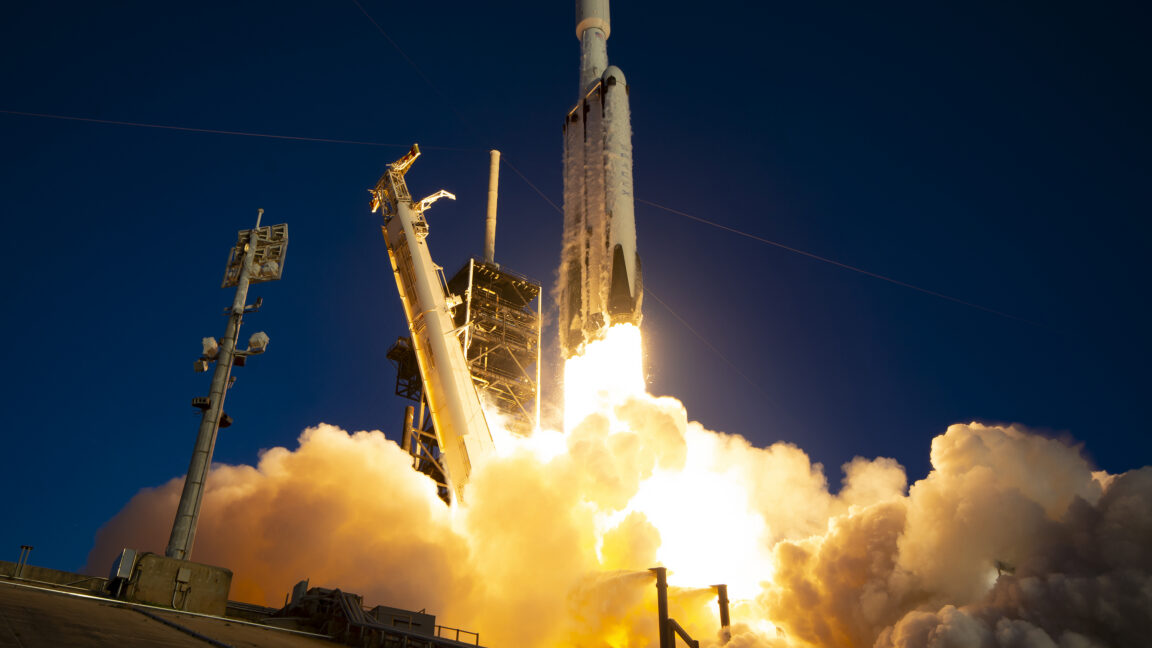
NASA has begun the mission of its next 'great observatory,' the Nancy Grace Roman Space Telescope, aimed at broadening humanity's view of the Universe. The telescope is designed to conduct large-scale sky surveys far beyond the capability of previous instruments. A single image from Roman's largest survey would require over half a million 4K televisions to display in full resolution, illustrating its extraordinary imaging scale. The mission represents a significant step forward in space-based observation technology for the agency.

0
TechnologyThe Verge ·

Instagram to label and penalize AI accounts that impersonate real humans

Instagram is introducing measures to crack down on AI-generated accounts that deceive users into thinking they are interacting with real people. The platform will rename its existing 'AI creator' label to 'AI-generated profile' to make the distinction clearer. Instagram stated that users have expressed frustration upon discovering that seemingly human profiles are actually AI-generated. Accounts that fail to self-label their AI-generated profiles will be actively identified by Instagram and face penalties, including restrictions on their reach.

0
TechnologyTechCrunch ·

Circleback Launches Free Tier and Revised Pricing Plans From $14/Month

Circleback, an AI-powered meeting notetaker tool, has announced the introduction of a free tier to broaden its user base. The move is aimed at attracting more customers who may be hesitant to commit to a paid subscription upfront. Alongside the free offering, the company is also rolling out new paid pricing plans starting at $14 per month. The strategy reflects a common freemium approach used by software companies to drive adoption and convert free users into paying customers.

0
TechnologyArs Technica ·

Meta's Pocket AI Turns Game Ideas Into Reality but Locks Results to Its Platform

Meta's Pocket platform features an AI tool that allows users to create interactive mobile mini-games and gizmos with relative ease. While the creative process is accessible and engaging, sharing the resulting content outside of Meta's ecosystem remains significantly restricted. Users who build projects on the platform find their creations largely confined to Meta's own environment. This raises concerns about creative ownership and portability for developers who invest time building with the tool.

0
TechnologyTechCrunch ·

US Raises Barriers on Foreign Drones and Robots as China Eyes Global Markets

The United States is implementing new restrictions aimed at limiting the use of foreign-manufactured drones and robots within its borders. The measures are widely understood to target Chinese-made technology, reflecting growing concerns over national security and supply chain dependence. However, analysts suggest that China's massive manufacturing scale gives it the ability to redirect its focus toward other international markets. Rather than being contained, Chinese drone and robotics firms may simply expand their global footprint outside the US. This dynamic raises questions about whether American trade barriers can meaningfully slow China's dominance in these emerging technology sectors.

0
TechnologyTechCrunch ·

Grindr CEO bets on AI, healthcare and premium tiers to build gay super-app

Grindr CEO George Arison has outlined an ambitious plan to transform the dating app into a broad lifestyle platform he describes as a 'gayborhood in your pocket.' The strategy centres on artificial intelligence, an expensive new EDGE subscription tier priced above $350, and expansion into healthcare and long-distance matchmaking. Arison is pushing back against what he calls a 'Grindr discount' — a perceived undervaluation of the company by Wall Street investors. The CEO has been championing this super-app vision since 2022, though investors remain cautious about whether the company can successfully execute such a wide-ranging pivot.

0
TechnologyArs Technica ·

Massive 12TB Steam leak exposes over a decade of lost PC gaming history

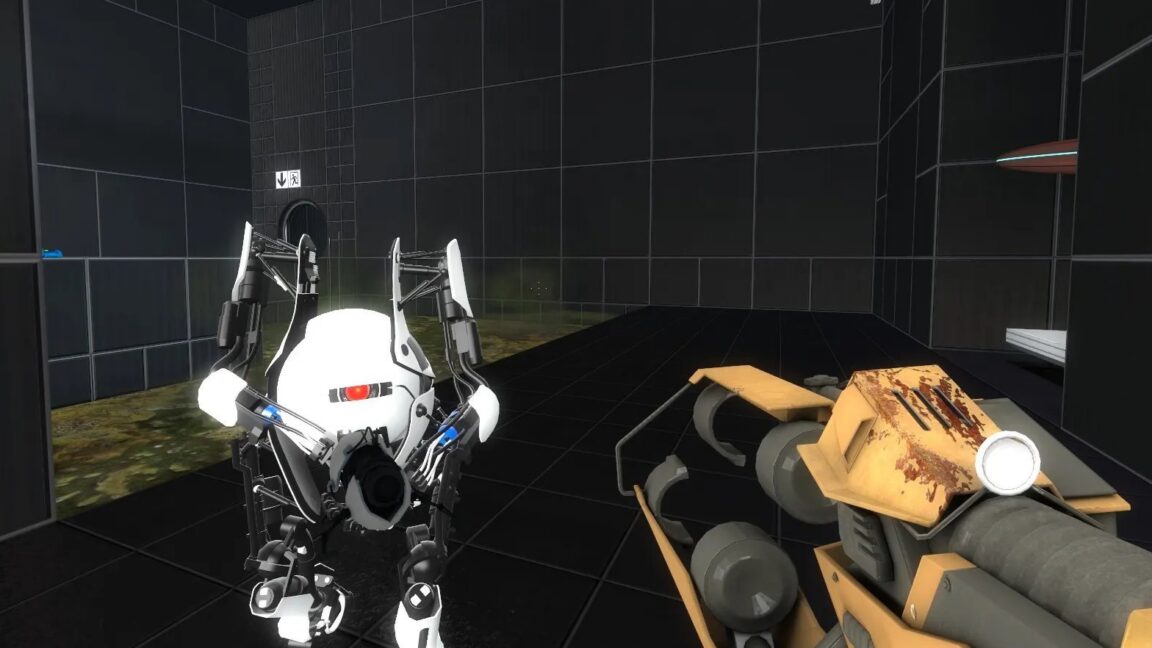
A massive 12TB trove of internal Valve data, dubbed the 'teraleak,' has surfaced online, exposing over a decade of unreleased and cut gaming content. The leak includes scrapped material from Portal 2 and apparent hints related to the long-rumored Half-Life 2: Episode 3. The sheer volume of the data suggests it spans multiple years of internal Valve development history. Researchers and fans are still combing through the files to identify the full scope of what was revealed. The leak raises significant concerns about data security at one of PC gaming's most prominent studios.

0
TechnologyThe Verge ·

Revisiting Professor Murder's Debut EP, a Standout of NYC's Mid-2000s Dance Punk Scene

A music writer recently revisited the EP 'Professor Murder Rides the Subway' after rediscovering old CDs, calling it a forgotten gem of the mid-2000s New York indie scene. Professor Murder was a New York-based dance punk band that emerged during a period when the genre was thriving in the city. The band existed alongside more prominent acts like LCD Soundsystem and The Rapture, as well as lesser-known DFA label artists. The mid-aughts NYC dance punk revival was characterised by high-energy, fun-oriented music designed to get audiences moving. The EP is being highlighted as an underappreciated but near-perfect example of that era's sound.

0
TechnologyThe Verge ·

12TB Steam leak exposes decade of game builds, including Half-Life 2: Episode 3 assets

A massive leak of over 12 terabytes of data has surfaced online, containing builds of nearly every game uploaded to Steam between 2003 and 2013. The archive includes assets from the canceled Half-Life 2: Episode 3, cut content from Portal 2, and an unreleased Portal-universe title called F-Stop built around a camera mechanic. Third-party titles are also present, with early builds of Call of Duty, Resident Evil, Mirror's Edge, Batman: Arkham Asylum, and Dragon Age: Origins already identified. Due to the sheer size of the archive, researchers are still working through its full contents and more discoveries are expected.

0
TechnologyTechCrunch ·

Spanish Startup Liux Launches Sustainable Big Microcar to Rival Chinese EVs

Spanish startup Liux has unveiled a small electric vehicle called the Big, positioning it as a sustainable alternative in the competitive microcar segment. The company manufactures the vehicle domestically in Spain, distinguishing it from many rivals. Liux is betting that its focus on sustainability will give it an edge in a market increasingly dominated by Chinese manufacturers. The startup believes its eco-conscious approach can attract buyers despite the crowded and competitive nature of the electric microcar space.

0
TechnologyArs Technica ·

Trump Joins NASA Press Conference as Agency's Science Mission Faces Uncertainty

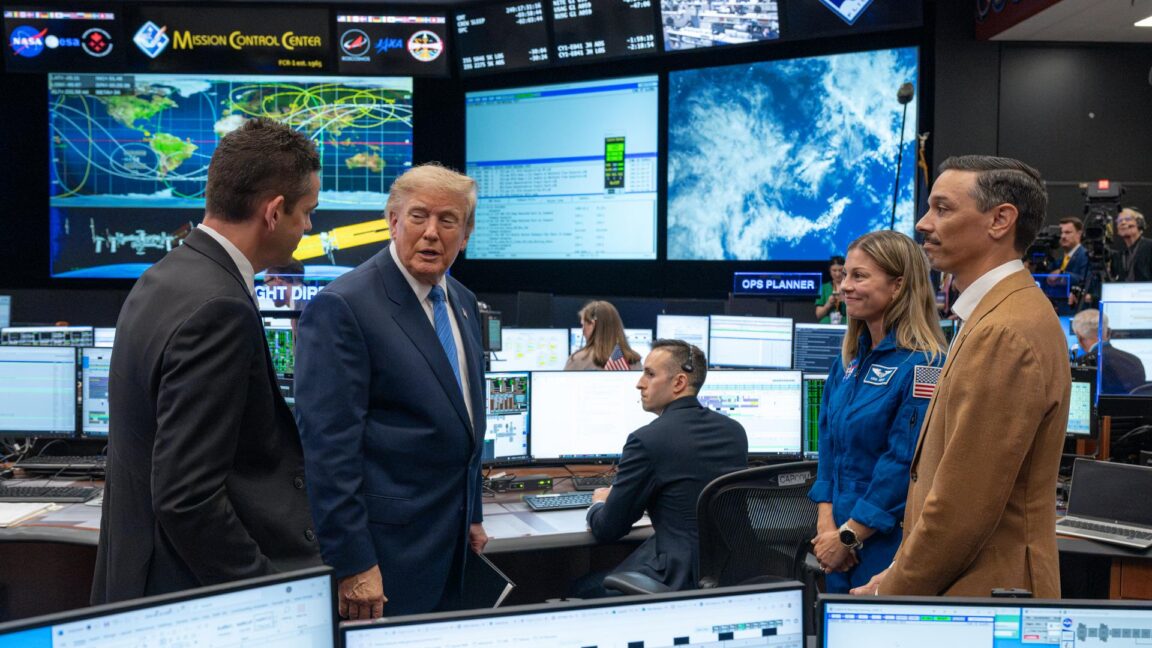
President Trump dialed into a NASA news conference, marking an unusual level of direct presidential engagement with the space agency. NASA's science programs are currently in need of support, with funding and future direction under scrutiny. The appearance comes as the agency has only one major mission remaining on the near-term horizon. The involvement of the president could signal either renewed political interest in NASA or an attempt to boost public and institutional morale. The timing raises questions about the long-term priorities and resources allocated to NASA's scientific endeavors.

0
TechnologyTechCrunch ·

SpaceX Foundry Promises Faster Gas Turbines but Raises Pollution Concerns

Elon Musk has revealed that SpaceX is operating a secretive new foundry capable of casting its own turbine blades in-house. The facility is expected to accelerate the deployment of gas-powered turbines by up to 18 months compared to conventional timelines. However, the move doubles down on natural gas as an energy source at a time when similar turbine installations are already facing legal challenges and health-related scrutiny. Communities near existing turbine sites linked to Musk and other operators have raised concerns about air quality and public health impacts. The announcement highlights a tension between rapid energy expansion and the environmental consequences of gas-based power infrastructure.

0
TechnologyThe Verge ·

NASA's Nancy Grace Roman Space Telescope Successfully Launches to L2 Orbit

NASA's Nancy Grace Roman Space Telescope has been successfully launched following earlier funding challenges and a name change. The observatory will travel approximately one million miles over three months to reach its operational orbit at the second Sun-Earth Lagrange point (L2), beyond the Moon. Equipped with a 300-megapixel infrared camera, Roman can survey the sky 1,000 times faster than Hubble and boasts a field of view 100 times larger. The telescope also features a Coronagraph instrument capable of blocking stellar glare to directly image exoplanets, including smaller, older, and colder worlds. Roman's primary scientific mission will focus on studying dark matter and dark energy through an unprecedented wide-field survey of the universe.

← NewerPage 131 of 287Older →