SShortSingh.

Technology

0
TechnologyThe Verge ·

Anker Launches Eufy MindBase, a Local AI Hub for Smart Home Security

Anker has unveiled the Eufy MindBase, a local AI hub designed to process smart home camera footage entirely on-device using a proprietary large language model. The device doubles as a smart home hub with Matter support, positioning it as a whole-home connectivity solution with local storage. Anker introduced the MindBase alongside several other security products at IFA 2025 in Berlin, including the TrackLight Cam S1, the S4 video doorbell, and a window camera. The company markets the MindBase as the 'central brain for the home,' with security being its primary initial use case. Anker says the on-device processing ensures that footage never leaves the user's home, addressing growing privacy concerns around cloud-based AI systems.

0
TechnologyThe Verge ·

Philips Hue partners with Nanoleaf to bring wall panels into its ecosystem for $40

Philips Hue has teamed up with rival Nanoleaf to integrate modular wall panels into its smart lighting ecosystem, launching on September 3rd. A new $39.99 Philips Hue x Nanoleaf Wall Light Module enables Nanoleaf Hexagon, Triangle, and Mini Triangle panels to work within the Hue app. The module supports Bluetooth, Zigbee, and Thread simultaneously, allowing users to control their panels via both the Hue app and Matter-compatible platforms like Apple Home. Rather than developing its own wall panel product, Philips Hue chose to collaborate with Nanoleaf, the company credited with pioneering the smart modular wall panel category.

0
TechnologyThe Verge ·

Anker Launches Soundcore Sleep Earbuds 4 and 4 Pro With Longer Battery, Display Case

Anker has announced two new sleepbuds, the Soundcore Sleep Earbuds 4 and 4 Pro, designed specifically for side-sleepers. Both models carry over the audio masking technology from last year's A30 sleepbuds, while adding improved active noise cancellation and longer battery life. The earbuds feature a 20 percent smaller contact area compared to their predecessor, aimed at reducing pressure for greater comfort during sleep. The new cases support wireless charging, though only the higher-end 4 Pro model includes a built-in display. The lineup builds on Anker's existing sleepbud range with incremental hardware upgrades across both tiers.

0
TechnologyThe Verge ·

Philips Hue launches cheaper TV sync options starting at $120 and $150

Philips Hue has introduced more affordable versions of its TV lighting sync products, unveiled at the IFA tech show in Berlin. The new Sync Box 4K starts at $150, significantly undercutting the existing $385 8K model. The company also launched its first camera-based product, the Play Screen Sync, priced at $119.99. Both devices synchronize Hue's color-changing smart lights with on-screen content such as movies, games, and TV. The Sync Box models work via HDMI, while the camera-based option captures visuals directly from the screen, and both are available for purchase immediately.

0
TechnologyThe Verge ·

Philips Hue adds AI-powered custom automations and Sonos integration at IFA

Philips Hue unveiled several software updates at the IFA tech show this week. A new feature called Custom AI Behaviors allows users to describe their lighting preferences in natural language, with the app's AI assistant translating those descriptions into complex automations. The update goes beyond basic color changes, enabling lighting sequences that were previously not possible within the Hue app. Philips Hue also announced a new integration with Sonos speakers, allowing users to control audio playback through select Hue switches such as the Tap Dial Switch.

0
TechnologyThe Verge ·

Philips Hue Launches Liane 360-Degree Rope Lights at IFA Berlin

Philips Hue has unveiled a new line of architecturally focused smart lights, including the Liane 360-Degree Rope Lights, at IFA in Berlin this week. The products are now available for purchase on the official Philips Hue website. The Liane lights use Hue's OmniGlow technology and offer a wide range of brightness levels and colors. Designed with versatility in mind, they allow for a variety of installation configurations to suit different interior styles. The launch marks a shift toward more design-conscious smart lighting options beyond conventional lamps and fixtures.

0
TechnologyBBC Tech ·

Uber Launches Self-Driving Robotaxi Service in London

Uber has rolled out its self-driving robotaxi service in London, marking a significant step in autonomous vehicle deployment in the UK. The service launched on Thursday, bringing driverless ride-hailing technology to one of Europe's busiest cities. BBC technology correspondent Zoe Kleinman took a ride in the vehicle to report on the experience firsthand. The launch signals Uber's continued push into autonomous transportation beyond its existing markets.

0
TechnologyBBC Tech ·

Uber Launches UK's First Self-Driving Taxis With Safety Drivers Onboard

Uber has introduced the United Kingdom's first robotaxi service, deploying a fleet of 15 self-driving vehicles. Despite being autonomous, each taxi carries a human safety driver as a precautionary measure. The launch marks a significant milestone for self-driving technology in the UK ride-hailing market. Uber is the first company to bring this type of service to British roads at a commercial scale.

0
TechnologyThe Verge ·

Uber launches London's first commercial robotaxi service using Wayve technology

Uber has become the first company to launch a commercial robotaxi service in London, beating rival Waymo to the milestone. The vehicles are powered by autonomous driving technology developed by Wayve, a UK-based startup. Safety drivers will remain behind the wheel during the initial phase of the rollout. The launch marks the culmination of several years of planning between Uber and Wayve for a UK debut. The service also serves as an early indicator of whether demand for autonomous ridehailing can extend beyond its current strongholds in the US and China.

0
TechnologyTechCrunch ·

Palo Alto Networks Acquires Console for $500M in AI IT Automation Push

Palo Alto Networks has acquired Console, a startup backed by Thrive Capital, for approximately $500 million, according to sources familiar with the deal. The purchase marks a significant move by the cybersecurity giant into the AI-driven IT service automation space. The deal's terms were not officially disclosed by either company. With Console now off the table, industry observers believe Sequoia-backed Serval has emerged as the leading independent startup in the AI IT service automation market.

0
TechnologyTechCrunch ·

Judge Rules Google Must Change Ad Practices, Stops Short of Breakup

A federal judge ruled on Wednesday that Google will not be forced to break up its advertising business. However, the court determined that the tech giant must make operational changes to its ad practices. The ruling aims to create a more competitive environment for rival companies in the digital advertising space. While Google avoided the most severe outcome, the decision still represents a significant legal constraint on how the company conducts its ad business.

0
TechnologyArs Technica ·

Congress Blocks OMB Bid to Overhaul Federal Research Grant Rules

A recent congressional spending deal includes a provision that prevents the Office of Management and Budget from changing how federal research grants are administered. Lawmakers moved to halt what critics viewed as a politically motivated effort to reshape grant funding rules. The OMB had been attempting to rewrite existing guidelines that govern the distribution of research funds. By embedding the restriction in the spending agreement, Congress effectively paused any such administrative overhaul. The move is seen as a safeguard to keep research funding decisions insulated from direct political influence.

0
TechnologyArs Technica ·

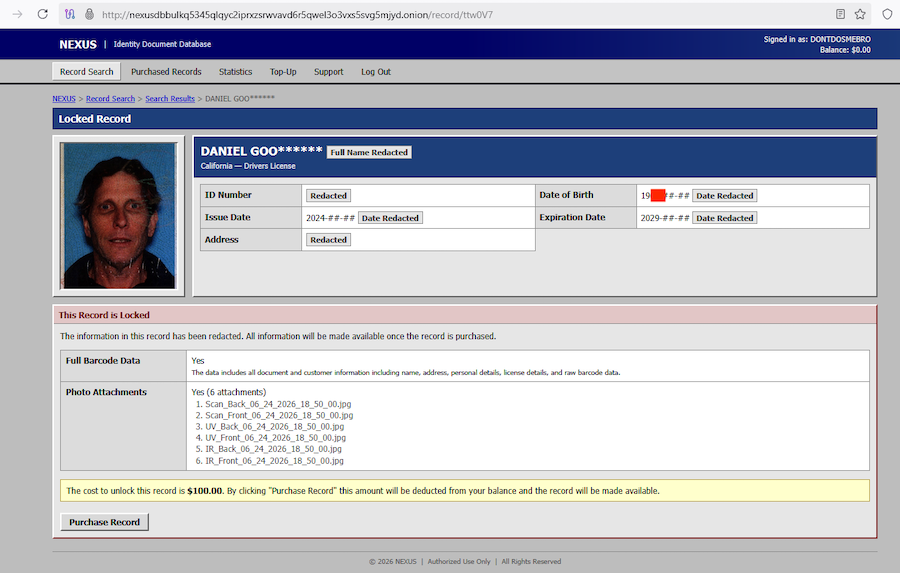
FBI Investigates Massive Data Breach Exposing Driver's License Information

The FBI has reportedly launched an investigation into a large-scale data breach that is currently unfolding. The incident came to light after a journalist discovered their driver's license data was being sold online shortly after renting a car. The breach appears to be linked to data collected during the car rental process. Authorities are actively monitoring the situation as the full scope of the leak remains unclear.

0
TechnologyTechCrunch ·

OpenAI's Astra Model Uses New 'Recurrent Depth' Technique, Raising Safety Concerns

OpenAI has introduced a new AI model called Astra that employs a technique known as 'recurrent depth.' Unlike most reasoning models, which follow a sequential thinking process, Astra is designed to operate beyond those conventional constraints. This departure from standard reasoning architecture has drawn concern from AI safety experts. The development marks a notable shift in how OpenAI is approaching reasoning capabilities in its models.

0
TechnologyTechCrunch ·

MapQuest hits No. 1 on US App Store after rejecting 'Lake America' rename

MapQuest has climbed to the top of Apple's US App Store charts following its decision not to adopt the 'Lake America' name promoted by the Trump administration. The once-dominant mapping app experienced a sharp surge in downloads, accumulating more than half of its total 2026 US downloads within just six days. The spike reflects a broader public reaction to the controversial renaming directive. MapQuest's refusal to implement the name change appears to have resonated strongly with users, driving a significant revival for the legacy navigation platform.

0
TechnologyThe Verge ·

Google launches Gemini 2.5 Flash with deeper reasoning but potentially higher costs

Google has released Gemini 2.5 Flash, its latest AI model, just weeks after the previous 3.7 Flash version. The company says the new model performs more reasoning steps on complex tasks and calls tools iteratively, making it work harder than its predecessor. Pricing remains the same at $0.75 per million input tokens and $3.75 per million output tokens, but Google cautions that users may still face higher bills. This is because the model may consume more tokens to maximize performance, particularly at higher effort levels. Developers who wish to manage token costs can continue using the older Gemini 3.7 Flash model.

0
TechnologyArs Technica ·

FCC to introduce scorecard grading phone carriers on robocall blocking efforts

The US Federal Communications Commission (FCC) is planning to introduce a scorecard system to evaluate phone companies on their performance in blocking spam and robocalls. The scorecards are expected to include metrics such as call-blocking statistics and data gathered from customer complaints. The initiative aims to create greater accountability among carriers in tackling the persistent problem of unwanted calls. By grading phone companies publicly, the FCC hopes to incentivize better spam-call filtering across the industry.

0
TechnologyArs Technica ·

NASA Revises Lunar Spacesuit Design Amid Artemis IV Timeline Concerns

NASA is modifying the design of its lunar spacesuits in response to concerns about the Artemis IV mission timeline. The agency is adjusting requirements to better align with near-term mission needs. The decision reflects growing pressure to ensure hardware is ready within the projected schedule. This redesign signals a pragmatic shift in NASA's approach to meeting its upcoming crewed lunar surface objectives.

0
TechnologyTechCrunch ·

Hackers Allegedly Steal 150M Driver's License Photos from ID Verification Service

An identity theft search website claimed that over 150 million driver's license photos were stolen from a major ID card verification service. The breach, if confirmed, would represent a significant compromise of sensitive personal identification data. The site that publicized the stolen records has since been taken offline. The identity of the hackers and the specific verification service targeted have not been officially confirmed. Authorities and cybersecurity researchers are likely to investigate the alleged breach further.

0
TechnologyTechCrunch ·

Uber Bids $15B for Delivery Hero With Board Support

Uber has made a $15 billion takeover bid for food delivery giant Delivery Hero. The company's board of directors has backed the proposed acquisition. If the deal receives full regulatory and shareholder approval, it would create one of the largest food delivery platforms globally. The merger would significantly expand Uber's footprint in international food delivery markets.

← NewerPage 121 of 287Older →