SShortSingh.

Programming

0
ProgrammingDEV Community ·

GitHub Actions Log Failures Traced to Azure Blob Storage Infrastructure Issue

Developers using GitHub Actions have reported a widespread problem where workflow logs are missing, empty, or inaccessible despite jobs appearing to complete successfully. Community members across multiple repositories and accounts documented the issue, ruling out individual workflow misconfigurations as the cause. Investigation led by contributor the-par3a found that the GitHub API correctly processes log requests and issues HTTP 302 redirects to temporary Azure Blob Storage URLs, but connections to those storage endpoints are actively refused. The failure, which also manifests as CORS errors in browsers, points to a breakdown in GitHub's log delivery infrastructure rather than user code or runner configuration. The issue poses a direct challenge to software project monitoring, leaving teams unable to diagnose failures or verify whether successful-status runs truly completed their intended objectives.

0
ProgrammingDEV Community ·

EU Proposes Common Energy Rating Scheme for Data Centres Amid Rising Demand

The European Commission has put forward a proposal to establish a shared energy rating framework for data centres across the EU. The scheme would assess facilities on four key dimensions: energy efficiency, clean energy sourcing, grid flexibility, and waste-heat reuse. The initiative is driven by growing concern over the energy demands of data centres that power cloud services and AI workloads. Final details — including methodology, legal obligations, and which facilities would be covered — have not yet been determined. Cloud customers are not immediately affected by new reporting rules, but the proposal signals greater future scrutiny of the infrastructure behind digital services.

0
ProgrammingDEV Community ·

GitHub Education Verification Bug Locks Out Faculty, Community Offers Workaround

A long-time faculty member identified as joelwross lost access to GitHub Education benefits after a re-verification attempt was denied, reportedly due to a poor-quality photo. The situation worsened when the reapplication button was disabled and official support channels, including a CoPilot chatbot, repeatedly closed tickets without human review. With no working official remedy, a fellow educator named amiriguesss shared a detailed workaround on GitHub's community forum, Discussion #207025. The guidance advises using a different, clearly legible document that explicitly states faculty status, and contacting GitHub through a specific education support link rather than general verification channels. The incident underscores how broken verification workflows and inadequate support routing can leave users stranded despite years of engagement with a platform.

0
ProgrammingGitHub Blog ·

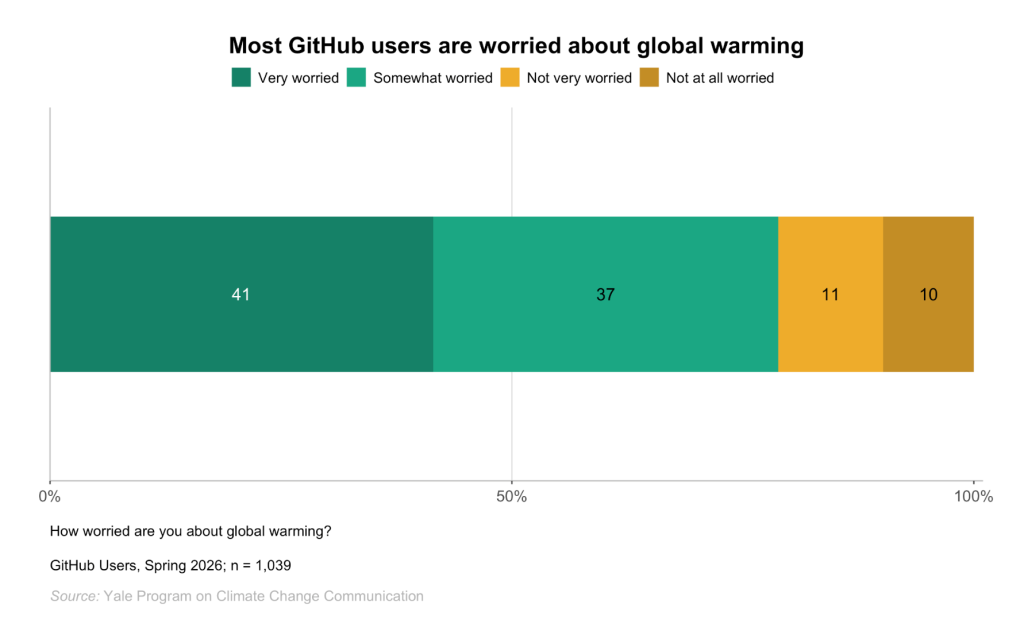
GitHub Survey: Developers Demand Better Tools to Cut Software Energy Waste

A new study by GitHub and the Yale Program on Climate Change Communication surveyed over 1,000 GitHub users about software efficiency. The research reveals strong demand among developers for practical tools and guidance to reduce wasted compute resources. Respondents also highlighted the need for better measurement capabilities to track and improve software energy consumption. The findings point to a growing awareness in the developer community around the environmental and efficiency costs of inefficient software.

0
ProgrammingHacker News ·

Samsung Software Update Bricks Smart Fridges, Leaving Screens Frozen

Samsung inadvertently caused malfunctions in its smart refrigerators after pushing a faulty software update to the devices. The update left the fridges' screens frozen and unresponsive, rendering their smart features unusable. The incident highlights the risks associated with over-the-air updates for internet-connected home appliances. Affected customers reported the issue, drawing attention to the growing vulnerability of smart home devices to software errors. Samsung has yet to issue an official public statement detailing a fix or timeline for resolution.

0
ProgrammingHacker News ·

WaveDigger Tool Maps Physical Locations of Wireless Signals

WaveDigger is an open-source tool published on GitHub by developer Christian Rowlands that analyzes wireless signals to determine their physical locations. The project has gained attention on Hacker News, accumulating 42 points and sparking discussion among the community. The tool is designed to help users investigate and geolocate wireless signal sources. It falls within the domain of radio frequency analysis and signal intelligence, areas of growing interest among security researchers and hobbyists.

0
ProgrammingHacker News ·

New Web Tool Offers File Delivery Service With Signed Proof of Receipt

A developer has launched IveSentIt, an online courier service designed for sending digital files with verified proof of delivery. The platform provides a signed confirmation when recipients access or receive the sent files. The tool was shared on Hacker News under the 'Show HN' category, attracting early community attention. It appears aimed at users who need documented evidence that a file was successfully delivered to its intended recipient.

0
ProgrammingDEV Community ·

SubScale, Bobby, Rocket Money: How Three Subscription Trackers Handle Your Data

Subscription tracking apps differ significantly in how they handle user privacy, with some requiring bank access while others work entirely on-device. Rocket Money connects to bank accounts via aggregators like Plaid, automatically detecting subscriptions but giving a third party continuous access to full transaction history. Bobby and SubScale are manual trackers requiring no bank connection, though Bobby's App Store privacy label still links purchases and identifiers to user identity. SubScale, a newer entrant available on both iOS and Android, stores all data on-device, requires no account, and reports no data linked to user identity, while also offering features like trial tracking, renewal calendars, and export options. The three apps represent distinct trade-offs between convenience, features, and privacy rather than a clear winner-takes-all comparison.

0
ProgrammingHacker News ·

OpenAI Builds Influencer Network to Shape Public Perception

OpenAI has launched a structured influencer marketing strategy aimed at improving its public image and portraying the company as beneficial to society. The campaign involves partnerships with social media creators across platforms including Instagram to promote ChatGPT and OpenAI's broader mission. The effort includes sponsored content and brand deals designed to reach mainstream audiences beyond the tech community. The strategy reflects growing efforts by AI companies to manage public sentiment as scrutiny over artificial intelligence intensifies.

0
ProgrammingDEV Community ·

Eight Red Team Attack Scenarios Security Teams Must Prepare for During Major Events

A technical guide published on DEV Community outlines eight major red team attack categories that pose heightened threats during high-profile events such as political summits, national holidays, and large sporting events. The scenarios covered include network boundary breaches, social engineering phishing, supply chain poisoning, zero-day and N-day exploitation, lateral movement within internal networks, data theft, DDoS attacks, and strikes on critical infrastructure. During such periods, state-level hacker groups and professional attack teams intensify efforts against key targets with the aim of stealing sensitive data or disrupting critical operations. Each attack scenario is broken down by tactical intent, attack chain, and corresponding blue team countermeasures. The guide is intended to help security operations personnel adopt an attacker-perspective defence mindset and strengthen preparedness ahead of major events.

0
ProgrammingHacker News ·

RxFilm Studio Uses AI to Help Small Teams Create Marketing Videos Fast

A developer has launched RxFilm Studio, an AI-powered video creation tool aimed at independent developers and small teams who lack the time or resources to produce marketing videos. Users can start with an idea, product website, images, or existing footage, and the tool generates a complete video including story structure, editing, visual effects, voiceovers, background music, and subtitles. The project was motivated by the creator's observation that video production remains a significant barrier for smaller teams despite growing demand for marketing content. RxFilm Studio is open source, with the codebase available on GitHub, and a demo marketing video produced using the tool has been shared on YouTube. The creator is actively seeking user feedback following the public launch.

0
ProgrammingHacker News ·

Jevper Brings Jev Interface to Any OpenAI-Compatible AI Model

A developer has released Jevper, a tool that layers the Jev interface over any OpenAI-compatible language model. The project was shared on Hacker News as a community showcase submission. Jevper allows users to apply the Jev interface to models they already have access to, rather than being locked into a specific provider. The submission received minimal community engagement at the time of posting, with four points and no comments.

0
ProgrammingDEV Community ·

HealthAuditor Launches Free Website Audit Tool for SEO and Performance

HealthAuditor is a newly launched free tool designed to help developers and website owners diagnose issues across performance, SEO, accessibility, and best practices. Users can simply enter a website URL to receive a detailed audit highlighting areas that need attention. The tool is currently in its early stage, being developed as a side project by its creator. Improvements are being made on an ongoing basis, guided by real feedback from users.

0
ProgrammingDEV Community ·

How AI Is Reshaping Every Stage of the Software Development Workflow

Artificial intelligence has expanded well beyond code generation to become embedded across the entire software development lifecycle, including debugging, testing, documentation, and code review. Tools such as GitHub Copilot, Cursor, Claude Code, and Gemini Code Assist allow developers to generate code from natural-language prompts, explain existing codebases, and identify potential bugs. AI can also accelerate testing by producing unit tests, edge cases, and mock data, helping developers catch scenarios they might otherwise overlook. In code review and architecture planning, AI serves as a supplementary layer, flagging security issues and proposing design alternatives, though human judgment remains essential for final decisions. Experts emphasize that AI should be treated as a collaborative partner rather than an autonomous developer, with all generated output still requiring human review and verification.

0
ProgrammingHacker News ·

Claude Code reportedly reads AGENTS.md file only when telemetry is enabled

A blog post has surfaced claiming that Anthropic's Claude Code tool conditionally reads the AGENTS.md file based on whether telemetry is turned on. This behavior suggests the file, which typically provides instructions for AI coding agents, may be tied to data collection settings. The finding was shared on Hacker News, where it attracted early attention from the developer community. The implications raise questions about transparency in how AI coding assistants handle configuration files and user data settings.

0
ProgrammingDEV Community ·

Agentic DevOps: Why LLMs Should Not Make Every Decision Alone

A developer at SFEIR has proposed a hybrid architecture for agentic DevOps that limits how much decision-making is delegated to large language models. The open-source project Esus, formerly known as Agent Smith, forms the basis of this approach, which was explored as part of internal research at SFEIR. Rather than relying solely on an LLM, the architecture wraps the model in a deterministic 'kernel' that handles code generation, AST validation, and contract enforcement. This neuro-symbolic design lets the LLM handle complex, ambiguous decisions while deterministic software guarantees system invariants and correctness. The approach also redefines the role of human oversight, positioning 'Human-in-the-loop' mechanisms as a deliberate layer within the pipeline rather than an afterthought.

0
ProgrammingDEV Community ·

MAUI, React Native, Flutter, Ionic: Which Cross-Platform Framework Fits Your Team?

The four leading cross-platform mobile frameworks — .NET MAUI, React Native, Flutter, and Ionic — each take a fundamentally different architectural approach to building apps for Android and iOS. MAUI suits C#/.NET and enterprise teams, while React Native is a strong fit for developers already working in the JavaScript and React ecosystem. Flutter stands out for applications requiring highly customised, visually consistent UIs, using its own rendering engine rather than native controls. Ionic takes a web-first approach, running HTML, CSS, and JavaScript through a WebView, making it ideal for web developers building business tools. Regardless of the framework chosen, developers should expect to engage with platform-specific Android and iOS concerns, particularly for features like Bluetooth, camera, and background execution.

0
ProgrammingDEV Community ·

How PayPal's Email Trick Became the Blueprint for Modern Digital Payments

PayPal originally launched as a tool to beam money between Palm Pilot devices via infrared, but the idea gained no traction due to the hardware's limited range and low adoption. A web-based workaround built purely for demos — allowing money transfers via email address — unexpectedly took off after eBay sellers began embedding PayPal links in auction listings. The core innovation was identity substitution: replacing complex bank account details with a simple email address people already shared publicly. This principle has since been replicated in payment systems worldwide, including India's UPI, Brazil's PIX, and Kenya's M-Pesa. The PayPal story illustrates a recurring pattern in fintech history, where the customer-facing interface advances rapidly while the underlying financial infrastructure changes far more slowly.

0
ProgrammingDEV Community ·

Coca-Cola Fairlife Ransomware Attack Highlights IT-Dependent Production Risks

A ransomware attack on Coca-Cola's Fairlife operations led to a temporary suspension of U.S. production after unauthorized third-party access compromised production-related systems, while Canadian facilities continued operating. Coca-Cola has not confirmed whether plant-floor machinery was directly encrypted; the disruption appears to have stemmed from supporting IT systems becoming unreliable rather than physical equipment failing. The company later confirmed that certain data was stolen and that the majority of production had resumed across Fairlife's four U.S. facilities. The incident highlights a broader architectural vulnerability in modern manufacturing, where coordination systems such as ERP, MES, scheduling, and inventory platforms can halt production without ever touching physical machinery. Security analysts note that most ransomware response planning focuses on data recovery timelines rather than the operational impact of losing the IT layers that coordinate physical production.

← NewerPage 991 of 3191Older →