SShortSingh.

Programming

0
ProgrammingDEV Community ·

Sentinel Uses TigerGraph and AI to Automate Bank Fraud Investigations

A developer built Sentinel, an agentic fraud investigation tool, as a submission to the Hacker House Goa × TigerGraph hackathon. The system analyzes six months of card-transaction graph data to generate verdicts, fraud-pattern labels, recommended bank actions, and FinCEN-compliant SAR narratives for flagged alerts. A key design choice separates responsibilities: a large language model writes explanatory prose while a deterministic policy engine makes all decisions based on the bank's own rulebook. The underlying fraud classification model achieved a cross-validated AUC of 0.9465, with counterintuitive findings — such as a new device flag correlating slightly against fraud — only emerging through empirical training rather than intuition. Eighteen GSQL queries run in parallel via asyncio, reducing per-investigation processing time from roughly 25 seconds to about 2 seconds.

0
ProgrammingHacker News ·

Researcher Uses LLMs to Decode 17th Century Alchemical Letters

A researcher has explored using large language models (LLMs) to trace alchemical knowledge and interpret letters from the 17th century. The work highlights a growing intersection between artificial intelligence and historical research. The author argues that AI laboratories should begin dedicating funding toward historical and humanities scholarship. The piece, published on the Res Obscura Substack, suggests that LLMs offer meaningful utility for decoding archaic texts and tracing intellectual lineages across centuries.

0
ProgrammingDEV Community ·

Why Unprotected MCP Servers Are a Security Risk for AI Agents

Model Context Protocol (MCP) has become a widely adopted standard for connecting AI agents to tools, APIs, and databases, but most MCP servers are deployed without authentication, authorization, rate limiting, or audit logging. Without a gateway layer, any agent that reaches an MCP server's port can invoke every available tool, making it impossible to track who called what or enforce per-tool permissions. Malicious content in an agent's context window can also trigger prompt injection attacks, manipulating the agent into taking unintended actions. Kong AI Gateway 2.0, available through Kong Konnect, addresses these gaps by introducing dedicated entities such as AI MCP Servers, AI Consumers, AI Auth Strategies, and AI Policies. The platform replaces older plugin-based approaches from Kong Gateway 3.x and provides declarative configuration to enforce authentication, tool-level authorization, rate limiting, and full audit trails for every AI agent interaction.

0
ProgrammingDEV Community ·

How to Build an Accessible SaaS Pricing Page Using Native Radio Buttons

A best-practice guide for SaaS pricing pages recommends using native HTML radio buttons grouped inside a fieldset element, rather than custom div-based controls. Each pricing plan card acts as a label wrapping its radio input, allowing users to select a plan by clicking anywhere on the card while retaining full keyboard and assistive-technology support. Visual styling such as border changes and background highlights should complement — not replace — the underlying form behavior, ensuring the page works even if CSS or JavaScript fails. Plan cards should clearly display cost, billing period, target user, and key feature differences without hiding critical details in tooltips. Server-side validation of the submitted plan value is also advised, since browser input should always be treated as untrusted data.

0
ProgrammingDEV Community ·

Security Review Flags Six Critical Upgrade Vulnerabilities in $5.7B SparkLend

A technical security assessment of SparkLend, a decentralized lending protocol with $5.7 billion in total value locked across Ethereum and multiple Layer 2 networks, has identified six critical vulnerabilities in its upgrade architecture. The review, dated September 24, 2026, was conducted by a senior DeFi security researcher examining proxy patterns, storage layouts, and governance pathways rather than the protocol's core lending logic. Among the most severe findings are storage-slot misalignments between Ethereum and L2 implementations that could silently corrupt user balances and collateral ratios during an upgrade. Auditors also flagged a governance bypass flaw in the UpgradeController that allows any address to execute proposals before the 48-hour timelock expires, potentially enabling immediate deployment of malicious code. The protocol received an overall risk score of 7 out of 10, with reviewers noting that while its core economic logic is sound, the upgrade surface poses a significant threat to a large portion of user funds.

0
ProgrammingDEV Community ·

Seven Workplace Strategies to Handle a Toxic Manager, Inspired by Schopenhauer

A software engineer writing for DEV Community draws on philosopher Arthur Schopenhauer's ideas about will and reason to outline seven behavioral rules for dealing with toxic managers. The author argues that logic alone fails against manipulative leadership because such managers operate on emotional scripts rather than rational debate. Three common toxic archetypes are identified — the Caregiver, the Victim, and the Inquisitor — each using distinct tactics to exploit or destabilize subordinates. Key strategies include withholding emotional reactions, guarding personal vulnerabilities, and allowing toxic leaders to expose themselves over time rather than confronting them directly. The framework reframes workplace survival not as conflict but as deliberate, low-visibility self-protection.

0
ProgrammingDEV Community ·

Why Free Evaluation Servers Must Never Share Production Write Keys

A software architect describes how a production incident occurred when a free execution server replayed an evaluation job that still carried a live production write key, causing unintended writes to a shared store. The core argument is that a shadow evaluation plane must never share commit keys, queues, or compensation topics with the live serving plane, even when doing so makes code diffs easier to manage. When two planes share a key namespace, they effectively become a single failure domain regardless of how separate their dashboards appear. The author proposes a strict architectural fence where the control plane rewrites any incoming job's key before model calls begin, ensuring the free server can only write to a shadow store. The piece concludes that free-tier capacity is an availability option for canary testing, not a license to allow secondary writers to influence production state.

0
ProgrammingHacker News ·

Radix Launches Free Beta Tool for Building AI Agent Workspaces Locally

A developer named Jordan has released Radix, a free beta UI tool that lets users prompt AI agents to generate interactive, persistent workspaces for coding and development tasks. The tool was created to address limitations of existing solutions like Claude artifacts, offering a more flexible way to build, test, and visualize work without relying solely on a chat interface. Workspaces are stored locally as React apps, which users can also edit manually, and no telemetry or user data is collected. An API key is required only to help the developer gauge adoption. A paid pro version is planned for a future launch.

0
ProgrammingDEV Community ·

MCP Spec Deprecates Protocol Logging, Adopts OpenTelemetry for Agent Tracing

The July 2026 Model Context Protocol specification deprecated protocol-level Logging, Roots, Sampling, and legacy HTTP+SSE transport, giving developers a minimum twelve-month transition window. OpenTelemetry's GenAI semantic conventions now include a dedicated MCP section with standardised span names, attributes, and metrics, replacing fragmented, server-side log formats. Trace context is propagated via W3C standard keys — traceparent, tracestate, and baggage — inside params._meta, allowing client and server spans to link into a single trace tree. This closes a long-standing observability gap where application traces and MCP server logs existed in isolation, making silent failures and incorrect agent responses difficult to detect. Teams using notifications/message logging have until approximately mid-2027 to migrate, though the GenAI semantic conventions themselves are not yet marked stable.

0
ProgrammingGitHub Blog ·

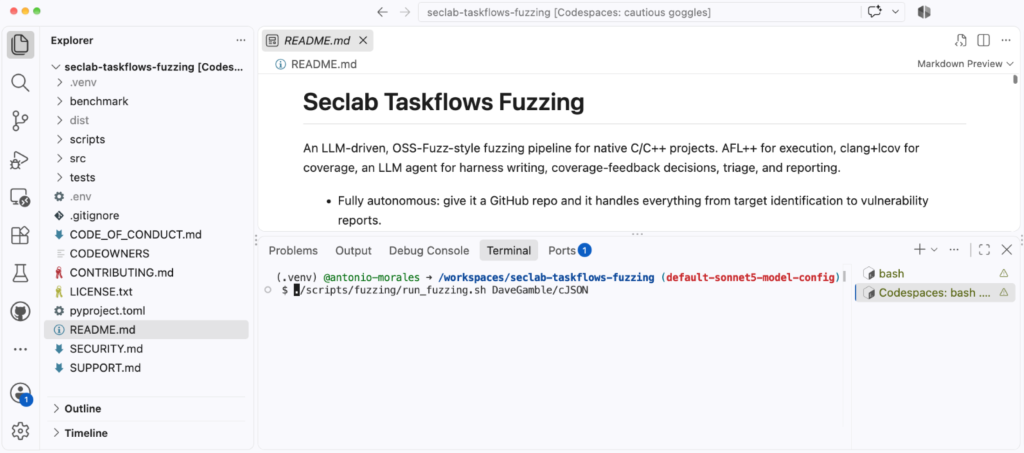
GitHub Security Lab Launches AI-Powered Fuzzing via Taskflow Agent

GitHub Security Lab has introduced a new AI-driven fuzzing capability built on its Taskflow Agent framework. The feature was announced through an official GitHub Blog post detailing how developers can use the new fuzzing taskflow. Fuzzing is a software testing technique that feeds random or unexpected inputs to programs to uncover security vulnerabilities. The Taskflow Agent framework serves as the underlying AI infrastructure powering this automated security testing workflow. The development reflects GitHub's broader push to integrate AI tools into software security and vulnerability discovery processes.

0
ProgrammingDEV Community ·

How DNS Resolution Really Works: Caches, Failures, and Debugging Layers

DNS behaviour underlies common engineering problems such as stale IP connections, NXDOMAIN errors after record changes, and certificate issuance failures. Resolution involves three distinct roles: the stub resolver on the client, the recursive resolver that performs iterative lookups and caches results, and the authoritative server that holds zone data. For a cold cache, resolving a hostname like api.acmeapp.io requires a chain of referrals from root servers down to the TLD and finally the authoritative nameserver, with each response cached at its own TTL. Key practical factors include glue records for in-zone nameservers, EDNS0 buffer limits that cause TCP fallback on large responses, and anycast routing that means two clients querying the same resolver IP may receive different cached answers. Understanding zone delegation — where an NS record marks the boundary of a separate zone — is essential for diagnosing split-authority and staging-environment DNS issues.

0
ProgrammingDEV Community ·

Why Software Development Is a Constant Cycle Between Chaos and Order

Most software projects begin in chaos, typically when a company's existing processes break down and a new system is urgently needed. Developers often respond by over-engineering solutions, building overly complex architectures that delay delivery and stifle early growth. Sustainable progress requires establishing a stable level of order — consistent architecture, reliable tests, and smooth delivery workflows. However, excessive order can become bureaucratic and block innovation, while too much chaos accumulates technical debt and causes team burnout. The same cycle applies to developer careers, where embracing the discomfort of learning new skills is necessary to build long-term professional maturity.

0
ProgrammingDEV Community ·

Developer Builds Agentic Fraud Investigator Powered by TigerGraph Graph Database

A developer has built an agentic fraud investigation tool using TigerGraph, a graph database platform, as part of the HHGOA2026 hackathon. The tool is designed to mimic how a human analyst investigates fraud by leveraging relational data connections. The project is built on the premise that fraud is inherently relational, making graph databases a natural fit for detecting it. The application is deployed via Streamlit and the source code has been made publicly available on GitHub.

0
ProgrammingDEV Community ·

Developer Builds Autonomous Fraud Detection Agent Using TigerGraph and LangChain in 24 Hours

A solo developer built a fully autonomous fraud investigation agent at the HHGOA 2026 hackathon within 24 hours. The system uses TigerGraph's graph database to detect relationship-based fraud patterns that traditional SQL or vector databases typically miss. Powered by a LangChain ReAct agent, it selects from eight tools to perform multi-hop graph traversals, detect five fraud patterns, and execute actions such as blocking or freezing accounts. Policy-grounded recommendations are ensured through a GraphRAG setup using a ChromaDB vector store built from real bank policy documents, preventing hallucinated outputs. The agent successfully investigated all 20 benchmark cases autonomously, generating Suspicious Activity Reports and Next Best Actions for each.

0
ProgrammingDEV Community ·

FraudGraph AI Uses TigerGraph and GraphRAG to Build Explainable Fraud Investigations

A team built FraudGraph AI, an agentic fraud investigation platform, as part of a recent hackathon project. The system moves beyond single transaction scoring by mapping relationships across customers, cards, merchants, and historical cases using TigerGraph as its graph investigation layer. GraphRAG supplies structured graph context to a downstream reasoning pipeline, enabling the system to trace connected entities and identify non-obvious fraud patterns. A dedicated Risk and Uncertainty Engine separately evaluates fraud probability, confidence, and uncertainty to avoid premature or irreversible decisions. The platform also includes a Next Best Action Engine that produces deterministic, policy-aligned recommendations such as monitoring, blocking, or requesting verification.

0
ProgrammingDEV Community ·

From First-Time Attendee to Organizer: One Developer's GDG Cloud Nagpur Journey

In 2023, a Nagpur-based developer attended Cloud Community Day Nagpur out of curiosity about the local tech ecosystem, not anticipating the lasting impact it would have. Nearly two years later, he joined GDG Cloud Nagpur as a volunteer, discovering firsthand how much unseen coordination goes into producing a community event. Taking on growing responsibilities over time, he eventually moved into organizing and hosting developer events across the city. He credits these experiences with shaping his understanding of how community connections — brief conversations, shared opportunities, collaborative problem-solving — can have outsized long-term effects on individuals. He is now working toward DevFest Nagpur 2026, reflecting on how Nagpur's developer ecosystem has visibly expanded in participation, collaboration, and technology exploration over recent years.

0
ProgrammingDEV Community ·

Google Lens Tops 25 Billion Monthly Searches, With 20% Tied to Shopping

Google Lens has surpassed 25 billion queries per month, up from nearly 20 billion reported in October 2024, according to Google's Think with Google search trends briefing. Approximately one in five of those searches carries commercial intent, signaling that visual search is increasingly relevant to product discovery and retail. The platform allows users to search using images rather than typed keywords, making it especially useful for visually distinctive or hard-to-name products. Google's broader Search strategy has been moving toward multimodal experiences that combine visual input with text and product data. The growth in Lens usage suggests businesses should ensure their product images, descriptions, and structured data are consistent and accurately represent what is being offered.

← NewerPage 952 of 3187Older →