3 reasons Wednesday's Fed meeting is pivotal for BTC
Your day-ahead look for July 29, 2026

Your day-ahead look for July 29, 2026

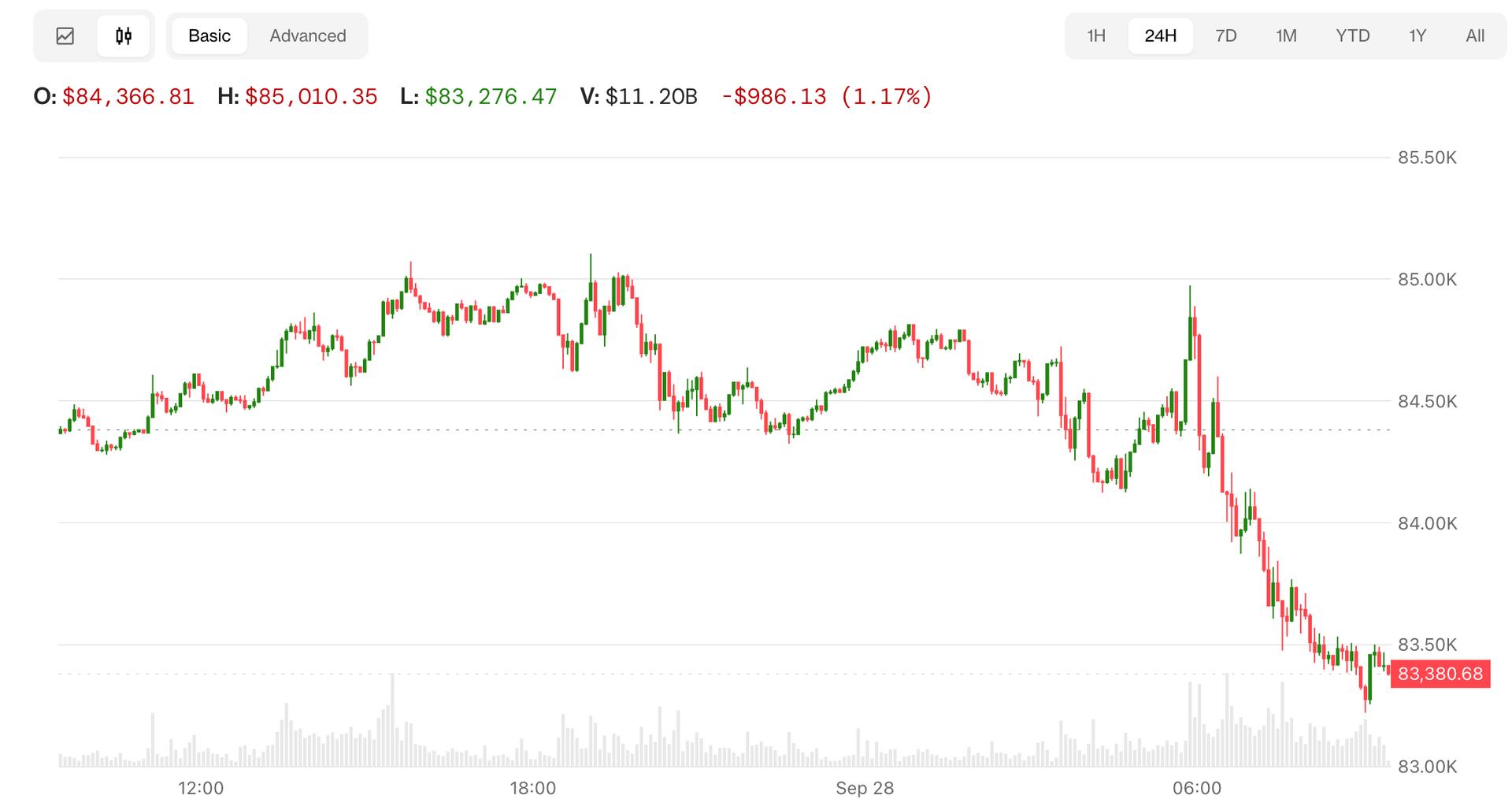
Bitcoin rose 0.75% to stabilize above $64,000 as markets awaited a key Federal Reserve interest rate decision. Investors are closely watching the Fed's move, which could significantly influence crypto market sentiment. Persistent inflation at 4.1% keeps the possibility of a rate hike firmly in play. Easing oil prices have offered some relief, though they have not been enough to take a rate increase off the table.

Binance has introduced options trading for gold and silver on its crypto exchange platform. The move follows strong user demand for the exchange's existing gold and silver perpetual futures contracts. Those commodity futures products have been attracting billions of dollars in daily trading volume. By expanding into options, Binance aims to offer traders additional tools to hedge or speculate on precious metal prices.

Ionic Digital, a bitcoin mining company, made a strong stock market debut on the Nasdaq, with its shares jumping 26% on the first day of trading. The company reached a market valuation of approximately $2.8 billion, based on its 44.9 million shares outstanding. The listing provides a significant exit opportunity for creditors of the collapsed crypto lender Celsius Network, who became stakeholders in Ionic Digital as part of Celsius's bankruptcy resolution. The public debut marks a notable milestone for those claimholders, allowing them to convert their holdings into publicly traded equity.

Russian authorities have filed terrorism-related charges against Telegram founder Pavel Durov, marking a significant escalation in the country's legal pursuit of the messaging platform. If convicted, Durov could face life imprisonment. The case has been building throughout the year, with Telegram already incurring fines exceeding 100 million rubles in Russia during this period. The charges reflect ongoing tensions between Russian regulators and the encrypted messaging service over content moderation and compliance issues.

Brian Smith, president of the Jito Foundation, has argued that perpetual futures contracts represent a critical gateway for migrating traditional finance onto blockchain networks. Smith describes perps as a 'trojan horse' strategy capable of drawing conventional financial players into the onchain ecosystem. His comments highlight the growing competition among blockchain platforms, with Solana seen as a key contender in capturing this market. The argument positions derivatives trading as a central battleground for blockchain adoption, rather than a niche crypto product.

Bitcoin surpassed the $64,000 mark during Asian trading hours as markets await the Federal Reserve's upcoming interest rate decision. The consensus expectation among market participants is that the Fed will hold rates steady at its Wednesday meeting. However, a notable minority of analysts are not ruling out a surprise rate hike. Major financial institutions, including Citadel Securities and UBS, have flagged the possibility of such an unexpected move. The uncertainty surrounding the Fed's decision appears to be influencing crypto market activity.

A company's AI-driven trade caused approximately $60 million in cryptocurrency liquidations after its mark price dropped 19% in a single pre-market trade in South Korea. The sharp price movement triggered a cascade of forced liquidations across the market. Despite the significant fallout, the company defended its oracle system, stating it functioned exactly as intended. In response to the financial damage caused to traders, the firm has committed to covering all losses resulting from the incident.

Citadel's macro team is forecasting a Federal Reserve interest rate hike at Wednesday's meeting, a view that puts it at odds with bitcoin analysts who expect rates to be held steady. The firm argues the decision is not purely data-driven but rather a strategic move. According to Citadel, the timing is tied to maximizing the impact of a surprise before markets can fully anticipate it. One side of the debate will ultimately be proven wrong when the Fed announces its decision.

Bitcoin rose approximately 1% on Wednesday, pushing toward the $64,000 mark. South Korean chipmaker SK Hynix saw its stock plunge 17% despite reporting a massive 557% surge in quarterly profit, as the results fell short of analyst estimates. The sharp selloff in the semiconductor sector, however, had no notable impact on cryptocurrency markets. Separately, the U.S. Federal Reserve is scheduled to announce its interest rate decision on the same day.

Coinbase Canada's newly appointed CEO, Eric Richmond, has outlined an ambitious plan to grow the platform into a comprehensive exchange offering derivatives, tokenized assets, and decentralized finance products. Richmond stressed that achieving this vision requires permanent regulatory frameworks rather than the temporary exemptions currently in place. The company believes clearer, stable rules are essential before it can confidently broaden its services in the Canadian market. Coinbase's push reflects a wider industry demand for regulatory certainty as crypto firms seek to scale operations in Canada.

Market analysts suggest that any dovish signals from the U.S. Federal Reserve could prove beneficial for Bitcoin. Traders remain divided on whether the Fed will proceed with further interest rate hikes. Analysts note that cryptocurrency may be less vulnerable to Fed policy shifts compared to AI-driven technology stocks. The divergence in sensitivity between crypto assets and tech equities reflects differing market dynamics in the current monetary environment.

Ondo Finance has abandoned its plans to build a tokenized asset blockchain, pivoting instead to a private, high-speed trading network. The new infrastructure is designed to support faster and more efficient trading of financial assets on-chain. The network already powers Ondo's recently launched perpetual futures trading platform. The company intends to expand the network's capabilities over time to support a broader range of on-chain financial asset trading.

DRW founder and CEO Don Wilson has argued that perpetual futures contracts are not inherently risky or speculative instruments, pushing back against prevailing regulatory views. The Wall Street veteran believes that traditional financial markets and regulators have mischaracterized these crypto derivatives. Wilson is calling on regulators to take a more open-minded approach and consider embracing perpetual futures. His comments reflect a broader debate in the financial industry over how crypto-native trading products should be treated under existing and future regulatory frameworks.

Major Wall Street institutions including BlackRock, Fidelity, Franklin Templeton, Goldman Sachs, and SoFi have publicly expressed support for the Clarity Act, a proposed crypto market structure bill. The endorsements come as the U.S. Senate faces a tightening timeline to advance the legislation. The bill aims to establish a clearer regulatory framework for the cryptocurrency market. The backing of such prominent financial firms signals growing institutional interest in shaping U.S. crypto policy.

EthSystems, a startup that recently spun out of the Ethereum Foundation, is focused on developing privacy infrastructure for banks and financial institutions. The company believes that robust privacy solutions are the critical missing piece preventing traditional financial players from adopting public blockchains. By addressing these privacy concerns, EthSystems aims to bridge the gap between legacy finance and decentralized public networks. The startup's formation marks a strategic effort to make public blockchain technology more viable for regulated industries.

Russia's central bank has released draft regulations requiring digital asset platforms to maintain up to $2.8 million in liquid capital reserves. The rules are part of a broader regulatory framework for cryptocurrencies that is expected to be implemented this fall. The proposed requirements aim to ensure financial stability and accountability among digital asset operators in the country. This move signals Russia's push to formalize and tighten oversight of its growing crypto sector ahead of the sweeping framework's launch.

Hyperliquid is expanding its footprint in decentralized finance by allowing external firms to build on top of its existing liquidity pool. Rather than requiring new projects to create separate liquidity, the platform lets them tap into its established order book depth. This composability approach mirrors the 'money LEGO' concept popular in DeFi, where protocols stack on top of one another. The move is designed to preserve liquidity concentration while broadening the platform's ecosystem reach.

Zcash has activated its Ironwood network upgrade, sealing a $1.7 billion shielded pool known as Orchard. The move comes after a counterfeiting vulnerability went undetected within the pool for four years. Under the new rules, all coins held inside the pool must exit through a controlled mechanism that limits withdrawals to verified deposit amounts. The upgrade effectively prevents any exploitation of the long-standing bug by restricting how funds can be moved out.

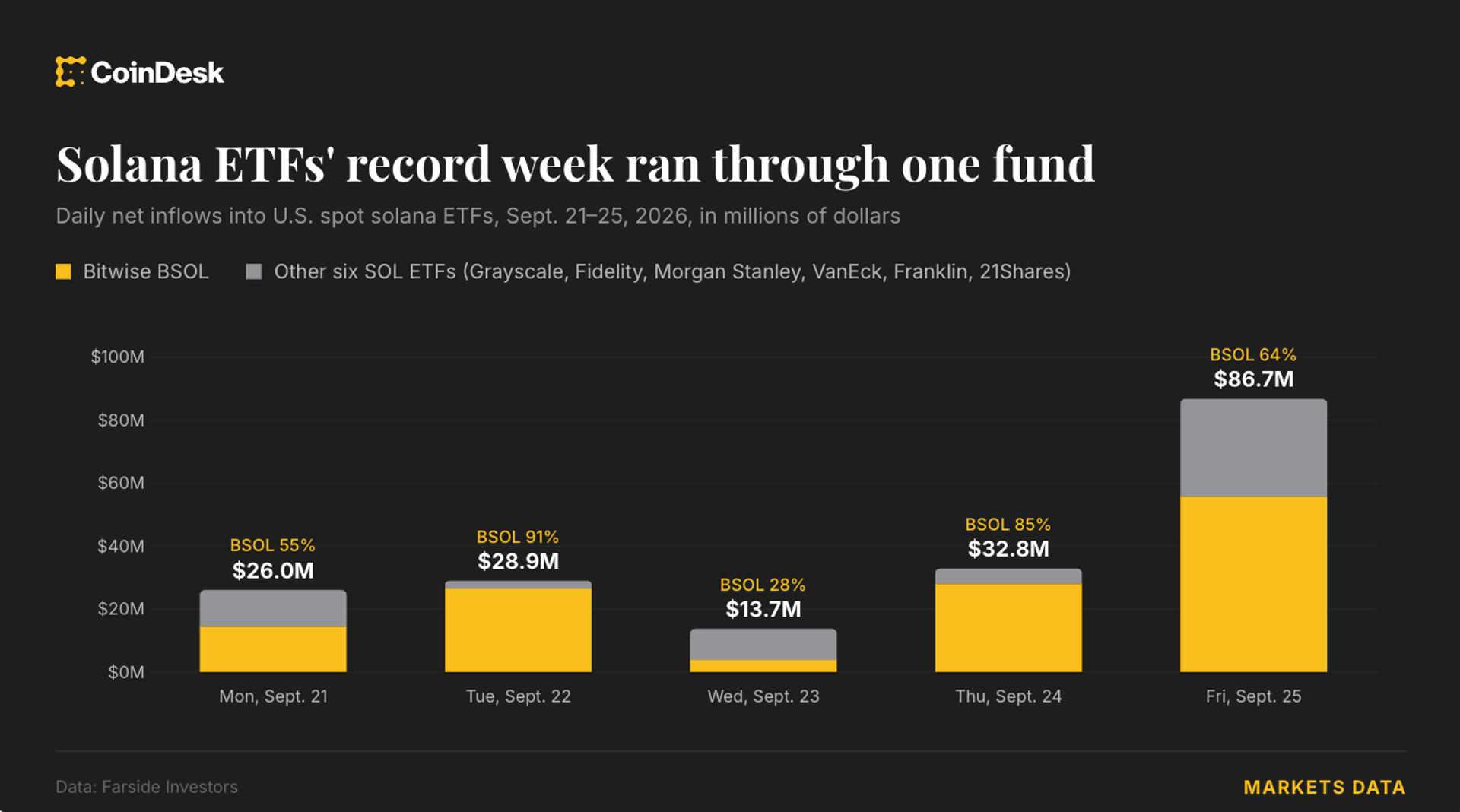
Morgan Stanley has introduced exchange-traded products for Ether and Solana, expanding its digital asset offerings. The move follows the strong performance of its Bitcoin fund, which surpassed $381 million in assets under management. The new ETPs are designed to be low-cost, making them accessible to a broader range of investors. The launch signals growing institutional confidence in cryptocurrencies beyond Bitcoin.