SShortSingh.
Back to feed

Webb Telescope Reveals Hidden Complexity of Centaurus A Galaxy at 4-Year Mark

0
·1 views

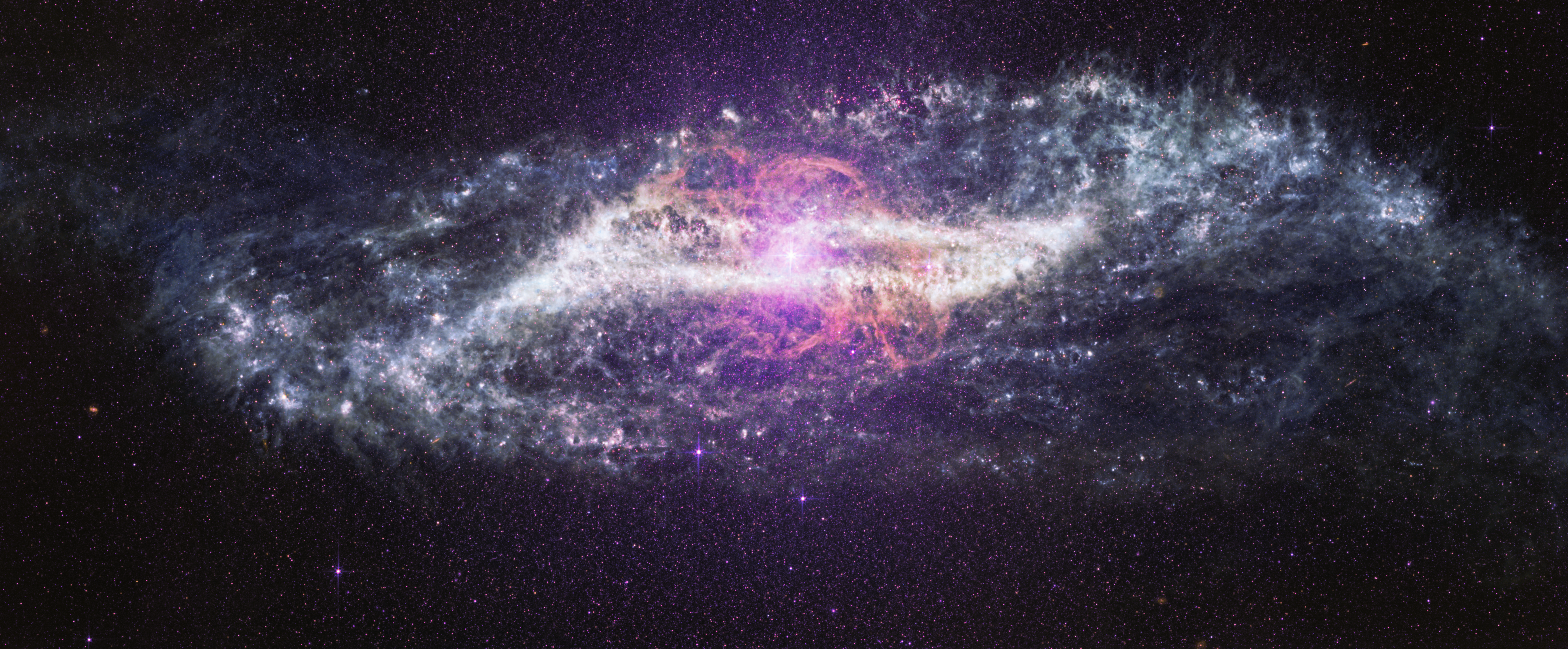
NASA's James Webb Space Telescope has captured new, detailed images of Centaurus A, a well-known galaxy, as part of celebrations marking its fourth science anniversary. Webb's advanced near- and mid-infrared sensitivity allowed it to penetrate thick dust lanes that previously blocked views of the galaxy's core in visible light. The images reveal a far richer and more complex structure than had been observed before. Centaurus A's unusual shape is believed to have been formed through a cosmic collision with another galaxy. The findings highlight Webb's growing contribution to deepening our understanding of galactic formation and evolution.

Read the full story at NASA

This is an AI-generated summary. ShortSingh links to the original source for the complete article.

Discussion (0)

Log in to join the discussion and vote.

Log in

Related stories

0
SpaceNASA ·

NASA Releases Draft RFP for Next Phase of Commercial Space Station Development

NASA released a draft Request for Proposals on Monday, inviting feedback from American companies on the second phase of its commercial space stations program. The initiative is designed to ensure a smooth transition of low Earth orbit operations away from the International Space Station. The agency stated that the draft reflects input it has already gathered from industry stakeholders throughout the planning process. NASA is seeking private sector engagement to shape the future of human spaceflight infrastructure in low Earth orbit.

0
SpaceNASA ·

NASA's CAPSTONE Spacecraft Wraps Up Extended Mission Testing Lunar Navigation Tech

NASA's CAPSTONE mission has successfully completed its extended phase of testing key technologies intended to support future lunar operations. The mission focused on validating autonomous navigation and communication systems that can function without a direct link to Earth. These capabilities are considered essential as NASA works toward establishing a sustained human presence on the Moon. CAPSTONE operated in lunar orbit, serving as a testbed for systems that future crewed and uncrewed missions will depend on. The data and results gathered are expected to inform upcoming lunar exploration programs under NASA's broader Artemis initiative.

0
SpaceNASA ·

Satellite Data Links Harmful Algal Blooms to Warm, Low Waters at Colorado Reservoir

Researchers have used satellite data to study harmful algal blooms at Blue Mesa Reservoir, one of Colorado's largest water bodies. The study identified a clear connection between the blooms and conditions of warm water temperatures combined with low water levels. The findings highlight how environmental factors can drive the growth of potentially dangerous algae. The research was supported by NASA's satellite observation capabilities, enabling scientists to monitor the reservoir remotely.

0
SpaceNASA ·

Hubble Telescope Captures Dazzling Multicolored Star Cluster

NASA's Hubble Space Telescope has captured a striking new image featuring stars in red, white, and blue hues. The photograph resembles the visual effect of a sparkler being waved against a dark background. The image was released by NASA to coincide with the Fourth of July holiday. The colorful stellar display highlights Hubble's continued ability to produce vivid, detailed observations of deep space objects.