SShortSingh.
Back to feed

NASA's IXPE May Have Detected 90-Year-Old Physics Phenomenon Near Magnetar

0
·1 views

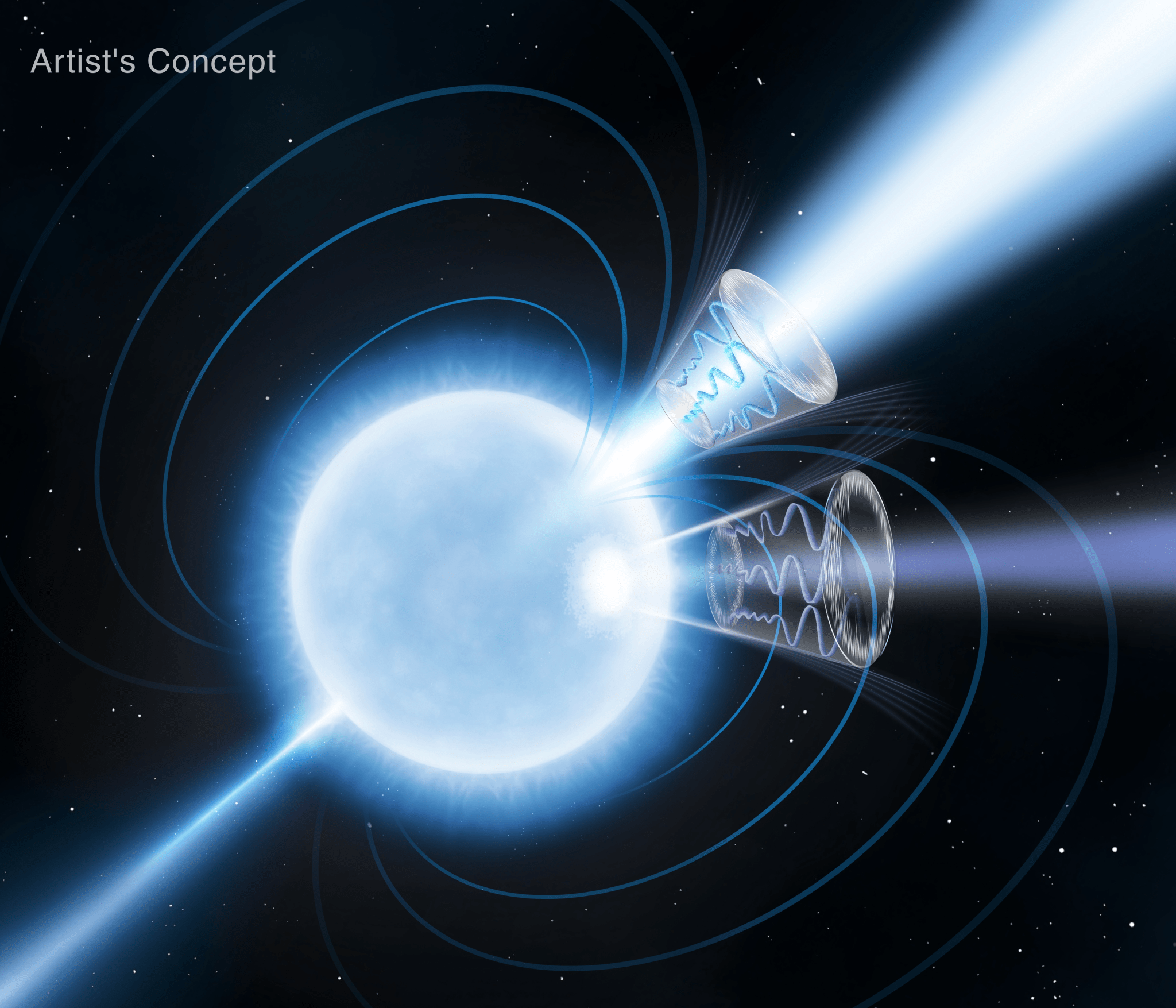
Scientists using NASA's Imaging X-ray Polarimetry Explorer (IXPE) spent over 140 hours observing magnetar 1E 1547-5408 between March and April 2025. The magnetar, a type of highly magnetized neutron star, was the focus of one of the mission's most intensive observation campaigns to date. Researchers believe the data may have captured empty space behaving in a theoretically predicted manner that has never been directly observed before. This phenomenon was first proposed by physicists nearly 90 years ago but has remained unconfirmed through direct evidence until now.

Read the full story at NASA

This is an AI-generated summary. ShortSingh links to the original source for the complete article.

Discussion (0)

Log in to join the discussion and vote.

Log in

Related stories

0
SpaceNASA ·

NASA Engineers Test Artemis Moon Hardware Against Harsh Lunar Dust at Johnson Center

NASA's Lunar Development and Test Facility at Johnson Space Center in Houston is rigorously testing hardware intended for use in the Artemis program before astronauts return to the Moon. A central focus of this work is evaluating how equipment holds up against lunar dust, which poses a significant threat to missions. Unlike terrestrial sand, lunar dust is extremely sharp, abrasive, and has a strong tendency to cling to surfaces. Engineers are working to ensure all Artemis hardware can withstand these demanding lunar conditions before it is used in actual missions.

0
SpaceNASA ·

Rubin Observatory Captures Sweeping View of the COSMOS Field

NASA's Astronomy Picture of the Day (APOD) for August 7, 2026, features an image known as Rubin's COSMOS Field. The image was captured by the Rubin Observatory, which is designed to conduct wide-field surveys of the night sky. The COSMOS field is a well-studied region of the universe used by astronomers to observe large-scale cosmic structures. As with all APOD features, the image is accompanied by an explanation written by a professional astronomer. The selection highlights the Rubin Observatory's capability to image vast stretches of the cosmos in detail.

0
SpaceNASA ·

NASA PREFIRE Mission Maps Two Years of Polar Temperature Changes

NASA's PREFIRE mission has released new animations documenting temperature fluctuations at both the Arctic and Antarctic regions. The visualizations capture two full years of seasonal heat variations at Earth's poles. The data was gathered as part of the PREFIRE mission, which focuses on studying thermal energy in polar areas. These findings help scientists better understand how heat moves through some of the planet's most climate-sensitive regions.

0
SpaceNASA ·

NASA and Smithsonian Unite to Teach Teens Air Quality Research Using TEMPO Data

NASA's Cosmic Storytelling with NASA Data project, led by Harvard University, teamed up with the Smithsonian Institution's BEST AQI initiative from July 27–29, 2026. The collaboration aimed to bring real NASA atmospheric data into the hands of educators and teenage learners. The partnership centered on TEMPO satellite data, which monitors air quality across North America. Together, the programs supported hands-on investigations into local air quality conditions, empowering young people with authentic scientific tools and methods.

NASA's IXPE May Have Detected 90-Year-Old Physics Phenomenon Near Magnetar · ShortSingh