SShortSingh.
Back to feed

NASA MAVEN Reveals How Solar Storms Trigger Auroras on Mars
0
·1 views

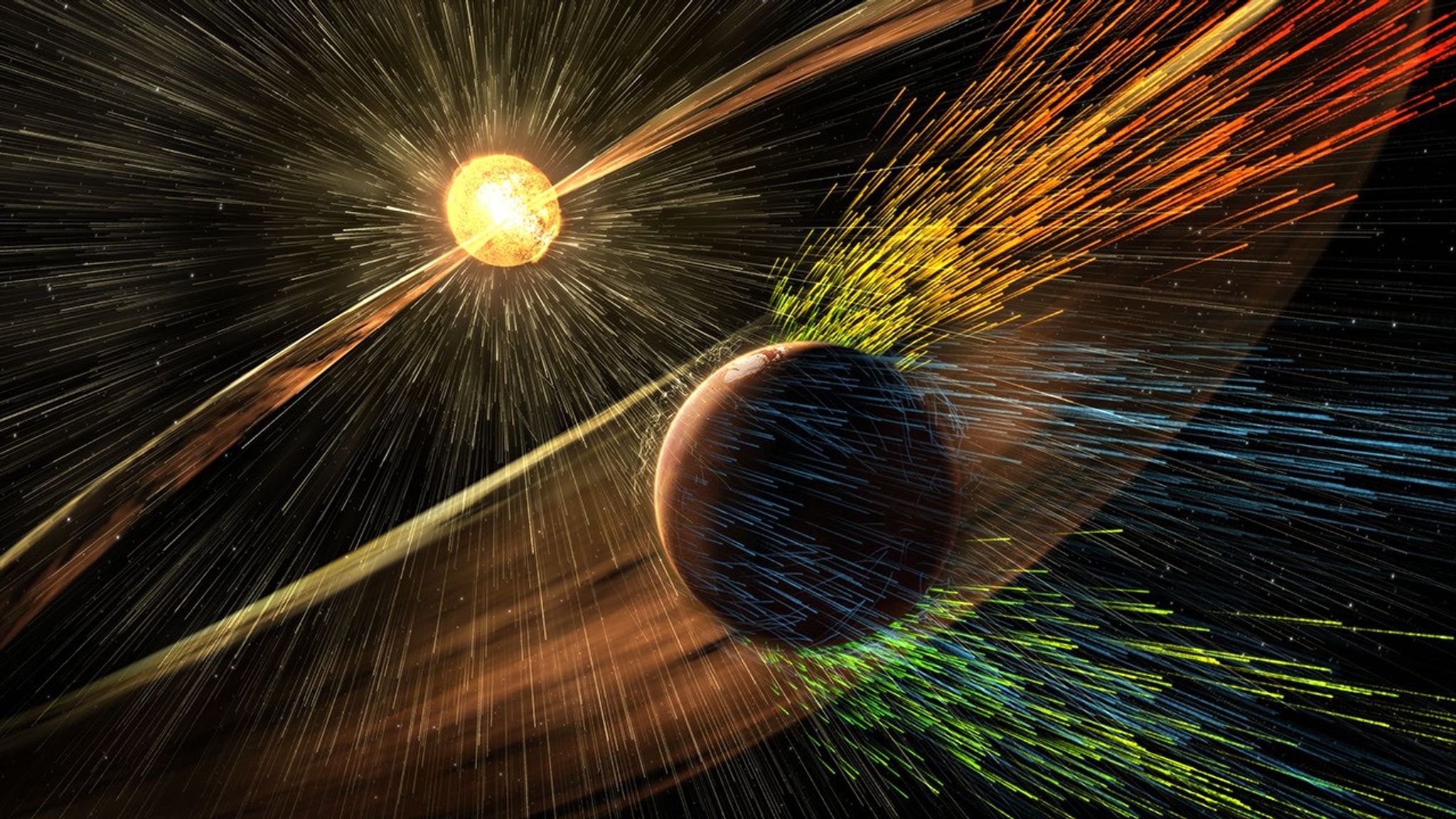
NASA's MAVEN mission has provided new insights into how certain auroras form on Mars. Scientists found that these Martian auroras are generated in a way similar to known auroral processes, driven by charged particles from solar storms. The research also connects aurora formation to the broader process of atmospheric loss on Mars, whereby solar activity strips charged particles from the planet's atmosphere. MAVEN, which stands for Mars Atmosphere and Volatile Evolution, has been studying these atmospheric and space weather interactions around Mars. The findings help deepen understanding of how solar storms shape the Martian environment over time.

Read the full story at NASA

This is an AI-generated summary. ShortSingh links to the original source for the complete article.
Discussion (0)

Log in to join the discussion and vote.

Log in

Related stories

0
SpaceNASA ·

NASA to Live Stream Total Solar Eclipse Crossing Europe and Arctic in August

A total solar eclipse will occur on Wednesday, August 12, crossing parts of Greenland, Iceland, northern Russia, the Atlantic Ocean, Spain, and a small section of Portugal. NASA plans to broadcast the event live, offering viewers coverage from multiple points along the eclipse's path. The stream will also feature interviews with scientific experts to provide context and insight into the phenomenon. NASA will make the coverage available across several online platforms for audiences worldwide.

0
SpaceNASA ·

Curiosity Rover Photographs 20-Foot Sand-Capped Martian Butte Named Miraflores

NASA's Curiosity Mars rover captured an image of a sand-topped rock formation on June 11, 2026, marking the 4,923rd Martian day of the mission. The feature, informally named 'Miraflores,' stands approximately 20 feet (6 meters) tall. The image was taken using the rover's Mast Camera, known as Mastcam. The butte formed as the softer rock surrounding it gradually eroded away, leaving the more resistant structure standing in a broad valley.

0
SpaceNASA ·

Curiosity Rover Finds Largest Concentration of Polygons on Mars Surface

NASA's Curiosity Mars rover captured a 360-degree panorama of a vast terrain covered in polygon-shaped surface features on June 19–20, 2026. The images were taken on the 4,930th and 4,931st Martian days, known as sols, of the mission. While Curiosity has previously encountered polygons on Mars, scientists noted this is the largest concentration of such formations the rover has ever observed in a single location. These geometric surface patterns are of scientific interest as they can indicate past freeze-thaw cycles or drying of ancient wet material.

0
SpaceNASA ·

NASA Curiosity Rover Spots Honeycomb-Like Rock Patterns on Mars

NASA's Curiosity rover has photographed a field of honeycomb-shaped geometric patterns while climbing a Martian valley known as 'Valle Grande.' The structures, called polygonal fractures, measure roughly 1.5 to 3 inches across. Mission scientists recognized the formations, having encountered smaller patches of similar shapes on previous occasions. The discovery adds to Curiosity's ongoing geological survey of the Martian surface.

NASA MAVEN Reveals How Solar Storms Trigger Auroras on Mars · ShortSingh