SShortSingh.
Back to feed

XRISM Observatory Captures Pulsar Feeding on Giant Star's Stellar Wind

0
·50 views
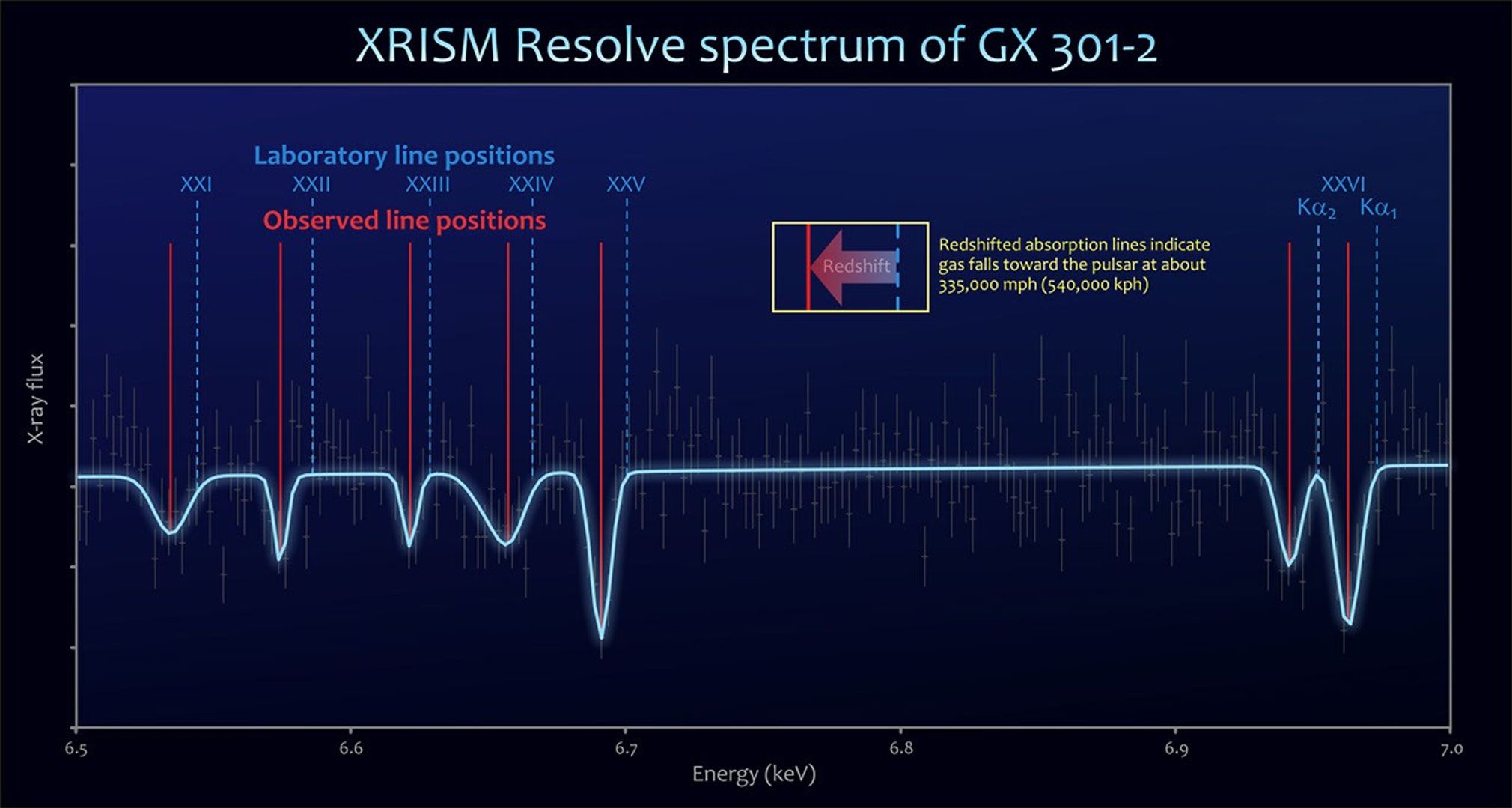
Astronomers have used data from the XRISM X-ray observatory, a Japan-led mission with NASA participation, to directly observe a stellar wind being captured by a compact pulsar companion. The stellar wind, an outflow from a nearby giant star, serves as the energy source powering intense X-ray flares from the pulsar. This marks a significant observational milestone in understanding how compact objects interact with their stellar companions. The findings contribute to NASA's broader effort to study extreme cosmic environments and the physics governing them.

Read the full story at NASA

This is an AI-generated summary. ShortSingh links to the original source for the complete article.


Discussion (0)

Log in to join the discussion and vote.

Log in

Related stories

0
SpaceNASA ·

NASA Astronauts Jessica Watkins and Luke Delaney to Answer Florida Students' STEM Questions

NASA astronauts Jessica Watkins and Luke Delaney will respond to prerecorded STEM questions from students in Florida while aboard the International Space Station. The Earth-to-space call is scheduled for 10:40 a.m. EST on Tuesday, November 10. It will be broadcast live on NASA's Learn With NASA YouTube channel. The event is hosted by Freedom Crossing Academy, and the article text is truncated, so further details are unavailable.

0
SpaceNASA ·

Hubble Images Star Cluster M30 and Its Galactic History

NASA has released a Hubble Space Telescope image showing Messier 30 (M30), also known as NGC 7099, a sparkling collection of stars. The cluster is a globular cluster, a dense group of ancient stars bound together by gravity. The article describes the image as a window into the history of the Milky Way through the stars of this cluster. Further details of the observations were limited in the source text provided.

0
SpaceNASA ·

NASA's Astronomy Picture of the Day Shows Saturn's Moon Enceladus in Silhouette

NASA's Astronomy Picture of the Day for November 5, 2026 features an image titled "Enceladus in Silhouette." The photograph shows Saturn's icy moon Enceladus appearing as a dark shape against a bright backdrop. The entry is part of NASA's daily series, which pairs each image with a short explanation written by a professional astronomer. The source text provided is truncated, so further specifics about the image's origin and scientific details are not included here.