SShortSingh.
Back to feed

Hubble Captures Edge-On View of Spiral Galaxy NGC 1827

0
·1 views
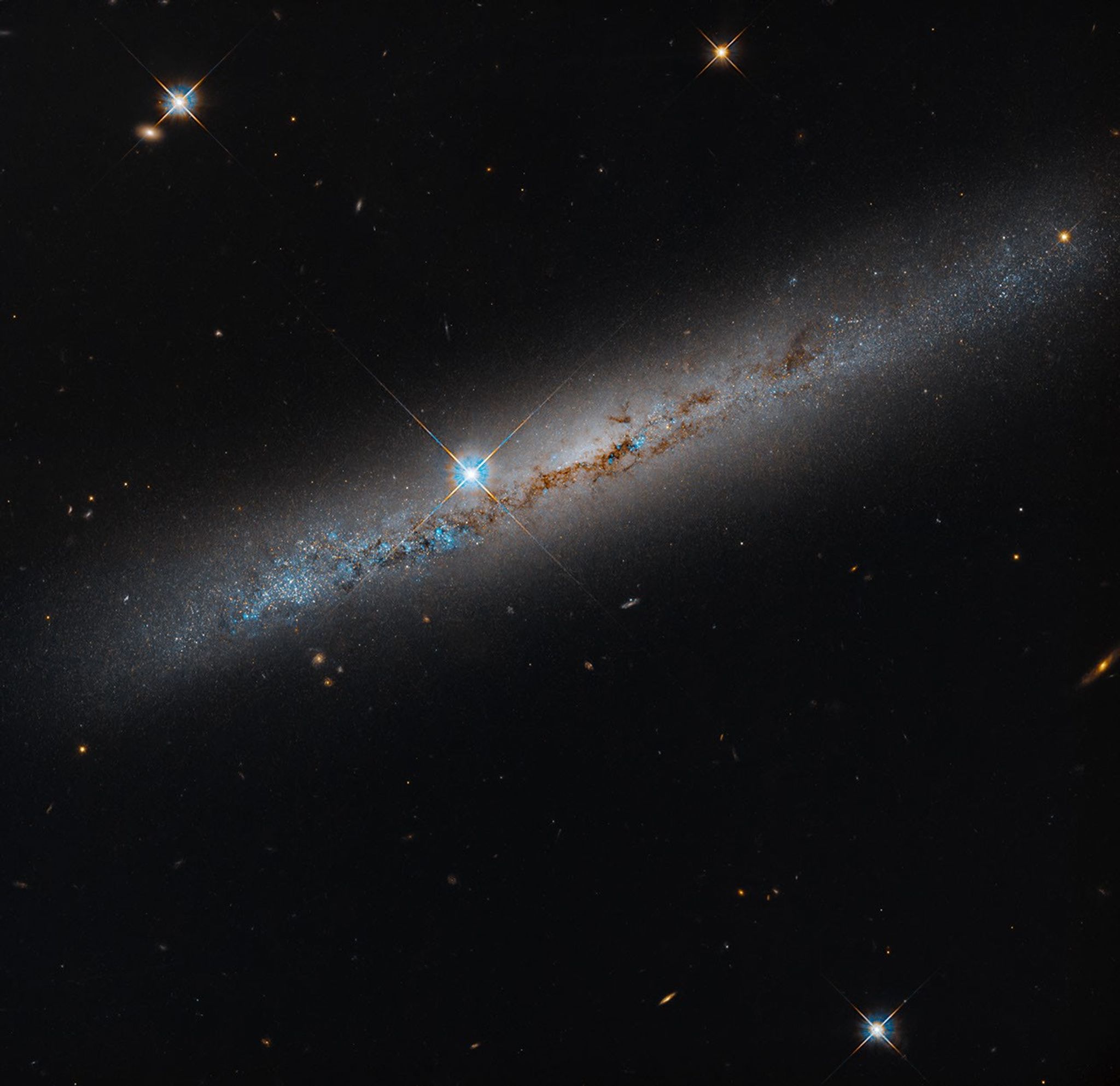
NASA's Hubble Space Telescope has produced an image of NGC 1827, an edge-on intermediate spiral galaxy. The galaxy lies roughly 37 million light-years from Earth. It is located in the constellation Columba, also known as the Dove. The image shows the galaxy viewed from the side, with its disk seen edge-on.

Read the full story at NASA

This is an AI-generated summary. ShortSingh links to the original source for the complete article.

Discussion (0)

Log in to join the discussion and vote.

Log in

Related stories

0
SpaceNASA ·

NASA Astronomy Picture of the Day Features Chase of the International Space Station

NASA's Astronomy Picture of the Day for October 16, 2026, highlights a photograph of the International Space Station being pursued across the sky. The featured image is part of the agency's long-running daily series that pairs a picture of the cosmos with an explanation written by a professional astronomer. The source text available is largely navigation and site boilerplate, so the specific details of the photographer, capture location, and technical notes are not included. The entry is published on NASA's APOD website, which has run since 1995 and is archived for public browsing.

0
SpaceNASA ·

NASA Night Images Track Power Outages and Recovery After Isaias on Florida Panhandle

NASA has released high-definition nighttime light images showing the areas along the Florida Panhandle where Hurricane Isaias knocked out electricity. The imagery also illustrates how quickly power was restored in those areas afterward. The photos highlight the storm's impact on the Gulf Coast through changes in nighttime illumination. The source text does not provide further details on the scale of outages or exact timelines.

0
SpaceNASA ·

NASA Joins JAXA's MMX Mission to Study Mars' Moons Phobos and Deimos

NASA is taking a significant part in JAXA's Martian Moons eXploration (MMX) mission, which is aimed at deepening scientists' knowledge of Mars' two moons. The mission will examine the characteristics of Phobos and Deimos and work to establish how they formed. It also plans to bring a sample back from the moons to Earth for analysis. The effort builds on NASA's long record of Mars exploration. The article as provided is truncated, so further specifics about timing and instruments are not included here.

0
SpaceNASA ·

NASA Tracks Developing El Niño Pattern Forming This Fall

NASA is closely monitoring a climate event that is developing this fall and is described as rarer than a solar eclipse. El Niño is a natural pattern that recurs about every two to seven years and is characterized by unusually warm water in parts of the equatorial Pacific. Scientists at the agency are using satellite observations to follow how the phenomenon is taking shape. The article notes that such events can have wide-ranging effects on global weather and climate. The full report provides further details on the observations and their implications.