SShortSingh.
Back to feed

Gemini Experiments Tested How Well Astronauts Could See Earth From Orbit

0
·1 views
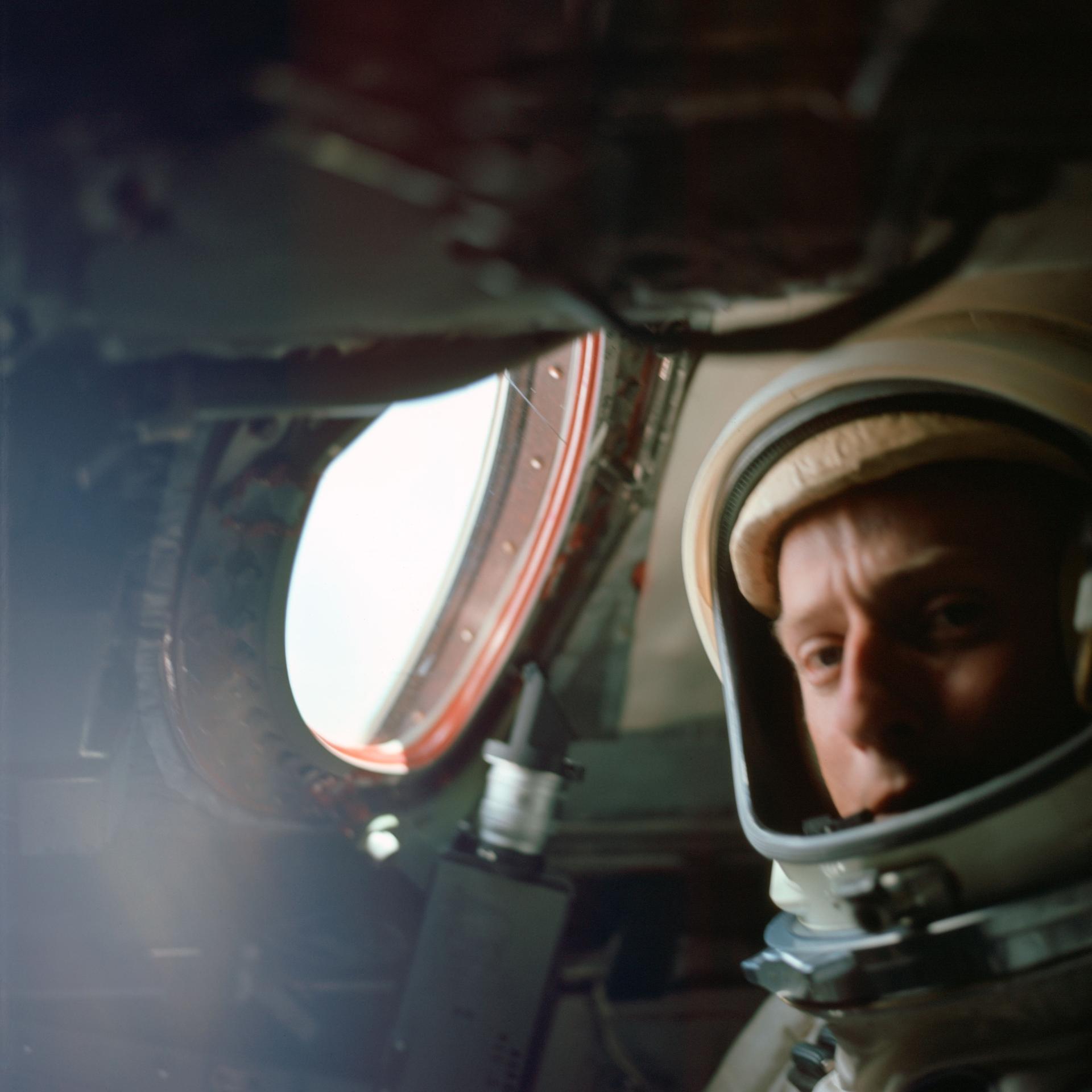
NASA astronaut L. Gordon Cooper Jr. captured 29 color photographs of Earth using a 70mm camera during the Mercury-Atlas 9 mission in May 1963. Flying aboard his Faith 7 spacecraft, Cooper reported remarkably sharp visual observations from orbit, including vehicles on dirt roads and smoke-emitting trains. His accounts raised scientific interest in understanding the limits of human visual acuity in space. These observations laid the groundwork for formal visual acuity experiments that would follow during the later Gemini program.

Read the full story at NASA

This is an AI-generated summary. ShortSingh links to the original source for the complete article.

Discussion (0)

Log in to join the discussion and vote.

Log in

Related stories

0
SpaceNASA ·

NASA Picks Four University Teams to Drive Next-Gen Aviation Research

NASA has selected four university teams under its University Leadership Initiative to support the agency's aeronautics research goals. The program gives students the opportunity to contribute to real-world flight research projects. The selected teams will work on a range of topics, including high-supersonic propulsion systems and low-noise flight routes for small urban aircraft. The initiative is designed to advance NASA's broader mission to transform the future of aviation.

0
SpaceNASA ·

NASA Earth Data Powers ML River Forecasts Amid Washington Snow Drought

NASA Earth science data is being used to support machine-learning models that forecast river conditions in Washington state. These forecasts help authorities make informed decisions related to water supply, electricity generation, and public safety. The initiative comes as the effects of a prolonged snow drought continue to affect the region. Reduced snowpack can significantly impact river flows, making accurate forecasting critical for resource management. The collaboration highlights how satellite-derived data can be applied to address real-world environmental challenges.

0
SpaceNASA ·

NASA APOD Highlights Elephant's Trunk Nebula in Constellation Cepheus

NASA's Astronomy Picture of the Day (APOD) for August 20, 2026 features an image of the Elephant's Trunk, a dense region of gas and dust located in the constellation Cepheus. The APOD program, run by NASA, publishes a different astronomical image each day accompanied by an explanation from a professional astronomer. The Elephant's Trunk is a elongated globule within a large emission nebula known as IC 1396. The feature is notable for its role in star formation, as its dense clouds are believed to be sites where new stars are born. The image continues APOD's long-running mission to make astronomy accessible and engaging to the general public.

0
SpaceNASA ·

NASA Launches Orbital Clarity Challenge to Study Space Weather and Atmospheric Drag

NASA has announced the Orbital Clarity Challenge, the sixth competition in its TechLeap Prize series. The initiative is a joint effort involving NASA's Heliophysics Division, the Flight Opportunities program, and the Center of Excellence for Collaborative Innovation. The challenge focuses on understanding space weather and its effects on Earth's outer atmosphere, particularly how intense solar activity causes atmospheric heating and expansion. These atmospheric density changes create orbital drag, which affects satellites and spacecraft in low Earth orbit. The competition aims to spur innovative technological solutions to better measure and predict these space weather-driven phenomena.