SShortSingh.
Back to feed

NASA APOD Highlights Elephant's Trunk Nebula in Constellation Cepheus

0
·1 views
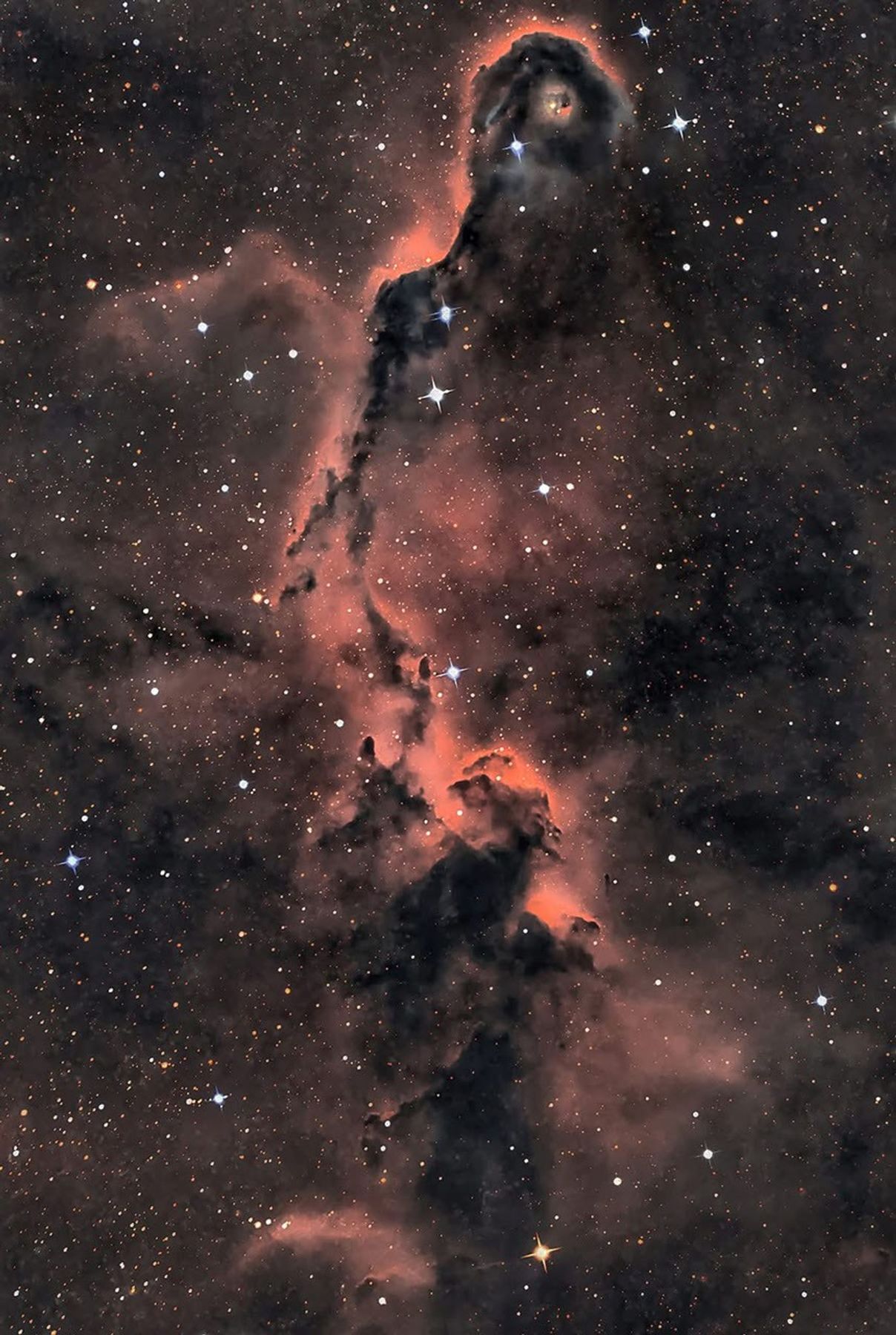
NASA's Astronomy Picture of the Day (APOD) for August 20, 2026 features an image of the Elephant's Trunk, a dense region of gas and dust located in the constellation Cepheus. The APOD program, run by NASA, publishes a different astronomical image each day accompanied by an explanation from a professional astronomer. The Elephant's Trunk is a elongated globule within a large emission nebula known as IC 1396. The feature is notable for its role in star formation, as its dense clouds are believed to be sites where new stars are born. The image continues APOD's long-running mission to make astronomy accessible and engaging to the general public.

Read the full story at NASA

This is an AI-generated summary. ShortSingh links to the original source for the complete article.

Discussion (0)

Log in to join the discussion and vote.

Log in

Related stories

0
SpaceNASA ·

NASA Launches Orbital Clarity Challenge to Study Space Weather and Atmospheric Drag

NASA has announced the Orbital Clarity Challenge, the sixth competition in its TechLeap Prize series. The initiative is a joint effort involving NASA's Heliophysics Division, the Flight Opportunities program, and the Center of Excellence for Collaborative Innovation. The challenge focuses on understanding space weather and its effects on Earth's outer atmosphere, particularly how intense solar activity causes atmospheric heating and expansion. These atmospheric density changes create orbital drag, which affects satellites and spacecraft in low Earth orbit. The competition aims to spur innovative technological solutions to better measure and predict these space weather-driven phenomena.

0
SpaceNASA ·

NASA Cancels Swift Satellite Boost After Katalyst Spacecraft Control Issue

NASA and Katalyst Space announced Wednesday that the LINK spacecraft will no longer attempt to capture and boost the Neil Gehrels Swift Observatory to a higher orbit as originally planned. The decision follows an ongoing attitude control problem affecting the commercial LINK spacecraft. The Swift Observatory boost mission had been intended to extend the satellite's scientific operational life. Despite the cancellation of the boost, LINK will still attempt rendezvous and proximity operations with the Swift Observatory. The mission revision marks a significant change in scope for this commercial space servicing effort.

0
SpaceNASA ·

NASA Study Finds Earth Microbes Could Survive in Moon's South Pole Shadows

NASA scientists have found that some microbes carried by human explorers could survive in the shaded regions of the Moon's South Pole. The research was published on August 19, 2026, in the journal Science Advances. The findings suggest that microbial life from Earth may persist in the cold, sheltered pockets of the lunar surface. Scientists say the results underscore the importance of understanding how microbes behave in space environments. The study has implications for planetary protection protocols as NASA plans future crewed lunar missions.

0
SpaceNASA ·

Hubble Data Reveals Milky Way Merged With Dwarf Galaxy 12 Billion Years Ago

NASA released an artist's concept on August 17, 2026, illustrating an ancient collision between the Milky Way and a dwarf galaxy called LKH. The merger is estimated to have occurred approximately 12 billion years ago, when the Milky Way was still in its early stages of formation. Researchers analyzed data collected by NASA's Hubble Space Telescope to reach their conclusions. The findings, which provide definitive evidence of the merger event, were published in the scientific journal Nature Astronomy.

NASA APOD Highlights Elephant's Trunk Nebula in Constellation Cepheus · ShortSingh