SShortSingh.
Back to feed

ChatGPT Now Limits Style Mimicry Requests to Protect Author Rights

0
·14 views
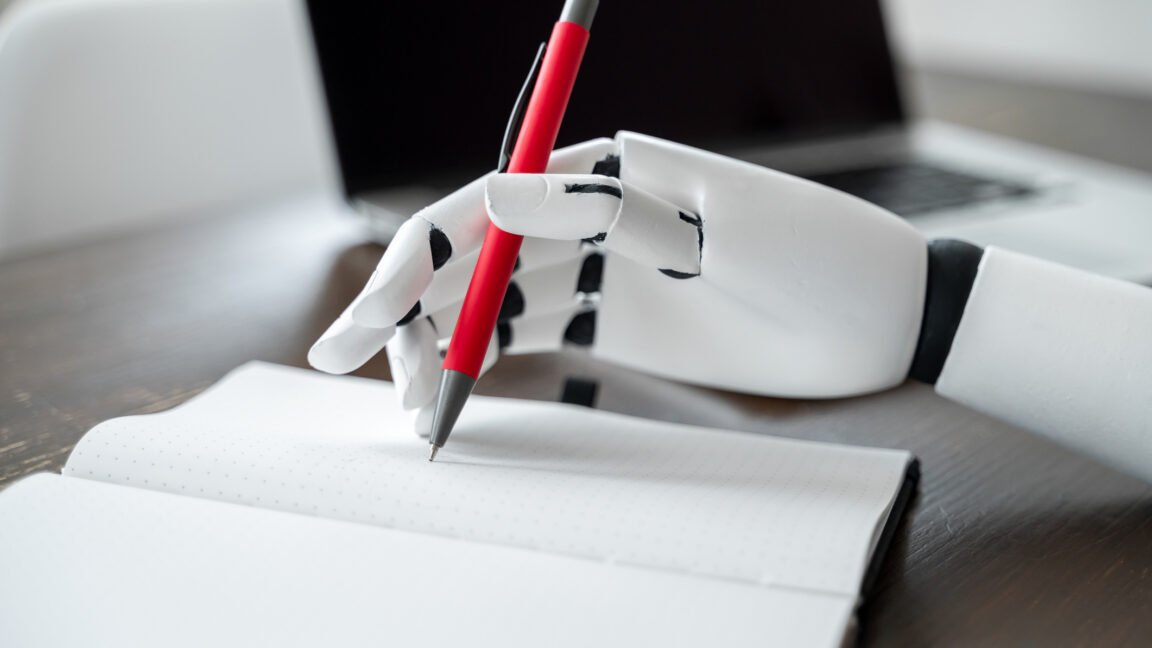
OpenAI's ChatGPT has begun blocking direct user requests that ask the AI to copy a specific author's writing style. The change targets attempts to replicate the broad qualities and distinctive traits associated with named writers. This behavioral shift represents a notable policy update in how the platform handles creative content generation. The move carries potential legal implications, as mimicking an author's style has been a contentious area in ongoing debates around AI and copyright. OpenAI has not yet fully detailed the scope or technical basis of the new restrictions.

Read the full story at Ars Technica

This is an AI-generated summary. ShortSingh links to the original source for the complete article.

Discussion (0)

Log in to join the discussion and vote.

Log in

Related stories

0
TechnologyThe Verge ·

AI shopping agents promise convenience, but some retailers are wary

Tech companies have pitched AI agents as personal assistants that could give everyone the kind of help once reserved for the wealthy. In practice, using them to buy things can be frustrating, as they often need detailed instructions, run into technical problems, and return results that differ from what was requested. The agents may complete a task, but not the specific one the user intended or in the way the user would have chosen. The article also notes that some retailers are hesitant about letting these agents shop on their platforms. The full story is available at The Verge.

0
TechnologyThe Verge ·

Claude Failed to Produce Scorpion Antivenom in Citrini Research Experiment

Investment research firm Citrini Research partnered with Anthropic to test whether an unreleased version of Claude could help create scorpion antivenom. According to experts cited by The Verge, the AI generated some promising starting points but nothing approaching a usable drug. Citrini acknowledged that none of its team had expertise in AI as applied to biology. The firm nonetheless attempted to develop a drug from scratch and published a blog post describing the outcome.

0
TechnologyThe Verge ·

Oppo's Find X10 Pro Max becomes first phone with three 200-megapixel cameras

Oppo has released the Find X10 Pro Max, which it describes as the first smartphone to include a triple 200-megapixel camera setup. The device adds a 200-megapixel ultrawide lens to the two 200-megapixel cameras that Vivo's X300 Ultra introduced earlier this year. Earlier phones, starting with Motorola's Moto X30 Pro in 2022, had already offered single 200-megapixel sensors. The reviewer notes the design remains camera-focused but is less extreme than many competing Ultra models. The phone is described as a notable engineering step, though its marketing claims are weighed against its actual performance.

0
TechnologyNYT Technology ·

Global Scramble to Patch PHP Security Flaw Takes Some Websites Offline

Governments and businesses in Kenya, the Netherlands, and other countries are racing to stop hackers from exploiting a security flaw in PHP, a widely used programming language. The vulnerability affects a language that powers many websites worldwide. Urgent efforts to fix the problem have led some sites to be taken offline as a precaution. The article's report is brief, so details on the flaw's technical nature and the full scale of the impact are limited.

ChatGPT Now Limits Style Mimicry Requests to Protect Author Rights · ShortSingh