SShortSingh.
Back to feed

3D-Printed Eggshell Arrays Filled With Water Boost Spacecraft Impact Resistance

0
·1 views
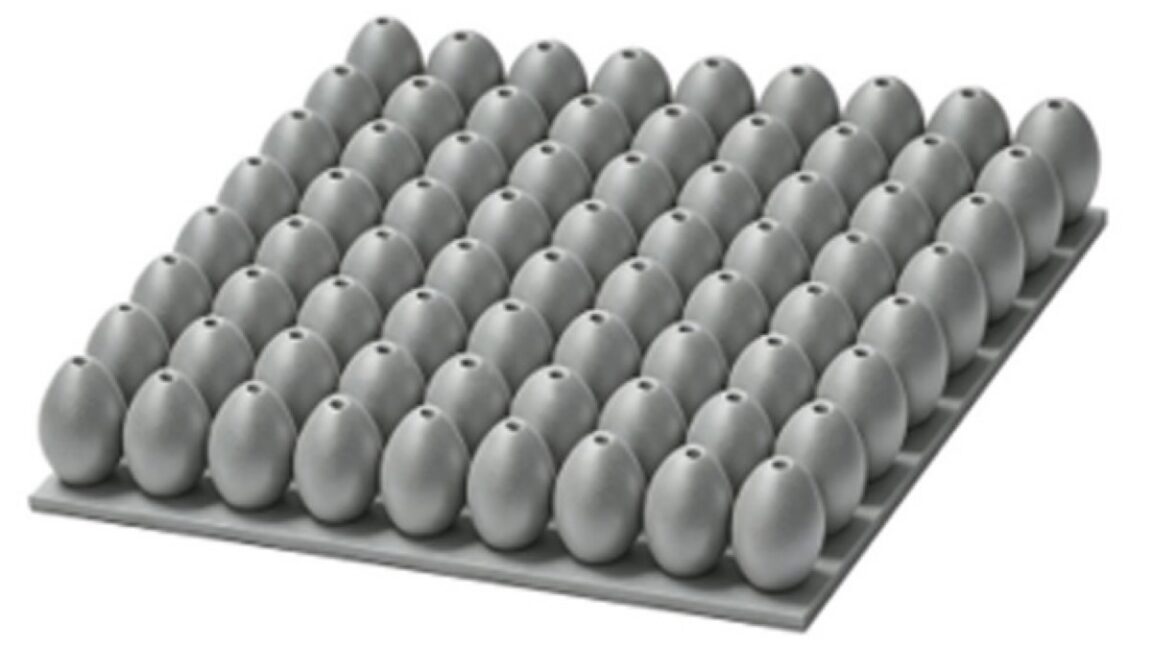
Researchers have developed a novel shielding material inspired by eggshell structures to better protect next-generation spacecraft. The design involves 3D-printed aluminum arrays modeled after eggshells, which are then filled with water. Testing showed this approach outperformed conventional shielding methods in resisting high-velocity impacts. The innovation could play a significant role in safeguarding future spacecraft from debris and micrometeorite collisions.

Read the full story at Ars Technica

This is an AI-generated summary. ShortSingh links to the original source for the complete article.

Discussion (0)

Log in to join the discussion and vote.

Log in

Related stories

0
TechnologyThe Verge ·

Sony clarifies disc production will drop only 10%, not 90%, by 2028

Sony has corrected a widely circulated misreport about the pace of its disc manufacturing wind-down. The company's disc division clarified that its Thalgau plant will produce only 10 percent fewer discs in 2028, not 90 percent fewer as was previously reported. The correction was shared by an unnamed Sony DADC spokesperson with games journalist Brian Crecente, two months after initial reports suggested the facility was already being repurposed. Sony's broader plan to phase out physical video game discs by January 2028 remains unchanged. The clarification suggests the transition away from disc production will be more gradual than earlier coverage implied.

0
TechnologyTechCrunch ·

Anthropic Warns Users After Hackers Found Stealing Claude Account Tokens

Anthropic has issued a warning to users following reports of unauthorized token consumption on Claude accounts. The issue came to light when a subscriber noticed his account was using tokens despite him not being active. Hackers appear to be gaining access to user accounts and exploiting their allocated tokens. Anthropic has since acknowledged the threat and alerted its user base to the security risk.

0
TechnologyBBC Tech ·

OpenAI Claims Breakthrough on Navier-Stokes Equations, Sparks Controversy

OpenAI has claimed it made significant progress on the Navier-Stokes equations, a complex mathematical problem that has remained unsolved for around 90 years. The company says its AI system achieved this in approximately 88 hours. The announcement has rapidly drawn scrutiny and debate from the scientific and mathematical communities. Critics and experts have questioned the validity and scope of the claim, making it a subject of controversy shortly after it was made.

3D-Printed Eggshell Arrays Filled With Water Boost Spacecraft Impact Resistance · ShortSingh