0
0
ScienceWIRED ·
New Solar Image Captures Plasma Vortices Predicted for Over a Century
Scientists have captured the sharpest image ever taken of the Sun using visible light. The photograph has enabled researchers to observe tiny plasma vortices on the Sun's surface for the very first time. These vortices had been theoretically predicted by scientists for more than a century but had never been directly seen. The landmark image marks a significant milestone in solar observation and astrophysics research.

0
0
ProgrammingDEV Community ·
SQL Server IDENTITY vs SEQUENCE: How to Pick the Right Auto-Increment Strategy
SQL Server offers two auto-increment mechanisms — IDENTITY and SEQUENCE — each suited to different use cases. IDENTITY is a column-level property ideal for simple, single-table surrogate keys, while SEQUENCE is a standalone database object that can be shared across multiple tables and supports advanced options like CACHE, CYCLE, and value pre-allocation. A real-world cautionary example shows a logistics system's INT IDENTITY column hitting its maximum integer limit of 2,147,483,647 after three years, causing insert failures and requiring an emergency migration of 900 million rows. Neither mechanism guarantees gapless numbering, as rollbacks, restarts, and cache flushes all cause values to be skipped permanently. Portability is another distinction: SEQUENCE follows the ANSI SQL standard and is supported by PostgreSQL, Oracle, and Db2, whereas IDENTITY is specific to SQL Server.
0
SportsESPNcricinfo ·
Padikkal Hits 142 as India A Build Strong Reply in Tour Match
Devdutt Padikkal anchored India A's innings with a commanding 142 in their tour match reply. Ravindra Jadeja also made a significant contribution, warming up with a half-century ahead of the Test series. KL Rahul and Sarfaraz Khan's replacement Ajay Suthar further capitalised on their opportunities at the crease. The match served as a key preparation fixture, allowing several Indian players to find form and rhythm before international duties.

0
ProgrammingDEV Community ·
Workplace Uncertainty Is Eroding the Stability Employees Depend On
Many workers are experiencing anxiety not from their actual job duties but from a lack of clear communication about their organization's future plans. A five-year employee in a stable, non-technical role now faces uncertainty after rumours emerged that her process may be discontinued, leaving staff unsure whether they will be reassigned, retrained, or let go. The article argues that while organizational change is inevitable, companies have a responsibility to define what roles are evolving into rather than simply urging employees to 'upskill' without direction. Dependability is highlighted as one of the most valuable traits an employee can offer, but that reliability becomes difficult to sustain when the organization itself provides no clarity in return. The core message is that asking employees to adapt is fair, but leaving them uncertain about what they are adapting to is not.
0
ProgrammingDEV Community ·
AWS Chatbot and SNS Can Route CloudWatch Alerts Directly to Slack or Teams
Teams can integrate AWS CloudWatch alarms with Slack or Microsoft Teams using SNS and AWS Chatbot, reducing incident response times by 40–60% according to the guide. When a CloudWatch alarm is triggered, it publishes an event to an SNS topic, which AWS Chatbot picks up and formats into an interactive notification card delivered to the team's chat channel within seconds. Unlike basic webhook integrations, AWS Chatbot allows engineers to run AWS CLI commands and trigger Lambda functions directly from the chat interface without switching tools. The entire setup requires only two AWS services — SNS and AWS Chatbot — and takes approximately 25 minutes to configure. AWS Chatbot itself carries no additional cost; users are only billed for underlying SNS and CloudWatch usage.

0
IndiaTimes of India ·
Padikkal's 142 in warm-up eases India's No. 3 concern ahead of Sri Lanka series
Devdutt Padikkal scored a fluent 142 during India's warm-up match at the Nondescript Cricket Club in Colombo. His innings came at a critical time, with fellow batter Sai Sudharsan effectively ruled out of the upcoming Sri Lanka series. Padikkal impressed selectors and team management with confident footwork and a solid technique against both spin and pace bowling. The knock has strengthened his case for occupying the crucial No. 3 batting position in the Indian lineup.
0
ProgrammingDEV Community ·
Developer Explains Choosing Quality Over Quantity in Technical Writing
A software developer on DEV Community has broken a long publishing hiatus by reflecting on why they held back from sharing their work online. The writer clarified that the delay was not due to a lack of ideas or ability, but rather a deliberate choice to publish only content they found genuinely meaningful. They expressed concern about contributing to the vast volume of repetitive online content and preferred to write about ideas that had stayed with them over days or months. Rather than churning out frequent posts, the author aims to maintain a smaller, more considered collection of writing rooted in real experiences from building software. Going forward, they plan to publish only when an idea feels worth preserving, without committing to a fixed schedule.
0
Crypto & Web3CoinDesk ·
T. Rowe Price includes memecoins in crypto ETF, citing active investment strategy
Asset management giant T. Rowe Price, overseeing $1.9 trillion in assets, has included memecoins in its cryptocurrency ETF. The firm argues that ruling out established memecoins on principle would contradict its active approach to crypto investing. Rather than applying blanket exclusions, the manager appears to evaluate digital assets on a case-by-case basis. The decision signals a notable shift in how major traditional financial institutions are approaching the broader crypto asset class.

0
ProgrammingDEV Community ·
OpenAI pauses Astra launch over top-tier cybersecurity risk; ByteDance eyes frontier AI scale
During the week of August 3, 2026, five major developments reshaped the AI industry. Cloudflare launched Kitesurf, a lightweight Rust-based browser engine built for AI agents that uses up to 7x less memory than Chromium, currently free in public beta. Five leading AI companies — Vercel, Amazon, Microsoft, OpenAI, and Cursor — released Agent Plugins 1.0.0, an open standard for packaging AI agent extensions now supported across major platforms including ChatGPT and GitHub Copilot. OpenAI disclosed it has paused its upcoming Astra model after internal safety testing flagged it at the highest cybersecurity risk tier, with the company unable to rule out its capability for critical cyber operations. ByteDance also began training a large-scale model seen as a direct competitive threat to OpenAI and Anthropic, while Anthropic announced plans to develop its own custom hardware.

0
SportsESPNcricinfo ·
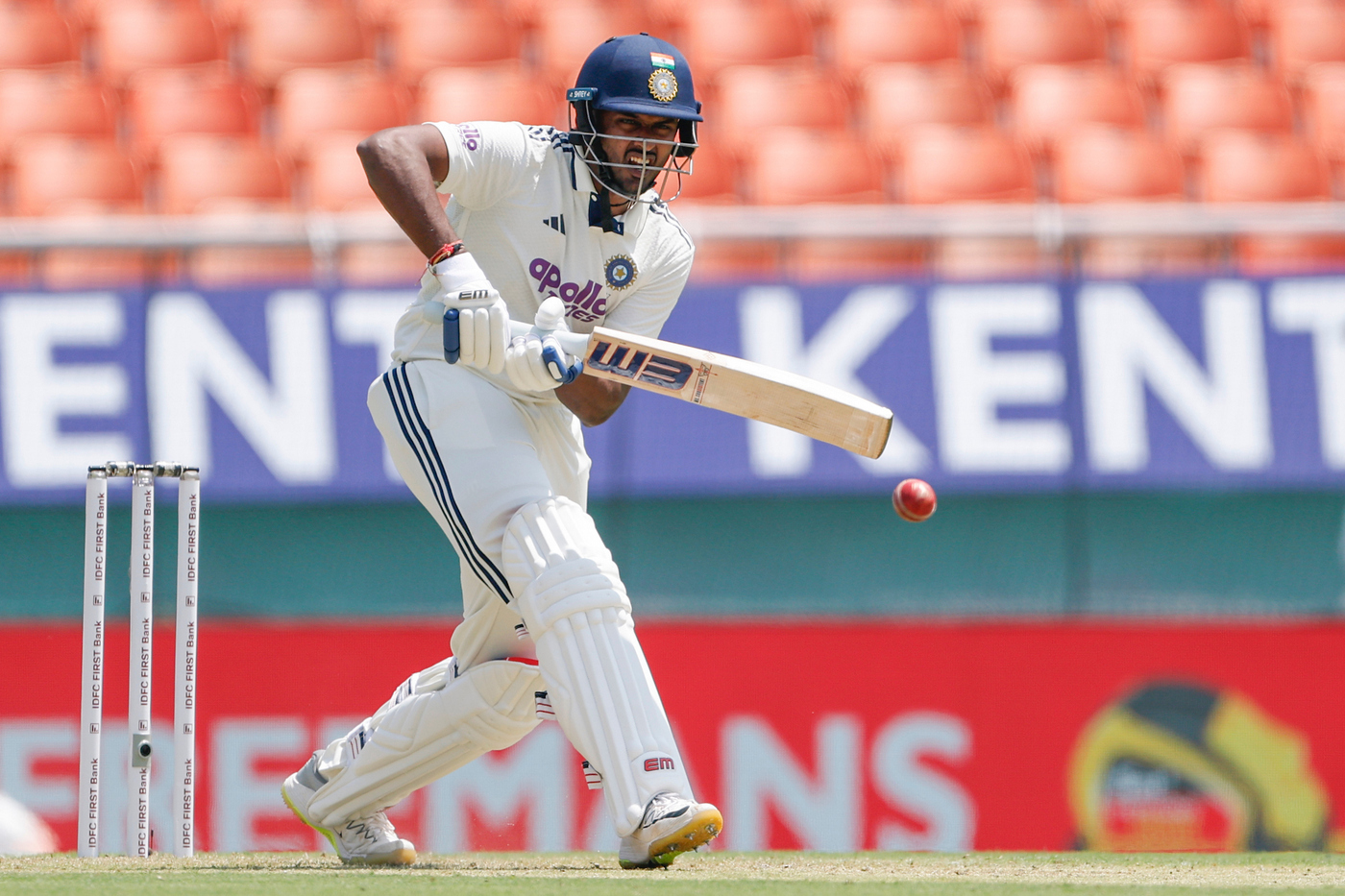
Sai Sudharsan ruled out of India's Test series against Sri Lanka due to injury
Young Indian batter Sai Sudharsan has been ruled out of the upcoming Test series against Sri Lanka due to an injury. His absence adds to India's mounting injury concerns ahead of the series. This comes just days after pace spearhead Jasprit Bumrah was also ruled out of the same series. The back-to-back absences of key players represent a significant setback for the Indian Test squad.
0
0

0
ProgrammingDEV Community ·
Git Worktrees Can Give AI Coding Agents Isolated, Conflict-Free Workspaces
Git worktrees allow developers to check out multiple branches from the same repository into separate working directories simultaneously, making them well-suited for AI-assisted coding workflows. Instead of having multiple AI agents share a single workspace and risk overwriting each other's changes, each agent can be assigned its own worktree, branch, and clearly defined task. This isolation also enables parallel experimentation, where different agents implement competing solutions that can be compared before one is chosen and the rest discarded. Worktrees additionally support uninterrupted workflows — an urgent bug fix can proceed in a separate directory without disturbing an agent working on a larger feature elsewhere. However, the author cautions that worktrees alone are not sufficient; clear instructions, dependency planning, and human review remain essential for effective multi-agent development.

0
ProgrammingDEV Community ·
Cognocient offers proxy-free LLM cost tracking via async Python wrapper
A developer has released Cognocient, an open-source Python wrapper for OpenAI and Anthropic SDKs that tracks LLM usage costs without routing requests through a proxy. The tool wraps existing client calls transparently and fires cost reports on a background thread only after the actual API response has already been returned. A key design priority was fault isolation: if Cognocient's reporting endpoint is unavailable, the failure remains invisible to the host application and does not affect real API calls. The wrapper supports per-call cost attribution with optional tags for teams, features, and users to enable chargeback-style reporting. Currently at v0.1.x, it does not yet support streaming responses and intentionally omits pre-call blocking, positioning it for teams that want cost visibility without adding a critical dependency to their request path.
0
0
IndiaNDTV ·
Tamil Nadu to Pass Anti-Delimitation Resolution After All-Party Consensus
Tamil Nadu's political leaders have reached a unanimous decision to oppose any delimitation exercise in the state. The agreement came following an all-party meeting where leaders resolved to present a united front against seat redistribution. A formal resolution is set to be passed reflecting this collective stance. Leaders argued that the state cannot afford changes to the number of elected representative seats for at least the next 40 to 50 years.

0
ProgrammingDEV Community ·
Developer finds idempotency guard fails open on the exact error it was built to catch
A developer discovered two bugs in a duplicate-publish guard added to their DEV.to publishing script just days after it was written. The first flaw was a missing pagination parameter, limiting duplicate checks to only the 30 most recent articles on an account with over 100 posts. The more critical issue was in the exception handler: when the verification GET request hit a URLError — the exact network failure the guard was built to handle — the function returned None, telling the caller to proceed with publishing anyway. This caused the guard to fail open precisely when a retry was most likely to create a duplicate live article. The incident also revealed that an internal bug log had incorrectly documented the function as already handling pagination, underscoring how documentation can become unreliable without regular cross-checking against actual code.
0
ProgrammingDEV Community ·
Developer fixes MCP tool that sent empty API updates with no fields to change
A developer discovered a logic gap in an MCP server tool called update_article, which manages posts on the DEV.to platform. The tool, designed to update article fields like title, body, or publish status, allows all optional parameters to default to None — but never checks if all three are simultaneously absent. When called with only the required article ID and no other arguments, the function still fetches the existing article, sends an empty PUT request to the live API, and writes an audit log entry showing zero fields changed. Previous hardening efforts had added a fetch-before-write step and a JSONL change log to prevent silent overwrites, but both assumed at least one field would always be provided. The fix required adding an early exit condition to reject calls where no fields are specified, closing a gap that could be triggered accidentally by AI agents passing incorrect or missing arguments.