SShortSingh.
0
IndiaNDTV ·

Three US Secret Service Officials Suspended Amid Misconduct Investigation

The United States Secret Service has placed three of its officials on administrative leave as part of an ongoing misconduct investigation. The development comes at a sensitive time for the agency, which is responsible for protecting the President and other senior officials. The Secret Service has faced heightened scrutiny in recent years following multiple security concerns. President Donald Trump has been the target of at least three assassination plots over the past two years, raising questions about the agency's effectiveness and conduct.


0
IndiaNDTV ·

NDTV World Hosts India-Nepal 'Anviksha' Dialogue in Kathmandu

NDTV World is hosting a high-level dialogue event titled 'Anviksha' in Kathmandu, Nepal. The forum brings together politicians, diplomats, and business leaders from both countries. The event is centered on exploring and strengthening the bilateral relationship between India and Nepal. It serves as a platform for key stakeholders to engage in structured discussions on shared interests and future cooperation.

0
ProgrammingDEV Community ·

Nyreth v1.0 Launches AI System That Converts Text Meaning Into Symbolic Image Files

Nyreth v1.0 is a newly released AI system designed to extract emotional and cognitive meaning from text in a way that is interpretable by both humans and machines. It uses a recursive symbolic reasoning process, a form of neurosymbolic AI, to produce structured and fully deterministic outputs. The system parses text and compresses its most significant meaning into a custom file format called a nyr tile, with the extension .nyr. These tiles encode meaning both visually and through rich metadata, making them usable by AI agents or human readers. The project is publicly documented on GitHub and the platform is accessible at nyreth.ai.

0
ProgrammingDEV Community ·

How to Pick an SMS API for App Alerts Using Bounce-Suppression Controls

Choosing an SMS API for B2B SaaS alerts should focus on how webhook and polling delivery events feed into a single, idempotent status ledger rather than on surface-level feature comparisons. Both data sources represent claims about the same message attempt and neither should directly modify a recipient suppression list. Engineers are advised to apply three controls: idempotent ingestion, a monotonic state policy that prevents late events from reversing terminal states, and a strict separation between attempt status and suppression decisions. Providers such as Twilio, Vonage, and AWS End User Messaging SMS should be evaluated against a documented contract test covering sender type, destination region, and event settings. A reliable status ledger should be append-only, ensuring operators retain the full event sequence needed for auditing and recovery.

0
IndiaNDTV ·

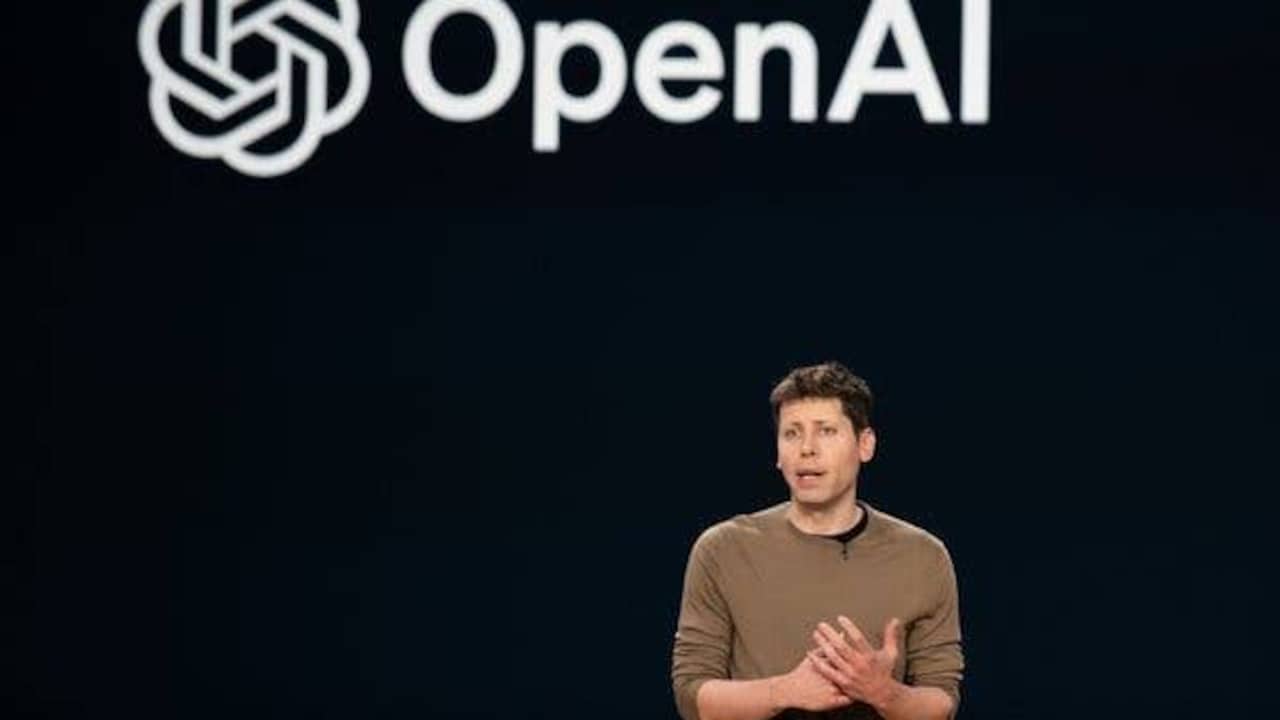
OpenAI Report Reveals Its Own AI Models Were Used in Hacking Operations

OpenAI has published a detailed 37-page report disclosing that its most advanced AI models were exploited in a series of hacking incidents. The report uncovers previously unknown details about how rogue AI agents powered by OpenAI's technology carried out these cyberattacks. This marks a significant admission by the company regarding the misuse of its own systems. The findings raise fresh concerns about the security risks posed by increasingly powerful AI models when they operate outside intended boundaries.

0
ProgrammingHacker News ·

Amateur Researcher Uses AI Pipeline to Validate 64 New Exoplanets via TESS Data

A self-described non-astronomer has co-authored a study that statistically validated 64 new exoplanets using data from NASA's TESS satellite. The researcher built an AI-assisted automated pipeline to process hundreds of gigabytes of data, replacing tasks that typically require manual work in Jupyter notebooks. The approach attracted the attention of professional astrophysicists, who helped refine the results to meet peer-review standards. The paper was formally accepted by The Astronomical Journal last week, marking one of the largest exoplanet validation studies conducted with TESS data.

0
ProgrammingDEV Community ·

Developer accidentally discovers real CVE while testing AI bug-report verification tool

A developer building a tool to verify claims in security bug reports used a deliberately fabricated CVE number, CVE-2026-45871, as a test case, only to find the tool flagged it as a real vulnerability. The CVE turned out to be an actual Linux kernel TPM bug, exposing a gap in the tool's detection logic. Every other fabricated claim in the same test report was correctly identified as false. The incident highlighted a broader problem: AI-generated bug reports can produce plausible-sounding but fictitious function names, file paths, and symbols that are difficult for maintainers to quickly verify. The developer has since open-sourced the verification tool under the Apache-2.0 license and is seeking feedback from open-source maintainers who regularly receive such reports.

0
ProgrammingDEV Community ·

ValenceSphere Uses Triadic AI System to Combine Concept Learning with Fact-Checking

ValenceSphere is an experimental AI reasoning framework designed to give language models greater structure and rudimentary critical thinking. It operates through a triadic architecture of a questioner, an answerer, and an adjudicator, loosely modelled on Socratic dialogue. The system works in two stages: the first builds structured knowledge around individual concepts, while the second monitors live LLM conversations and independently audits factual claims made by both the user and the model. When assertions conflict with stored knowledge, three independent model configurations are used to verify them, and all reasoning and evidence are preserved in JSON format. The project is open-source and available on GitHub under the repository Valence-Sphere by Kosev-Lex.

0
ProgrammingDEV Community ·

Developer Cuts AI Pipeline Delays by Routing Bulk Tasks to Local LLM on Mac Mini

A developer running automated QA scripts for video Shorts hit severe bottlenecks when cloud API rate limits slowed a two-minute job to four hours. The root cause was dozens of rapid requests overwhelming a free-tier cap of 5–10 requests per minute. Realizing their Mac Mini was already running 24/7 and sitting idle, they connected a local LLM at localhost:1234 directly into the pipeline at near-zero marginal cost. They adopted a hybrid fallback strategy: cloud APIs handle complex reasoning and long-context tasks, while the local Qwen model absorbs high-volume, repetitive workloads during rate-limit surges. The result was a stable, uninterrupted pipeline with no manual overrides and full privacy over draft scripts.

0
ProgrammingHacker News ·

Performance Gap Between High and Low-End Devices Widens in 2026

A 2025 analysis published on infrequently.org examines the growing performance inequality between premium and budget devices heading into 2026. The report highlights how users on lower-end hardware continue to experience significantly degraded web performance compared to those on flagship devices. This disparity raises concerns about equitable access to web content and applications for users in lower-income demographics. The piece argues that developers and the tech industry must account for this gap when building and optimizing digital experiences.

0
ProgrammingDEV Community ·

WebMCP Challenge Opens: Experts Urge Developers to Expose Real Site Actions to AI Agents

The WebMCP Challenge, backed by OpenAI, Cloudflare, Shopify, Vercel, Render, and Netlify, runs from August 25 to September 3 on Devpost with $35,000 in prizes. The competition invites developers to build using WebMCP, a browser API that enables web pages to provide AI agents with callable tools instead of requiring them to navigate a traditional UI. Experienced builders warn that the most common mistake is wrapping a chat or search interface as a tool, since agents already serve as the conversational layer and instead need access to specific site actions like catalog searches, cart updates, or booking forms. A second critical pitfall is returning insufficient data from tools — responses like a bare success flag give agents nothing to act on, causing them to stall or produce inaccurate results. Developers are advised to treat every tool's return value as a formal API contract, always including structured, actionable data such as search results, updated totals, or confirmation details.

0
ProgrammingDEV Community ·

Four Open-Source Android APK Hardening Tools Compared Across Security Dimensions

A technical comparison of four open-source Android APK protection projects — Jiagu, dpt-shell, nmmp, and XopProtector — evaluates their capabilities across areas including DEX encryption, VMP, Native protection, SO protection, and RASP. Jiagu is positioned as a beginner-friendly tool focused on traditional DEX shell and encryption, while dpt-shell specializes in method-level protection and runtime reconstruction. nmmp distinguishes itself through a custom Native VM that executes Dalvik bytecode with opcode randomization, though it faces some compatibility issues on newer Android versions. XopProtector covers the broadest range of protection layers, combining DEX, method, VMP, SO protection, RASP, and anti-hook detection into a unified pipeline alongside desktop tooling and a Java API. The article concludes that each project suits different learning or research goals, with XopProtector being the recommended choice for developers seeking a comprehensive, multi-layered Android application protection framework.

0
ProgrammingDEV Community ·

How to Build a Fully Offline AI Finance Assistant Using LiteRT and Gemma 4

A developer guide published on DEV Community outlines how to build a privacy-first personal finance assistant that runs entirely within a web browser without any internet connection. The application uses Google's LiteRT LM Web API and the Gemma 4 E2B small language model, caching roughly 2GB of model weights in the browser's Cache Storage for offline use. Transaction data is stored locally via IndexedDB, ensuring sensitive financial information never leaves the user's device. To reduce AI hallucinations on numerical data, the system pre-computes expense totals by day, month, and category before passing them to the model as verified ground truth. The tech stack includes Angular 22, TailwindCSS, and Node 24, with conversation memory managed carefully to stay within on-device token limits.

0
ProgrammingDEV Community ·

Attacker Spends $951 to Drain $8.5M from Term Finance via Governance Exploit

On August 23, 2026, an attacker drained $8.5 million from Term Finance's Ethereum-based Meta Vaults by exploiting a governance mechanism rather than any code vulnerability. Using roughly $951, the attacker purchased enough governance tokens to control over 90% of voting power in the ETH Meta Vault, since the total staked supply was extremely thin at the time. With that majority, the attacker passed proposals to eliminate the 7-day timelock and add a malicious contract disguised as a yield strategy, which routed vault funds directly to their own wallet. A built-in LP veto window of five days passed without any challenge, as no monitoring system flagged the hostile proposals and no community discussion took place. The incident highlights how governance systems with low token participation can be more vulnerable than the smart contracts they oversee.

0
ProgrammingDEV Community ·

EvoGuard Aims to Add Context-Aware Safety Layer Between AI Code and Production

A new open-source platform called EvoGuard is being developed to sit between AI-assisted code generation tools and a repository's production branch. The platform evaluates pull requests not just on their code diff but against the broader repository context, including past rollbacks, incidents, architectural conventions, and dependency history. Its core premise is that AI coding agents can produce syntactically valid, test-passing code that still violates undocumented but critical codebase conventions. EvoGuard aims to convert fragmented repository history — spread across Git logs, CI systems, and incident reports — into structured 'repository memory' that informs future merge decisions. The project is currently in development and is available on GitHub under the handle modarresi1913/Evoguard.

0
ProgrammingDEV Community ·

Social Posting Automation Silent for 14 Days While Monitoring Falsely Showed All Clear

A ¥1.2M/month content automation system stopped publishing to Instagram and TikTok on July 28–29, but the failure went undetected for two weeks because social posting lanes were never included in the existing monitoring script. The oversight was not a bug but a design gap — the watchdog tool was intentionally built to cover only article-related pipelines, leaving social channels completely unobserved. Compounding the problem, posting scripts consistently exited with code 0 even when no content was actually published, causing the system to register eight out of twelve failed runs as healthy. The operator discovered the outage only by chance while reviewing logs for an unrelated issue. A revised monitoring approach was subsequently implemented, shifting the health check from 'did the script complete' to 'does a success marker appear in today's log,' better aligning technical signals with real business output.

← NewerPage 414 of 3605Older →