SShortSingh.
0
ProgrammingDEV Community ·

Flutter Dev Discovers Silent Bug Discarded 4 of 6 Onboarding Answers for Months

A developer building Lifemaxxing AI, a habit app, found that four of six answer options on a key onboarding question were being silently discarded instead of generating personalised tasks. The bug stemmed from a mismatch between how answers were stored in the app using semantic keys and how the JSON config referenced them using positional IDs. Rather than crashing or logging an error, the app quietly fell back to a default, making the issue invisible during normal use. The developer had originally moved onboarding logic into a JSON asset file to allow easy updates without new app releases, a decision they still consider sound. The discovery also revealed that three of the eight onboarding questions were never mapped to any tasks, a gap the developer acknowledged should have been a deliberate design choice rather than an accidental omission.


0
ProgrammingDEV Community ·

How Viewport Virtualization Solved Canvas Performance for Large JSON Files

A developer building Treease, a JSON graph visualizer, encountered severe browser slowdowns when rendering large real-world files, such as 15 MB API responses with hundreds of thousands of key-value pairs. The core problem was a one-to-one mapping between data nodes and canvas objects, causing memory bloat and frame rates dropping to single digits during panning or zooming. The solution involved decoupling the full semantic data model from the visual render layer, keeping the entire document parsed and indexed in memory while only materializing canvas objects for elements near the current viewport. A technique called directional overscan was applied to pre-render content just outside the visible area, preventing objects from visibly popping in during fast panning. Combined with spatial indexing and scene graph reconciliation, this approach maintained global search and navigation capabilities without sacrificing rendering performance.

0
ProgrammingDEV Community ·

Why AI Models Cannot Simply Delete Your Personal Data on Request

When personal data is used to train an AI model, it does not remain as a discrete, removable record but instead becomes distributed across billions of numerical parameters throughout the model's weights. Privacy laws like the GDPR's right to erasure were designed around traditional databases where data can be located and deleted, an assumption that does not hold for trained neural networks. The only guaranteed method — retraining the model from scratch without the requested data — is prohibitively expensive, costing potentially millions of dollars per run and taking weeks to complete. Researchers are developing 'machine unlearning' techniques, such as gradient ascent and influence functions, that attempt to make a model behave as if it never saw specific data without full retraining. However, these methods are approximations and cannot offer the same provable guarantees as complete retraining, leaving a significant gap between legal data deletion rights and current technical reality.

0
TechnologyArs Technica ·

Stanford Study: AI Cuts Entry-Level Jobs by 19% Versus AI-Resistant Roles

A new Stanford study has found that artificial intelligence is disproportionately affecting early-career workers. Employment in AI-impacted fields has fallen by 19% compared to occupations considered more resistant to AI disruption. The findings highlight a growing concern that younger job seekers face the steepest barriers as automation reshapes hiring. The research suggests entry-level positions, typically a gateway for new workers, are among the first to be displaced by AI adoption.

0
ProgrammingDEV Community ·

Developer builds AI memory system Muninn, misses leaderboard deadline but self-benchmarks results

A developer and their AI partner built a hybrid memory retrieval system called Muninn overnight to enter the Agent Memory Leaderboard, which pits systems against competitors from Tencent, Mem0, Cognee, and MemOS. The team missed the submission window and will try again when the next cycle opens in September. Running the benchmark's public pipeline independently on the LoCoMo dataset, Muninn scored an estimated 72.9% in its best configuration, though the developer cautions this is an internal estimate rather than an official result. The same core system, entered as Perpetual Recall on the separate LongMemEval-V2 benchmark, achieved a confirmed submission score of 56.98% accuracy with a query latency of roughly 2.3 seconds. While mid-pack on accuracy, every system that outperformed it required between 27 and 180 seconds per query, compared to under three seconds for Perpetual Recall.

0
ProgrammingDEV Community ·

How Startups Should Structure Content Moderation Into 7 Risk Categories

A technical framework recommends that startup apps organize content moderation into seven risk categories: harassment, sexual content, self-harm, violence, illegal activity, spam, and PII. Each category alone should not determine an outcome; instead, decisions must factor in severity, confidence, and the intended system action. The design proposes a two-lane pipeline, where high-risk checks like self-harm and credible violence run synchronously to block harmful actions before they execute, while lower-risk quality issues are handled asynchronously. A key principle is that category labels describe content, but policy governs what action follows, since identical flagged content can warrant different responses depending on context and destination. The framework also cautions against over-engineering, advising teams to maintain a single policy object and decision function rather than building multiple unrelated filters.

0
ProgrammingDEV Community ·

How a silent PrestaShop hook failure hid three stacked bugs across releases

A PrestaShop module hook registering correctly and showing in Design > Positions still produced no output on the front end, with no errors, logs, or stack traces to indicate why. The root cause was PrestaShop's Hook::callHookOn() silently swallowing all exceptions when debug mode is off, returning an empty string for any failure. Adding a manual try/catch block with explicit logging finally revealed that the Smarty template was failing to compile entirely. The culprit was a plain CSS rule containing curly braces, which Smarty misread as a template tag and choked on, causing the whole template — including unrelated blocks — to silently fail. Wrapping such CSS in Smarty's built-in {literal} tags resolves the conflict and prevents the silent compilation failure.

0
ProgrammingDEV Community ·

Why Patient Portals Must Separate Login Authentication from Data Consent Records

Healthcare patient portals should treat user authentication and data-use consent as two distinct technical processes, not a single login event, according to software architecture guidance. While delegated login via OAuth can verify a user's identity, the portal itself must independently record which consent policy version a patient accepted, for what purpose, and at what time. Consent records should be append-only, tied to a stable patient identifier, and never modified — with policy updates creating new records rather than overwriting old ones. Password recovery restores account access but must not imply or renew consent, and a successfully authenticated session can still be blocked from protected data if valid consent is absent. This separation ensures that audit trails can reconstruct both identity verification and informed consent decisions without relying on transient browser state or third-party identity-provider logs.

0
ProgrammingDEV Community ·

Dictionary Pattern Matching Silently Ignores Extra Keys, Risking Hidden Bugs

In languages like Python and Rust, dictionary pattern matching does not require an exact structural match — extra keys in a dictionary are silently ignored when a pattern is applied. This design choice prioritizes flexibility, allowing dictionaries with additional keys to match a given pattern without raising errors. However, developers familiar with stricter sequence pattern matching may incorrectly assume the same enforcement applies to dictionaries. In security-sensitive contexts such as financial systems, this silent behavior can allow unexpected or malicious data to pass undetected. Experts recommend that developers carefully review language documentation and implement explicit key validation where strict dictionary shapes are required.

0
ProgrammingDEV Community ·

Why price comparison tools fail without unit normalization first

Most price comparison tools sort listings by raw price, which produces misleading results when products differ in quantity or concentration. The real challenge is extracting unit counts from inconsistently formatted product titles and then normalizing prices to a comparable unit, such as cost per battery or per 100g. The problem deepens in categories like supplements, where a lower per-serving cost may reflect a weaker formulation rather than a better deal. Developer Arjun Mahadevan built Popgot, an API that pre-calculates unit pricing and value scores across retailers, to address this normalization gap. He argues the core issue is not data scraping but ensuring products are genuinely equivalent before any price comparison is made.

0
IndiaNDTV ·

US Supreme Court Allows Trump's Mail Ballot Restrictions to Proceed

The US Supreme Court has backed President Donald Trump's effort to curb mail-in voting in the United States. Trump had signed an executive order in March aimed at restricting the use of mail ballots in elections. The order faced immediate legal challenges from multiple parties upon its signing. The Supreme Court's decision allows the administration's push against mail-in voting to move forward despite the earlier opposition.

0
TechnologyArs Technica ·

Solid-State Transformers Find Early Market in Data Center Power Demand

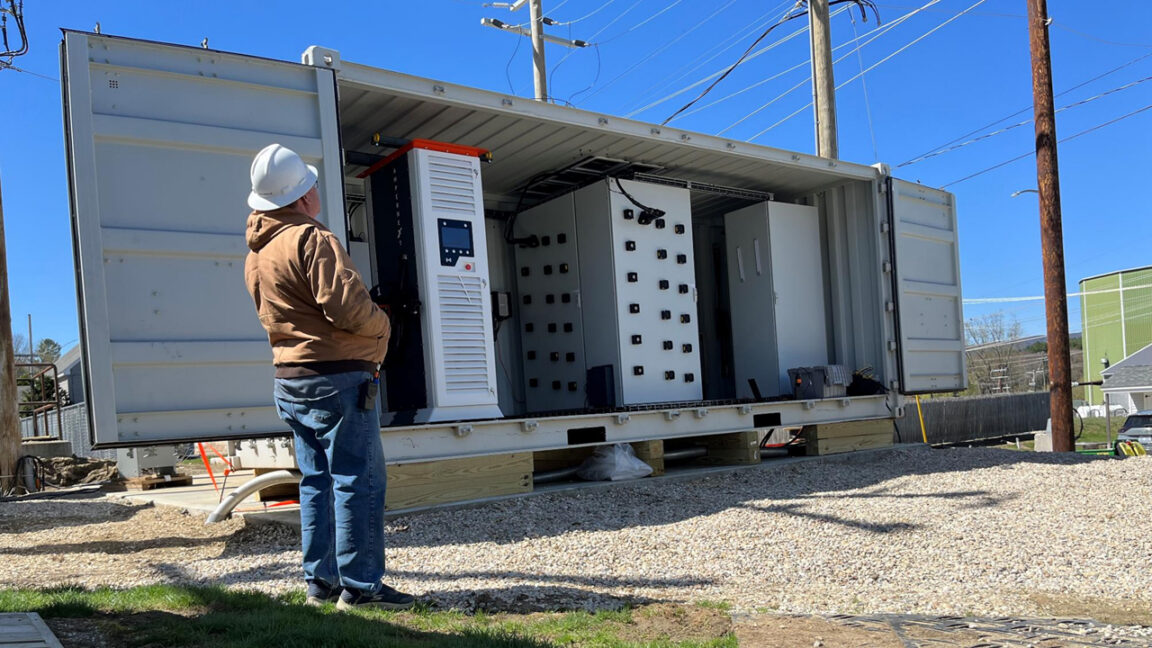
Solid-state transformers, a next-generation power conversion technology, are gaining traction as data centers emerge as their primary early adopters. Unlike traditional transformers, solid-state versions use semiconductor components to manage electrical power more efficiently and flexibly. The surge in data center construction, driven by cloud computing and AI workloads, has created strong demand for advanced power infrastructure. Beyond data centers, the technology is also seen as promising for electric vehicle charging networks. Researchers and industry players believe solid-state transformers could eventually find their way into household power systems as well.

0
TechnologyTechCrunch ·

Trump Bought SpaceX Shares at ~$155 Shortly After Its IPO Debut

President Trump purchased SpaceX shares approximately two weeks after the company's initial public offering. He bought the stock when it was trading in the mid-$150 range, above the IPO price. SpaceX shares subsequently declined, closing on Monday back at their IPO price of $135. The purchase drew attention given the timing, coming shortly after the company's high-profile market debut.

0
ProgrammingDEV Community ·

SEMAPRAX Tool Links Semantic Code Patches to Verifiable WebAssembly Artifacts

Wavect GmbH is developing SEMAPRAX, an experimental open-source agent-native systems programming language currently at v0.2 pre-alpha stage, designed to bring verifiability to code changes made by AI coding agents. A read-only command called 'semaprax target-evidence' rebuilds both original and patched versions of a program and generates deterministic compiler outputs, including a semantic graph, capability manifest, C11 source, and a validated WebAssembly module. Each output artifact receives a domain-separated cryptographic digest, allowing independent verifiers to confirm exactly which projections a given source edit actually affects. The tool uses wasmparser 0.256.0 to structurally validate emitted WebAssembly modules, though the developers stress this confirms only structural validity and not runtime correctness, ABI compatibility, or cross-runtime conformance. SEMAPRAX's current WebAssembly support is intentionally limited to bounded scalar exports and JS/TS bindings, and the project explicitly cautions against treating static evidence reports as stronger runtime guarantees.

0
ProgrammingDEV Community ·

Cricket Analogy Breaks Down How Hubs, Switches, and Routers Actually Work

A developer-focused explainer published on DEV Community uses cricket player roles to demystify common networking devices and concepts. A hub is compared to a player with no situational awareness — it blindly broadcasts incoming data to every connected device rather than targeting a specific recipient. A switch improves on this by maintaining a MAC address table, allowing it to send data directly to the correct device on the same network. Routers serve a distinct function by connecting separate networks, such as linking a home network to the broader internet. The article also covers supporting concepts including IP addresses, subnet masks, NICs, and the RJ45 connector to give beginners a fuller picture of how networks are structured.

0
TechnologyArs Technica ·

RFK Jr. Eyes Overhaul of Vaccine Recommendation Categories

Robert F. Kennedy Jr. is reportedly considering changes to the existing system used to categorize vaccine recommendations in the United States. The current framework consists of three distinct categories that guide public health guidance on vaccines. No clear rationale or justification has been provided for the proposed changes. The potential overhaul could have significant implications for how vaccine guidance is communicated and followed nationwide.

0
ProgrammingDEV Community ·

Developer Publishes 59 AI Predictions Across 17 Categories Through 2031

A practitioner who spent roughly two months building AI tools, testing workflows, and advising clients has published a detailed set of 59 predictions about how artificial intelligence will reshape software development and broader industries. The predictions are organised into 17 categories and four time horizons ranging from within 12 months to three-to-five years out, each carrying a stated confidence level and a falsification criterion. Among the near-term forecasts is a shift from agile teams of six-to-eight developers toward AI-powered pods of just two-to-three people, though the author acknowledges this transition is more plausible for greenfield projects than for regulated enterprises. A second prediction holds that smaller pods will accelerate the clearance of long-standing technical debt and open defect backlogs within the next year. The author invites community feedback and plans to expand on individual predictions in subsequent writing.

← NewerPage 222 of 3289Older →