SShortSingh.

Technology

0
TechnologyArs Technica ·

Supreme Court Limits Government Use of Geofence Warrants

The US Supreme Court has issued a ruling that significantly curtails the government's ability to use geofence warrants in investigations. Geofence warrants allow law enforcement to obtain location data from tech companies for all devices present in a specific area during a given time. The Court's decision restricts how and when such warrants can be employed, dealing a notable blow to a tool widely used by federal and local agencies. However, the justices stopped short of declaring geofence warrants unconstitutional altogether, leaving the door open for their limited use under stricter conditions.

0
TechnologyThe Verge ·

Tidal to strip royalties from fully AI-generated music, add labels from July 15

Music streaming platform Tidal has announced new policies on AI-generated content, effective in two phases. Starting immediately, tracks identified as 100% AI-generated will no longer earn royalties on the platform. From July 15th, such tracks will also be marked with a dedicated icon to inform listeners of their AI origin. Tidal stated its priority is ensuring royalties reach music that is directly produced, written, and performed by humans. The company has not disclosed which detection tools it will use to identify wholly AI-generated content.

0
TechnologyThe Verge ·

Sony hints next-gen PlayStation will expand gameplay beyond the living room

Sony has signaled that its next-generation PlayStation console will offer gaming experiences outside the traditional living room setting. The hint came during a recent Q&A session with investors, where the company addressed how it plans to win back users who shifted to PC gaming during the COVID-19 pandemic. Sony acknowledged that PlayStation has historically been tied to living room play but suggested significant changes are coming with the next platform. The comments have fueled speculation about a potential new handheld device, which Sony is already rumored to be developing. No further details about the next-gen platform or a portable device have been officially confirmed.

0
TechnologyArs Technica ·

Sony Removes Digital Content, Highlighting Limits of Digital Ownership

Sony has been gradually scaling back its digital store over a period of several years. The move has resulted in purchased digital content being removed from users' libraries. This situation has renewed debate about the nature of digital ownership, as consumers who paid for content found it inaccessible. The incident underscores that buying digital media typically grants a license rather than true ownership. Many users are left questioning the long-term value and reliability of digital purchases from major platforms.

0
TechnologyTechCrunch ·

Kobo eReaders gain native StoryGraph sync as Goodreads alternative

Kobo has introduced a feature allowing users to automatically sync their reading progress directly to StoryGraph, a book-tracking platform seen as a rival to Amazon's Goodreads. The integration enables readers to monitor their books, personal reading statistics, and challenges through StoryGraph without switching between apps manually. This move offers Kobo users a non-Amazon option for managing their reading activity. The update strengthens StoryGraph's position as a credible alternative to Goodreads, which is owned and operated by Amazon.

0
TechnologyArs Technica ·

Ozone depletion began before CFCs became widespread, study finds

New research suggests that ozone layer depletion was occurring even before chlorofluorocarbons (CFCs) came into widespread industrial use. Scientists believe that with modern analytical tools, the early signs of ozone loss could have been detected as far back as the 1950s. The findings indicate that factors beyond CFCs may have contributed to ozone degradation earlier than previously understood. This challenges the conventional timeline of when human activity began significantly affecting the ozone layer.

0
TechnologyThe Verge ·

OpenAI to Launch Codex-Linked Hardware Device with Work Louder on July 15

OpenAI has teased a new hardware device tied to its AI-powered coding tool, Codex, set to launch on July 15th. The company shared a short video on X showing a square-shaped device featuring multiple buttons. The device is being released in partnership with Work Louder, a company known for making mechanical keyboards and programmable macro pads. OpenAI described the product as an upgrade to Codex shortcuts, suggesting it will offer hardware-based controls for the coding tool. This is separate from the AI consumer device OpenAI is reportedly developing with former Apple designer Jony Ive.

0
TechnologyTechCrunch ·

Waymo and Uber End Nearly Three-Year Partnership in Phoenix

Waymo and Uber have quietly dissolved their ride-hailing partnership in Phoenix, Arizona. The two companies confirmed the split to TechCrunch, marking the end of a collaboration that lasted close to three years. The partnership had been considered unusual given that Uber and Waymo operate as competitors in the autonomous vehicle and ride-hailing space. Neither company provided detailed reasons for the decision to part ways.

0
TechnologyArs Technica ·

Google warns EU antitrust remedies pose serious user privacy risks

The European Union is pushing Google to share its search data with rival companies and open up AI features on Android devices as part of efforts to curb its market dominance. Google has responded by raising significant privacy concerns, arguing that these proposed measures could expose sensitive user data. The company contends that forcing data-sharing with competitors creates security vulnerabilities that could harm consumers. The dispute reflects the ongoing tension between EU regulators seeking to break up Big Tech monopolies and companies resisting such interventions on safety grounds.

0
TechnologyTechCrunch ·

South Korean chipmakers pledge $550B+ to boost memory chip production for AI

South Korea's two largest memory chip manufacturers have committed over $550 billion to expand their production capabilities. The investment will go toward building additional memory chip fabrication facilities. The move comes as global demand for memory chips surges, driven largely by the rapid growth of artificial intelligence technologies. South Korea is using this investment push to strengthen its position as a leading AI technology hub on the world stage.

0
TechnologyArs Technica ·

Quantum startup claims it will surpass rivals, but hardware gap remains vast

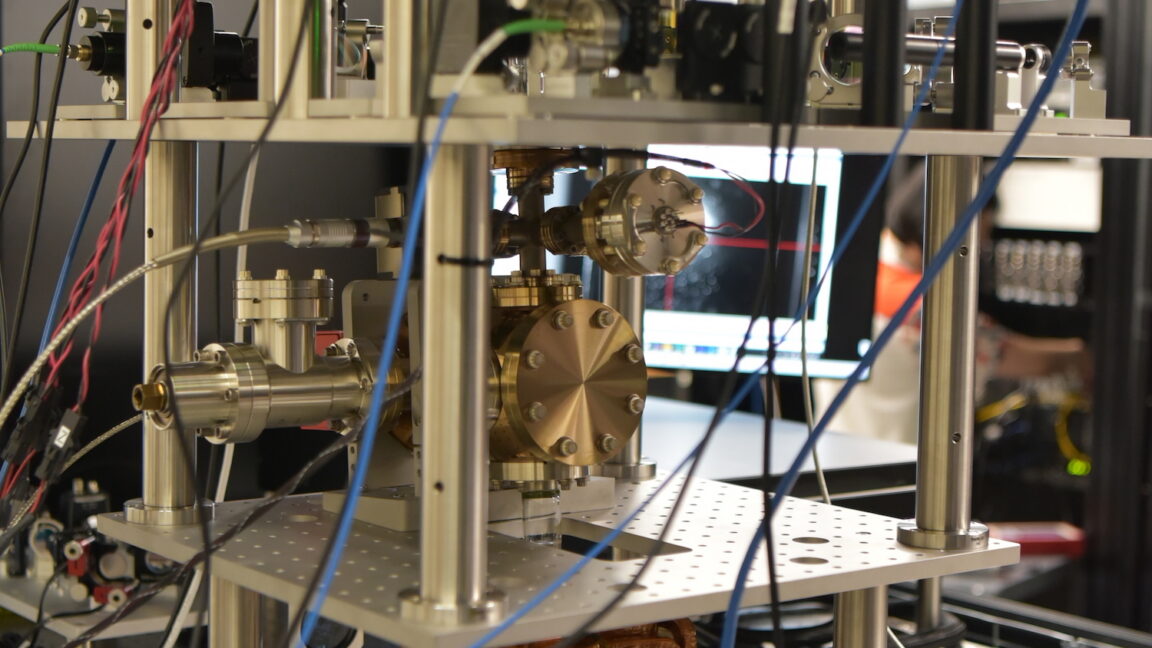
A quantum computing startup has boldly claimed it will leapfrog all competitors in the field. The company's ambitions, however, are not yet matched by its current hardware capabilities. Achieving its stated goals would require an enormous technological leap beyond what the startup has demonstrated so far. Experts and observers note a significant gap between the firm's promises and its existing systems. The claim highlights the broader tension in quantum computing between ambitious roadmaps and practical, near-term realities.

0
TechnologyThe Verge ·

Apple M3 iPad Air (128GB, Wi-Fi + 5G) drops to $499 at Best Buy

Best Buy is currently selling the 11-inch iPad Air with Apple's M3 chip, 128GB storage, and Wi-Fi plus 5G connectivity for $499, down from its usual $749. The discount comes amid broad Apple price increases that have pushed many iPad models significantly higher than their previous retail prices. At just $50 more than the now-$449 base iPad, the Air offers a faster processor, a laminated antireflective display with a wider color gamut, and support for the Apple Pencil Pro and latest Magic Keyboard. The M3 chip also brings Apple Intelligence support and compatibility with the upcoming iPadOS 27, giving it a notable performance edge over the base model's A16 chip.

0
TechnologyArs Technica ·

Kalshi sues Illinois over tax targeting prediction market sports bets

Prediction market platform Kalshi has filed a lawsuit against the state of Illinois over a new tax levied on sports-related prediction market bets. The legal action marks Illinois as a significant battleground in the broader regulatory dispute surrounding prediction markets. Kalshi argues the tax unfairly targets its platform and business model. The case highlights growing tension between emerging prediction market operators and state gambling regulators across the US.

0
TechnologyTechCrunch ·

AI Leaderboard Startup Arena Reaches $100M Valuation After Commercial Launch

Arena, the startup behind a widely used free AI leaderboard, has grown into a $100 million business. The company only launched its commercial service in September of the previous year, marking a rapid rise in valuation. Arena is known for running a popular platform that allows users to compare and rank AI models. The swift growth highlights strong market demand for independent AI evaluation and benchmarking tools.

0
TechnologyTechCrunch ·

Cursor launches mobile app to let developers monitor coding agents remotely

Cursor has released a new mobile application designed to give developers remote oversight of their coding agents. The app allows users to guide and manage AI-powered coding processes from their mobile devices while away from their desks. This move reflects a growing trend of enabling developers to stay connected to automated coding workflows on the go. The launch extends Cursor's existing AI coding platform beyond the desktop environment.

0
TechnologyTechCrunch ·

Trump Administration Policies Put 92 GW of Solar and Wind Capacity at Risk

The Trump administration has introduced regulatory measures that threaten approximately 92 gigawatts of new electricity supply in the United States. The affected projects represent around $121 billion in planned solar and wind energy investments. Solar and wind are currently the largest contributors to new power capacity in the country. The administration's red tape is seen as a significant obstacle to the development of these renewable energy sources.

0
TechnologyThe Verge ·

Best Buy, Amazon, REI Offer July 4th Deals on Tech, Gear, and Apple Products

Several major retailers including Best Buy, Amazon, and REI are running July 4th sales this week, offering discounts on a range of tech and outdoor products. This year's holiday sales follow Amazon's Prime Day rather than preceding it, yet many comparable deals remain available. Notable discounts include the LG C5 65-inch OLED TV dropping to $1,099.99, the 11-inch iPad Air M3 at $499, and the Asus ROG Falcata keyboard at $214.99. Apple's second-generation AirTags and the SteelSeries Arctis Nova Pro Wireless headset are also among the highlighted deals. REI's sale, which covers outdoor and adventure gear, is expected to run through the full week leading up to July 4th.

0
TechnologyTechCrunch ·

TIDAL Bans Monetization of AI-Generated Music on Its Platform

Music streaming service TIDAL has introduced a new policy that blocks AI-generated music from earning revenue on its platform. The move represents one of the more direct stances taken by a streaming service against artificial intelligence-created content. Under the policy, tracks identified as AI-generated will be cut off from monetization features available to human artists. The decision reflects growing industry tension between traditional musicians and the rise of AI music tools that can produce songs at scale.

0
TechnologyNYT Technology ·

Six-Figure Tech Salaries Lose Ground as AI Boom Widens Wealth Gap in SF

San Francisco's technology sector is experiencing a growing divide between traditional tech workers and a new class of AI professionals commanding far higher compensation. Employees earning around $180,000 annually — once considered highly comfortable salaries — now report feeling financially squeezed in the city. The tension is intensifying as AI firms like OpenAI and Anthropic prepare for public listings, further enriching their top talent. Many mid-level tech workers say they struggle to afford housing and living costs that the AI elite can easily absorb. Some are questioning whether remaining in San Francisco is financially viable at all.

← NewerPage 300 of 308Older →