SShortSingh.

Technology

0
TechnologyThe Verge ·

Nothing OS 5.0 adds adaptive wallpaper colors and revamped Glyph Interface app

Nothing has unveiled OS 5.0, an Android 17-based update that introduces new homescreen customization options. App icons and widgets can now adopt adaptive colors drawn from the user's wallpaper, updating automatically whenever the wallpaper changes. The feature works alongside Android's built-in Dynamic Colors while preserving Nothing's signature monochrome aesthetic. Nothing is offering the adaptive color scheme as an optional additional theme, allowing users to stick with the original design if preferred. The update also includes a redesigned Glyph Interface app, expanding functionality for the brand's distinctive LED notification system.

0
TechnologyThe Verge ·

Nvidia GeForce Now to Add Steam Controller Support Later This Year

Nvidia has announced that its GeForce Now cloud gaming service will officially support Valve's Steam Controller and Steam Machine later in 2025. Users running GeForce Now on a Steam Deck or Steam Machine will be able to use the Steam Controller to play games through the service. Support for Windows and macOS users is also planned, though Nvidia says it will arrive at a later, unspecified date. Additionally, Nvidia is rolling out new DLSS 4.5 controls covering Super Resolution, Dynamic Frame Generation, and Ray Reconstruction. Ray Reconstruction is also set to officially launch for RTX GPU users in the near future.

0
TechnologyNYT Technology ·

EPA Proposes Eliminating Public Comment on Air Pollution Permits for Data Centers

The U.S. Environmental Protection Agency has put forward a proposal that would significantly reduce public participation in the air pollution permitting process. Under the plan, state authorities would no longer be required to notify the public or gather community feedback before issuing air pollution permits. The change would apply to data centers as well as other similar large-scale projects. Critics are likely to raise concerns that the move limits transparency and community oversight over facilities that can have significant environmental impact.

0
TechnologyTechCrunch ·

Life360 launches $8 scannable pet tags with location sharing and care tracking

Life360 has introduced new scannable pet tags priced at $7.99, designed to help families locate lost pets. When a pet is found, the tag triggers an alert and shares the animal's last known location with its owners. The company has also rolled out care-tracking features that allow households to monitor feeding schedules, walks, and medication. These additions expand Life360's existing family safety platform into the pet management space.

0
TechnologyArs Technica ·

Lab suppliers caught using manipulated images to sell research antibodies

Life science supply companies have been widely using manipulated images in their marketing materials for research antibodies, a practice that would result in retraction if found in academic papers. The issue involves alterations to experimental result images used to promote and sell these laboratory reagents. The scale of the problem appears significant, with such manipulations described as widespread across multiple suppliers. This raises serious concerns about the reliability of product claims that researchers depend on when selecting materials for scientific experiments. The findings highlight a double standard between the strict image integrity rules applied to published research and the largely unregulated marketing practices of commercial suppliers.

0
TechnologyThe Verge ·

Polestar says US blindsided it with sales ban under connected-vehicle rules

Electric vehicle maker Polestar has been barred from selling new cars in the United States starting with the 2027 model year, following a rejection by the Commerce Department citing national security concerns over connected-vehicle software linked to China. In an August 18th letter to dealers, Polestar said it was given no clear explanation for the denial after months of engagement with the Trump administration. The company expressed confusion over the decision, noting that its sister company Volvo received approval to continue US sales in May 2026 despite having similar corporate ownership ties. The ban stems from a federal rule prohibiting vehicles that use connected software originating from China. Polestar said it does not yet have a clear path forward regarding its US market presence.

0
TechnologyArs Technica ·

New Bootloader Exploit Grants Full Control Over Original Meta Quest Headset

A new bootloader has been developed that allows users to remove Meta's software and server dependencies from the original Meta Quest headset. The tool works through a privilege escalation attack, granting users full administrative control over their device. This effectively frees the headset from Meta's ecosystem, including its apps and online services. The development is significant for users seeking greater autonomy and privacy from Meta's platform on their existing hardware.

0
TechnologyTechCrunch ·

Fake GTA VI Demo Circulating Online Is Actually Malware

A malicious program disguised as a demo for Grand Theft Auto VI is targeting eager fans of the highly anticipated game. Cybercriminals are exploiting the intense public interest surrounding the unreleased title to distribute the malware. Users who download what they believe to be a GTA VI demo are instead installing harmful software on their devices. Security researchers have flagged the threat, warning fans to be cautious about unofficial downloads claiming to be related to the game.

0
TechnologyTechCrunch ·

Pacific Fusion Breaks Ground on Self-Sustaining Demo Facility in New Mexico

Fusion energy startup Pacific Fusion has begun construction on a new demonstration facility located in New Mexico. The company says the machine being built at the site is designed to produce enough energy to power its own operations. This milestone represents a potentially significant step toward clearing a major technical barrier on the path to commercial fusion power. Pacific Fusion's progress signals growing momentum among private companies racing to make fusion energy a viable commercial reality.

0
TechnologyArs Technica ·

AI Reshaping Radiology Jobs but Not Replacing Radiologists, Experts Say

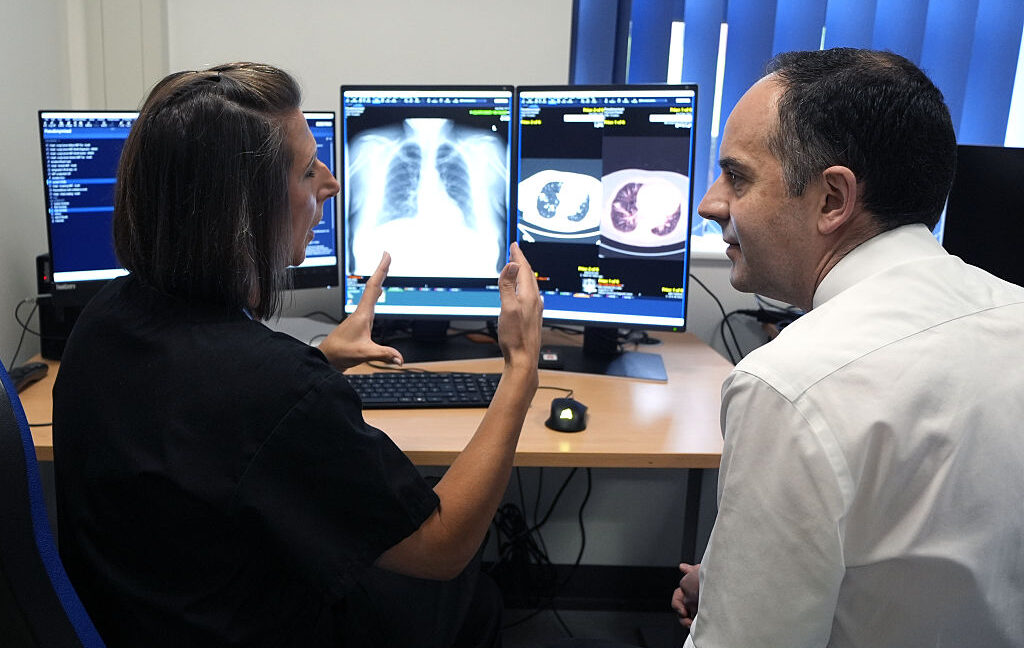
Early predictions that artificial intelligence would fully replace radiologists have not come to pass. Instead, AI is proving to be a tool that significantly transforms how radiologists work rather than eliminating their roles. The technology is changing workflows, assisting with image analysis, and altering day-to-day responsibilities within the field. Experts now broadly agree that human radiologists remain essential, even as AI becomes more deeply integrated into medical imaging.

0
TechnologyTechCrunch ·

Gamma Acquires Accel-Backed Design Startup Lica

Presentation software company Gamma has acquired Lica, a design startup that had backing from venture firm Accel. The deal brings Lica's co-founders into Gamma's organization, where they will join a newly formed research team. Financial terms of the acquisition were not disclosed. The move signals Gamma's intent to strengthen its research and design capabilities through the talent and expertise of the Lica team.

0
TechnologyTechCrunch ·

Apple reverses decision to keep Hide My Email feature on iCloud.com

Apple has announced it will retain the use of its icloud.com domain for its Hide My Email privacy feature. The decision marks a reversal of an earlier plan that would have discontinued the domain's role in the service. Hide My Email allows users to mask their real email addresses by routing messages through Apple-generated aliases. The move has been welcomed as a win for user privacy, as the feature helps protect personal information when signing up for online services.

0
TechnologyThe Verge ·

Apple relaunches polishing cloth at $9, half the price of original $19 version

Apple has quietly relaunched its polishing cloth accessory, cutting the price from $19 to $9. The product appears largely unchanged, made from the same soft, nonabrasive material as the previous version. It is compatible with a wide range of Apple devices, including iPhones dating back to the iPhone 5, and can safely clean nano-texture displays. The original polishing cloth has been removed from Apple's website, replaced by this lower-priced listing. The relaunch was first spotted by MacRumors.

0
TechnologyTechCrunch ·

OpenAI's Jalapeño Chip Outperforms Current AI Hardware on Key Inference Benchmarks

OpenAI has developed a custom chip called Jalapeño, designed to handle fast AI inference at scale. The chip was evaluated using Semianalysis's InferenceX benchmark, a standard tool for measuring AI hardware performance. Results showed Jalapeño delivered more tokens per user than existing state-of-the-art chips. It also demonstrated superior throughput per kilowatt, indicating stronger energy efficiency. The benchmarks suggest Jalapeño could represent a significant step forward in AI inference hardware.

0
TechnologyTechCrunch ·

Apple Launches M5 Ultra and M6 Chips, Updates Mac Mini and Mac Studio

Apple has unveiled its latest processors, the M5 Ultra and M6, which the company is calling its most powerful chips to date. The new silicon was announced alongside refreshed versions of the Mac Mini and Mac Studio desktop computers. The M5 Ultra and M6 represent Apple's continued push to develop in-house chips for its Mac lineup. The announcements signal Apple's ongoing commitment to advancing performance across its desktop computing range.

0
TechnologyThe Verge ·

OpenAI Claims Its Jalapeño AI Chip Outperforms Rivals on Speed and Efficiency

OpenAI announced on Tuesday that its new AI chip, called Jalapeño, delivers faster responses and greater efficiency than competing AI systems. The company's hardware vice president Richard Ho said the chip achieves both lower latency and higher throughput, a combination that AI systems typically struggle to balance. Jalapeño is an Application-Specific Integrated Circuit (ASIC) developed in collaboration with semiconductor firm Broadcom. First unveiled in June, the chip is built specifically for AI inference — the stage where a trained model is used to complete tasks or run AI agents.

0
TechnologyThe Verge ·

Apple Launches M6 Mac Mini and M5 Ultra Mac Studio, Preorders Now Open

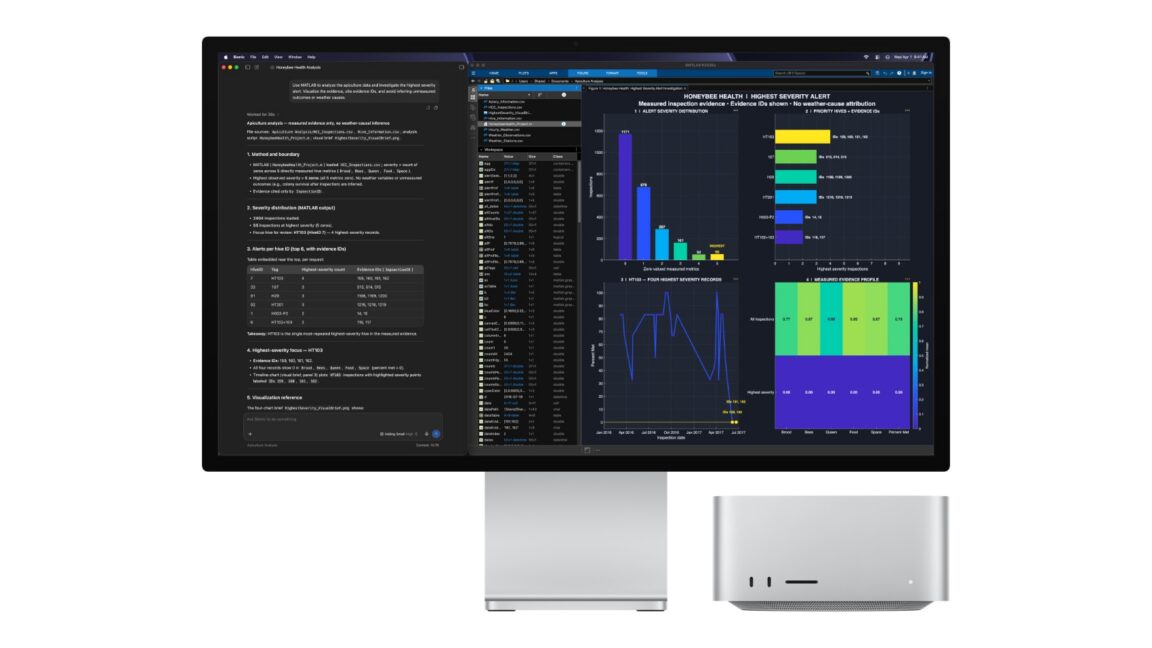
Apple has unveiled two new desktop computers — an updated Mac Mini powered by the new M6 chip and a refreshed Mac Studio featuring the M5 Ultra processor. The Mac Mini starts at $899, a $300 increase over the previous M4 base model, while the Mac Studio begins at $2,499, matching the current M4 Max model's price. Both machines are available for preorder directly from Apple, with most configurations set to ship on September 22nd, 2026. High-end Mac Studio configurations with up to 512GB of RAM are expected to ship in late October, with pricing not yet announced. Apple says the upgrades focus on AI performance gains and improved connectivity, including Wi-Fi 7, Bluetooth 6, and 2.5Gb Ethernet on the Mac Mini.

0
TechnologyArs Technica ·

Apple Refreshes Desktop Macs With Local AI Development as a Core Focus

Apple has unveiled a new lineup of desktop computers designed with local AI development as a primary use case. The updated machines are built to handle the demanding computational workloads associated with running and developing AI models directly on-device, without relying on cloud infrastructure. The refresh acknowledges a growing trend among developers who have been connecting multiple Mac machines together to pool processing power for AI tasks. By addressing this need natively, Apple aims to streamline local AI workflows for developers and researchers. The move reflects the broader industry shift toward on-device AI processing as a viable alternative to cloud-based solutions.

← NewerPage 144 of 288Older →