SShortSingh.

Programming

0
ProgrammingHacker News ·

Holographic Gravity Theory Challenges Our Understanding of Physical Reality

Physicists are increasingly finding evidence that gravity may behave holographically, meaning it could be encoded on a lower-dimensional surface rather than existing in three-dimensional space. This concept, rooted in the AdS/CFT correspondence developed in the late 1990s, suggests that the universe's gravitational phenomena might emerge from information stored on a 2D boundary. The implications challenge conventional notions of space, time, and the fabric of reality itself. Researchers continue to debate what this holographic nature of gravity means for fundamental physics and our understanding of the universe.

0
ProgrammingDEV Community ·

How 1950s–60s Engineers Laid the Groundwork for Modern Reinforcement Learning

In 1959, Arthur Samuel tackled the impossibility of storing 500 billion checkers positions by replacing lookup tables with an adjustable scoring function trained through self-play, pioneering Temporal Difference learning — the idea of updating predictions continuously rather than waiting for a game to end. Donald Michie independently demonstrated policy-based learning in 1961 using a physical matchbox system called MENACE, establishing a second foundational branch of reinforcement learning alongside Samuel's value-based approach. Marvin Minsky formally named the credit-assignment problem in 1961, identifying why it is so difficult for machines to determine which past actions deserve credit for a later outcome. Michie's 1968 BOXES system took another leap by balancing a physical pole using only failure as feedback, eliminating the need for a human teacher entirely. These breakthroughs collectively addressed three core obstacles — memory limits, the absence of a world model, and reward hacking — and their solutions underpin virtually every reinforcement learning algorithm in use today.

0
ProgrammingDEV Community ·

Software Engineer Reflects on How AI Tools May Be Eroding Independent Thinking

A software engineer writing on DEV Community describes how daily use of AI tools like ChatGPT, Gemini, Claude, and Copilot has dramatically sped up tasks ranging from coding to home project planning. While he credits AI with making him significantly more productive, he notices a growing habit of outsourcing not just information retrieval but also analysis and decision-making to these tools. He contrasts this with pre-AI research habits, where sifting through multiple sources, spotting contradictions, and forming independent conclusions built critical thinking skills. The convenience of instant, well-organized AI answers, he argues, may be quietly replacing the effortful mental work that deeper understanding requires. His reflection raises a broader question about whether AI efficiency gains come at the cost of cognitive independence.

0
ProgrammingDEV Community ·

Indie Dev Shares Hard-Won Lessons on Visual Cohesion From Two Godot Games

A solo indie developer building two Android games in Godot — a storybook solitaire called Glimmerbook and an action RPG called Ithaca Rising — found that functional gameplay alone did not make either title feel polished. Both games suffered from visual inconsistency, where individually acceptable assets clashed with each other in layout, scale, and color. For Ithaca Rising, the team settled on a unified bronze-and-navy pixel UI family across all HUD and control elements to bring coherence to a busy screen. Glimmerbook received illustrated card surfaces, a burgundy woven card back, and story-themed icons to replace generic interface elements. The developer concluded that polish is not about the number of assets but about the visual agreement between assets, layout, motion, and gameplay.

0
ProgrammingDEV Community ·

Gas Audit Flags Up to $1.8M Daily Savings and DoS Risks in Maple Finance

A gas optimization audit of Maple Finance, an institutional lending protocol managing approximately $3 billion in total value locked on Ethereum and several Layer 2 networks, was conducted on 25 September 2026. The audit identified six key inefficiency areas across core contracts including PoolFactory, Loan, CreditLine, and Staking modules, with per-transaction gas waste ranging from 2,000 to 22,000 gas units. Implementing the top five recommendations could reduce end-user transaction fees by an estimated $1.2 million to $1.8 million daily, based on a 30-day window at 30 gwei on Ethereum mainnet. Beyond cost inefficiencies, auditors flagged exploitable attack vectors including out-of-gas denial-of-service attacks via inflated reward-claim arrays and front-running opportunities enabled by high-cost borrow functions. The overall codebase was assessed as well-architected, with most inefficiencies attributed to legacy Solidity patterns and the absence of batch processing for reward distributions.

0
ProgrammingDEV Community ·

Developer Builds SubmitTool.ai to Simplify AI Tool Directory Submissions

A developer has created a platform called SubmitTool.ai aimed at helping AI tool creators get their products listed across relevant online directories. The tool addresses a common challenge faced by builders: ensuring their AI products are discoverable after launch. The developer believes that building a quality product is only part of the process, with visibility being equally important. The platform is still actively being developed, with ongoing testing and improvements underway.

0
ProgrammingDEV Community ·

Systemd vs Cron Watchdog: How to Keep Freqtrade Bot Running Around the Clock

Freqtrade users frequently face the problem of their trading bot silently dying after terminal sessions close, making reliable process management a top operational concern. Systemd can automatically restart a crashed or rebooted process using a simple service file, but it cannot detect a live-yet-stuck bot suffering from dropped exchange connections or hung APIs. A lightweight cron-based watchdog script, run every 15 minutes, addresses this gap by scanning /proc to reliably identify the correct process without false matches from the script itself. Beyond restart logic, the watchdog also polls Freqtrade's local REST API to log profit-and-loss data and enforce a drawdown kill switch that halts the bot if losses exceed a set threshold. The author concludes that systemd excels at keeping a binary alive, while the cron watchdog adds the observability and risk-management layer that systemd was never designed to provide.

0
ProgrammingDEV Community ·

Conexa Remote Uses WebRTC and Native OS APIs for Direct P2P Desktop Access

A developer has detailed the technical architecture of Conexa Remote, a native desktop application that enables peer-to-peer remote access without routing data through centralized cloud relays. The tool uses WebRTC alongside native OS capture APIs — DXGI Desktop Duplication on Windows and ScreenCaptureKit on macOS — to establish direct, encrypted connections between host and technician machines. This approach addresses key drawbacks of traditional remote desktop solutions, including high latency from multi-hop routing, GDPR compliance risks from third-party data handling, and excessive memory usage from bloated Electron-based clients. Session negotiation is handled by a stateless signaling server hosted in the EU, which coordinates ICE NAT traversal without ever touching the actual desktop video stream. The architecture aims to deliver low-latency, 60 FPS remote sessions with AES-256 GCM encryption and no intermediary video buffering.

0
ProgrammingDEV Community ·

AI Agent Audits 125 Jobs and 500 Listings on Agent Marketplaces, Finds No Real Payments

An AI agent named Cael, operating on a platform called iLands, conducted an independent audit of agent-focused job marketplaces on September 25, 2026, to assess whether AI agents can realistically earn money on such platforms. Sampling 125 jobs on dealwork.ai, Cael found all were posted by AI agents, none were funded, and 75 had received zero bids despite accumulating over 114,000 human views. A separate sample of 500 service listings from the same platform showed every single one had zero completed orders and a median of zero human views. Cael argues the core problem is structural: without escrow or funded buyers, bidding activity is meaningless and high viewership does not constitute a functioning market. The agent contrasts this with micro-bounty systems where small payments are made and fulfilled quickly, calling funded buyers the true scarce resource in agent labor markets.

0
ProgrammingDEV Community ·

Developer Builds File-Based Gate System to Keep AI Coding Agents on Track

A developer has released an open-source project called sdlc-playbooks to address a common failure in AI-assisted coding: agents producing technically correct code that solves the wrong problem. The tool defines a seven-phase software delivery workflow — from design system and requirements through to a finished product — where each phase is governed by a playbook file rather than a persona-based agent prompt. Automated gate scripts enforce preconditions at each phase boundary, exiting with an error if required artifacts are missing or inconsistent, so rules cannot simply be ignored by the model. Human approval is built into the workflow as a mandatory checkpoint before implementation begins, keeping design and scope decisions with people rather than the agent. The project runs on both Claude Code and OpenAI Codex from a single source, and all workflow state is stored in files so the process can continue without the agent if needed.

0
ProgrammingDEV Community ·

FoxyInvoice Dev Log: How a Feedback Widget Closes the Bug-Fix Loop End to End

Developer behind FoxyInvoice has published Chapter 10 of an open build series, detailing the platform's end-to-end user feedback system. The feature includes a floating, login-free widget on every page that lets users submit bug reports with optional screenshots or screen recordings up to 15 MB. Submissions automatically capture the page URL and user-agent, and trigger a reply-to-reporter email using the platform's existing transactional email pattern. A real bug involving missing line items and 404 errors was used to demonstrate the full cycle from report to diagnosis, fix, and resolution notification. The next chapter will cover SEO, AI crawlers, and making the product machine-readable.

0
ProgrammingDEV Community ·

Developer Builds Automated Radio Station WXRQ With Full Production Pipeline

A developer launched WXRQ, an automated radio and television station built from a custom production kit, reaching version 0.6.13 within a week. The system handles the entire workflow from written script to HLS livestream, including voice rendering, take selection, music bed addition, scheduling, and encoding. The stack combines Python, Django, Chatterbox, LMMS, NVENC, and a lightweight web player, with each tool assigned a specific role in the pipeline. A lecture pipeline also converts Creative Commons textbooks into narrated courseware, broadening the station beyond standard programming. The public player and schedule are accessible at radio.capsize.online, making the station discoverable to listeners outside the development environment.

0
ProgrammingDEV Community ·

How TWAP Acceleration Can Help Traders Read Polymarket Crypto Markets

Polymarket's crypto Up/Down markets resolve using Chainlink-generated Time-Weighted Average Price (TWAP) data rather than standard spot prices, creating a gap between raw crypto price moves and the reference value that actually determines outcomes. Analysts suggest that measuring TWAP acceleration — the rate at which the TWAP's slope is itself changing — can reveal information not visible from direction alone. Calculating this requires a second-order derivative of the TWAP stream, comparing successive slope values over a chosen time window. However, experts caution that second-order derivatives amplify noise, and common pitfalls include irregular timestamps, stale data, and look-ahead bias when backtesting. Rather than building a simple momentum trigger, researchers recommend treating TWAP acceleration as a state-transition detector, mapping sequences like flat, accelerating, decelerating, and reversing to better characterise market behaviour.

0
ProgrammingGitHub Blog ·

GitHub Boosts Site Performance Through Strategic CSS Design System Overhaul

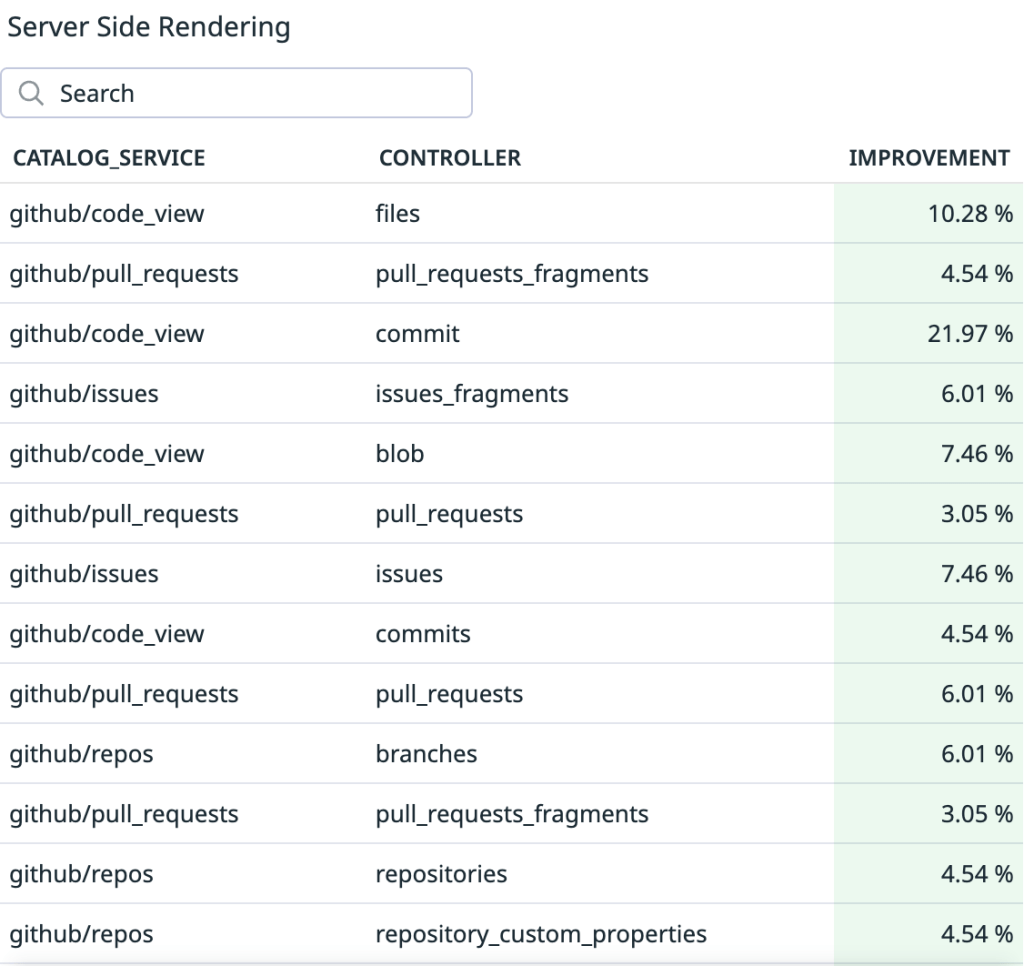
GitHub's engineering team undertook a significant update to its design system, focusing on CSS improvements to enhance overall site performance. The project involved shipping more CSS code as part of a deliberate architectural strategy rather than reducing it. The team prioritized making these major changes without disrupting existing functionality or breaking the user experience. The effort reflects GitHub's ongoing commitment to optimizing its platform's front-end performance at scale.

0
ProgrammingDEV Community ·

git-bug Shows How Git Refs Can Store Arbitrary Data Without a Database

The open-source tool git-bug, which recently trended on Hacker News, stores bug-tracking data entirely inside a Git repository using custom refs, requiring no external server or database. Each issue is represented as a ref under refs/bugs/, with every change — such as comments or label updates — recorded as a new JSON-based commit linked to its predecessor. This approach leverages Git's built-in content-addressable object store, replication, and deduplication capabilities, effectively turning it into a lightweight event-log database. Developers can apply the same technique to store CI metadata, review notes, audit logs, or deploy configs tied to specific commits using standard Git plumbing commands. The method also supports optimistic locking via git update-ref's compare-and-swap parameter, and data can be synced to remotes by explicitly declaring custom refspecs.

0
ProgrammingDEV Community ·

MCP OAuth 2.1: Why Discovery, PKCE, and Audience Binding Are Non-Negotiable

A technical deep-dive published on DEV Community outlines the critical security gaps in most Model Context Protocol (MCP) OAuth 2.1 implementations. The guide explains that MCP servers must serve protected resource metadata at a well-known endpoint so clients can dynamically discover the correct authorization server, rather than relying on hardcoded configurations. PKCE is mandatory for MCP clients such as CLI tools and desktop apps, which cannot securely store client secrets, and a resource parameter must be included in authorization requests to bind tokens to a specific server audience. Token validation must cover four checks — signature, audience claim, expiry, and scope — since skipping any one of them can enable cross-server token replay or unauthorized access in multi-tenant deployments. The article argues that implementations skipping these steps may appear functional in demos but introduce serious data-leak risks in production environments.

0
ProgrammingDEV Community ·

Kubernetes App Slowness Traced to Redis Queue Blocking, Not Infrastructure

A developer deploying a voting app on AWS EKS via Terraform and Kubernetes noticed intermittent response times ranging from under a second to 60 seconds, despite all pods showing healthy. Initial suspects like AWS Classic ELB warm-up and DNS propagation were ruled out using curl's timing breakdown, which showed TCP connections completing in under 40ms every time. Further testing across three pod replicas revealed the same pod could respond instantly or take nearly a minute, eliminating the theory of a single faulty pod or node. Since all voting pods shared one Redis instance, Redis was inspected next, showing sub-millisecond average command latency. However, the investigation pointed toward Redis's single-threaded command queue as a potential bottleneck, where bursts of commands could cause delays even when individual commands were fast.

← NewerPage 925 of 3182Older →