0
Crypto & Web3CoinDesk ·
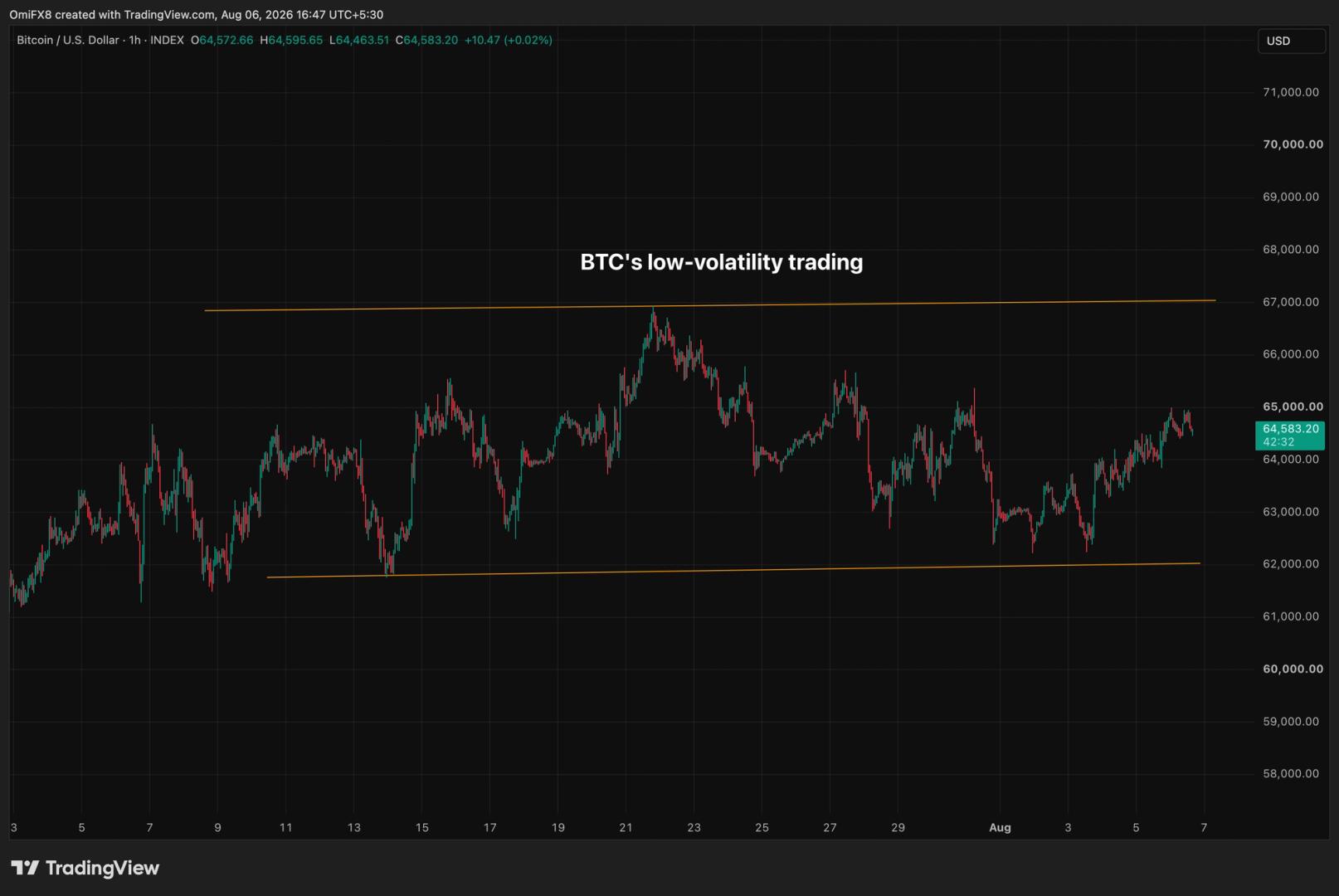
Bitcoin’s low volatility doesn’t necessarily mean low risk
Your day-ahead look for Aug. 6, 2026
Your day-ahead look for Aug. 6, 2026
The Blockchain Association's Summer Mersinger has publicly challenged the Wall Street Journal's editorial board over its stance on crypto legislation. Mersinger argues the board mischaracterizes the Clarity bill, which she describes as pro-innovation, pro-competition, and pro-consumer. The WSJ editorial board reportedly opposes the bill, a position Mersinger contends contradicts free-market principles. The Clarity bill is framed by its supporters as a measure designed to foster healthy competition and protect consumers in the crypto space.

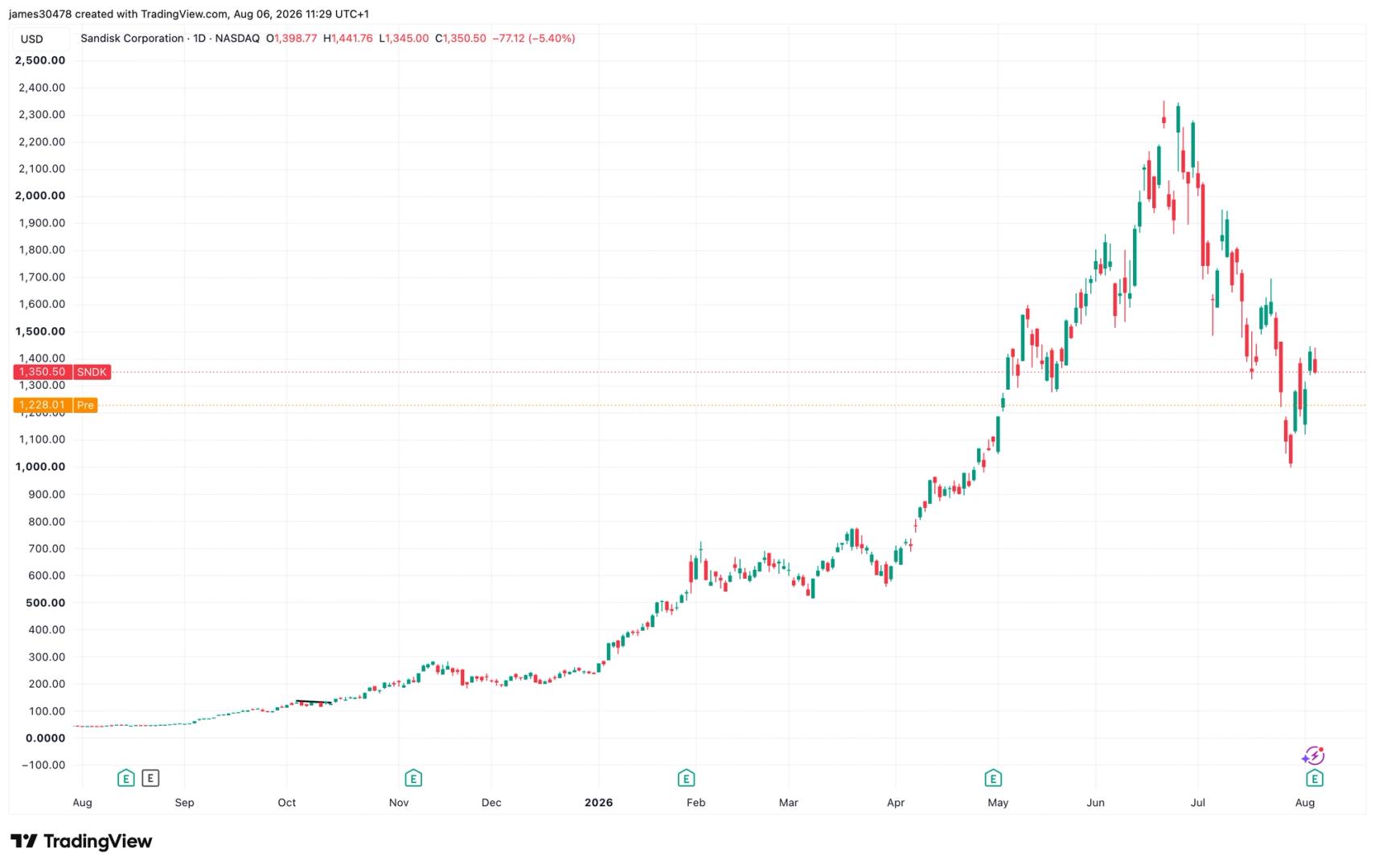
Shares of SanDisk and Western Digital fell roughly 10% even after the companies reported strong quarterly earnings, disappointing investors who had expected more. The sell-off has prompted analysts to question whether capital may be shifting away from artificial intelligence-related stocks. Some observers suggest this rotation could benefit alternative assets, including bitcoin and the broader crypto market. The development highlights growing uncertainty around AI sector valuations and where investors may deploy funds next.
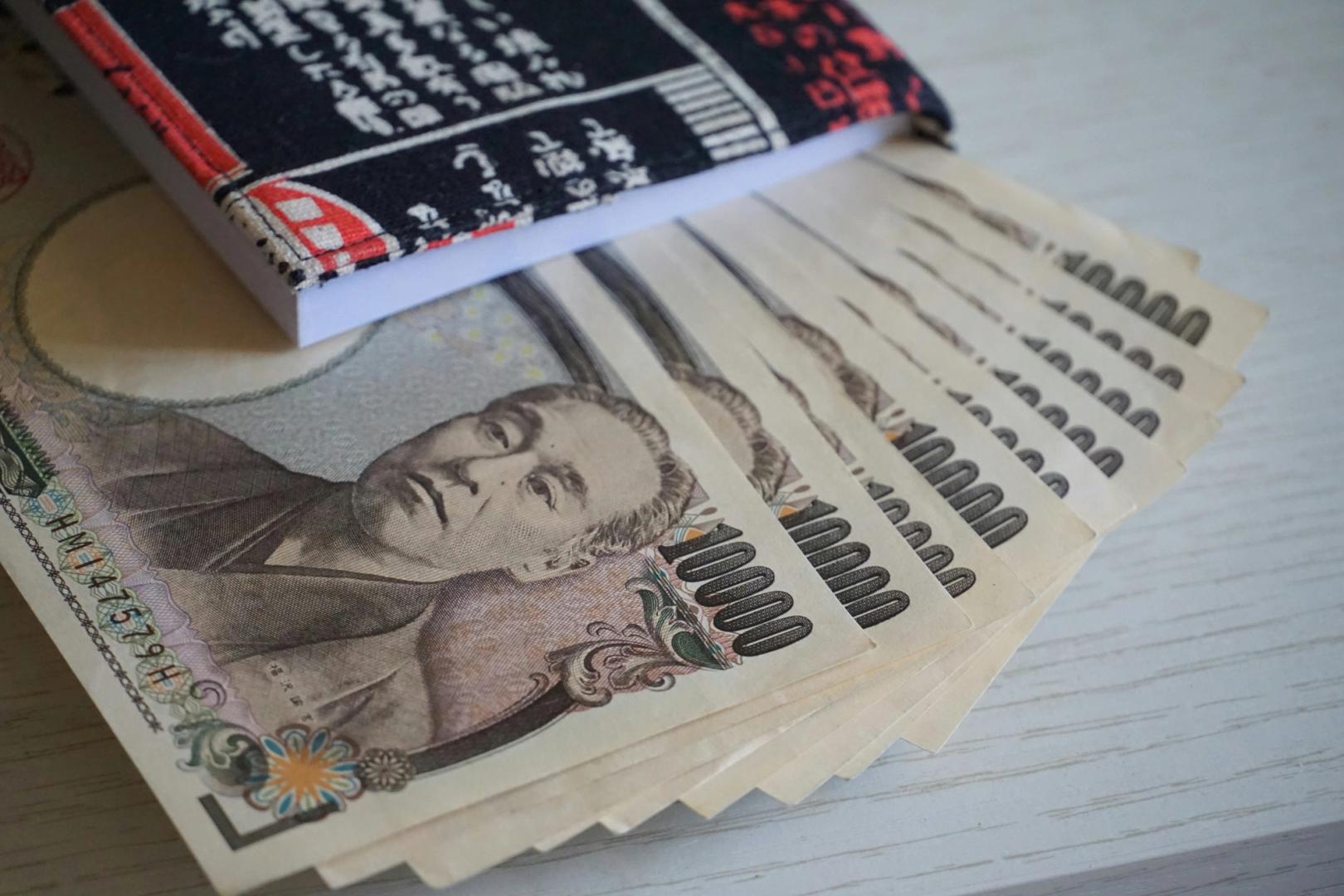
Japanese yen-pegged stablecoin issuer JPYC has secured $38 million in a Series B funding round. The round was led by AZ-COM Maruwa, a major Japanese logistics company. This latest investment pushes JPYC's total fundraising to $106 million overall. The company has now completed seven funding rounds since it began raising capital in November 2021.
Bitcoin and Ether, the two largest cryptocurrencies by market capitalization, are posting gains while most other digital assets decline. The broader altcoin market is falling out of favor with traders, who appear to be shifting capital toward more established tokens. Among the CoinDesk 20 index constituents, only Bitcoin and Ether are trading in positive territory. This trend reflects a risk-averse sentiment in the crypto market, with investors seeking relative safety in the most liquid and widely recognized assets.
Federal prosecutors have charged Taj Tarsha, founder of an NFT startup, with misappropriating funds raised from investors. Tarsha allegedly raised $10 million from backers under false pretenses. Prosecutors claim he diverted investor money toward personal expenses rather than legitimate business purposes. The charges reflect growing regulatory scrutiny of fundraising practices within the NFT and crypto space.
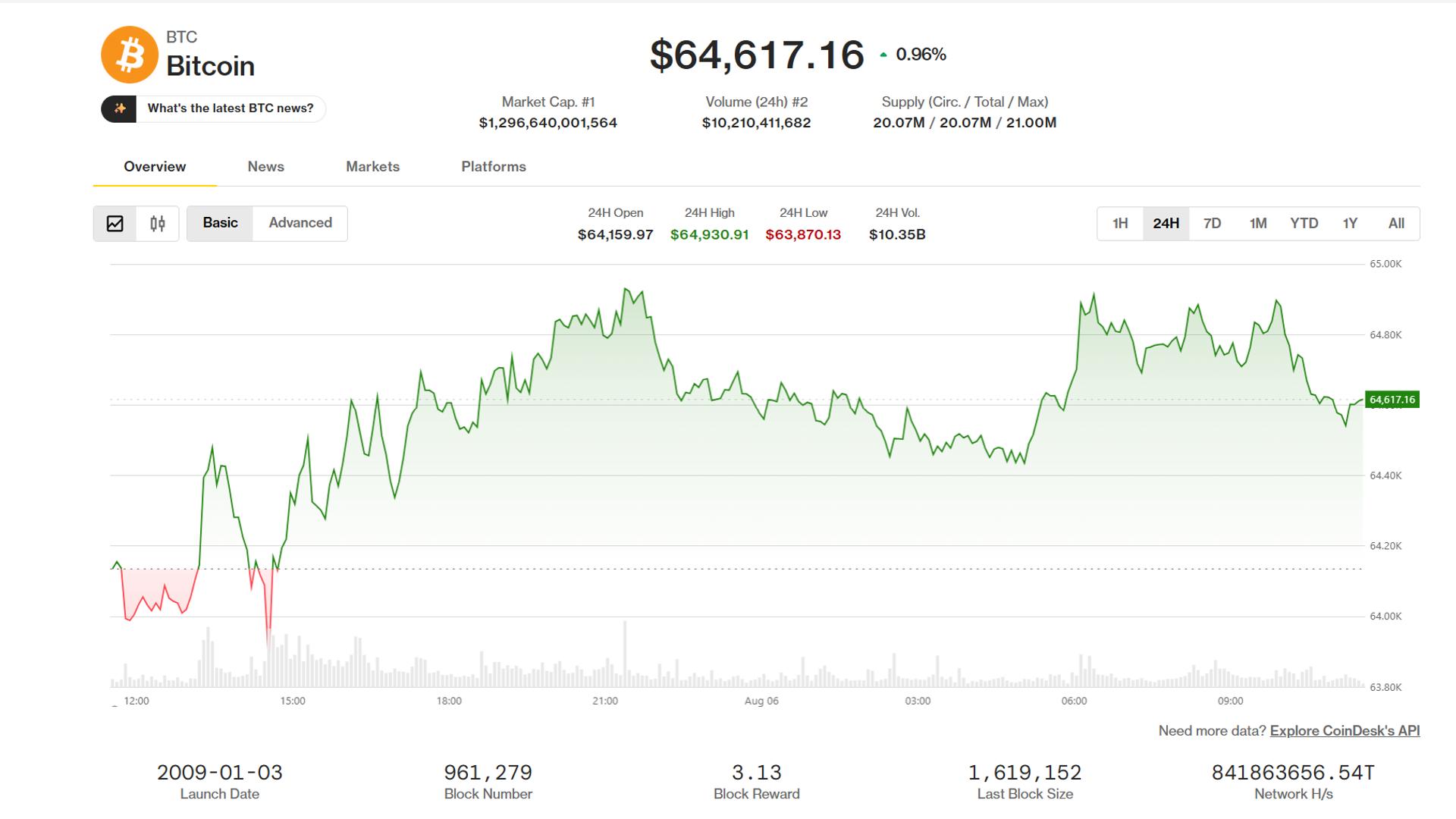
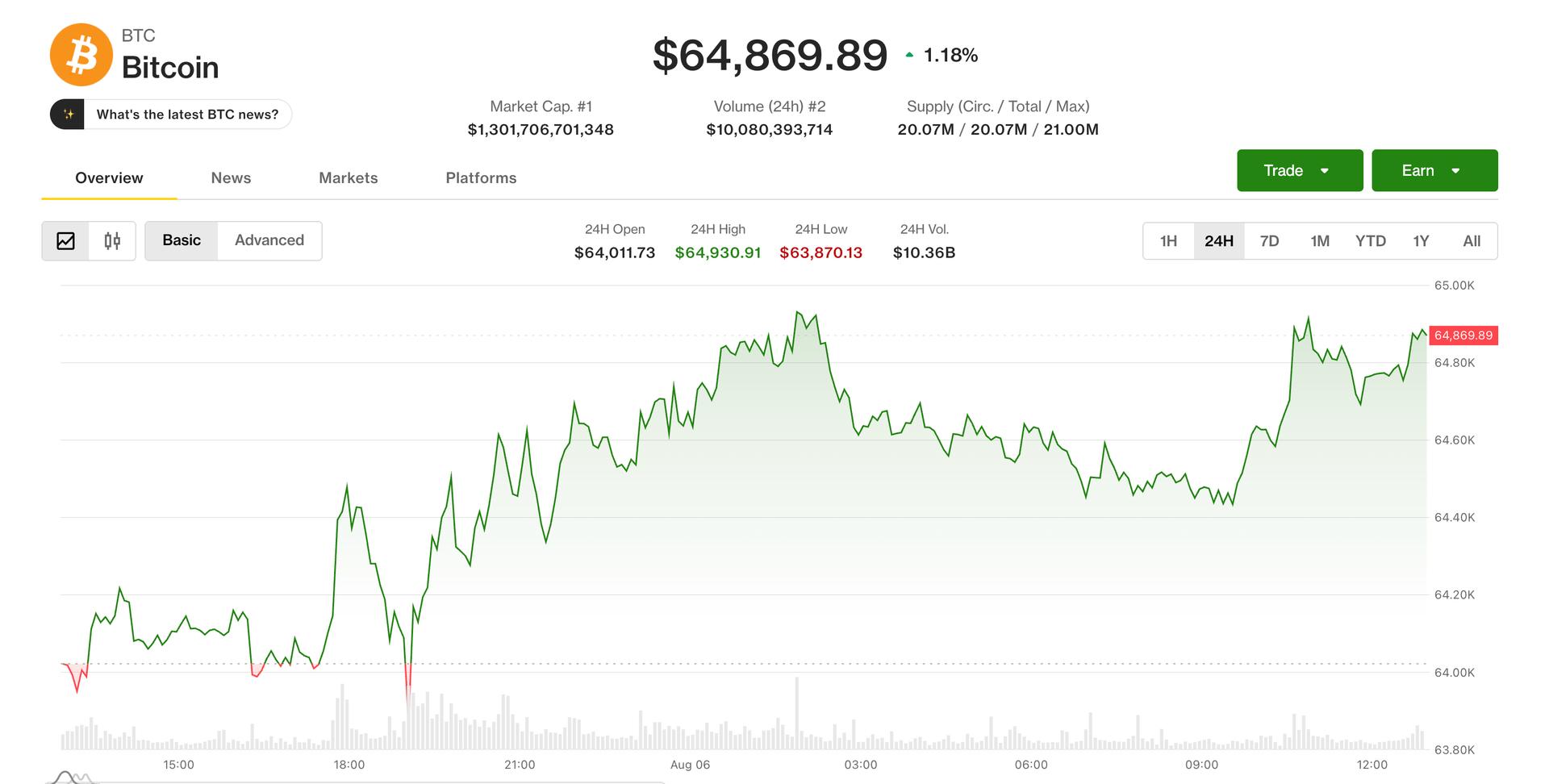
Bitcoin edged closer to the $65,000 mark as improving risk sentiment lifted crypto markets. Comments from Donald Trump regarding jobs, inflation, and a potential Strait of Hormuz deal contributed to the positive mood among investors. Falling oil prices have fueled hopes of easing inflation, encouraging appetite for riskier assets like Bitcoin. However, analysts caution that Bitcoin's next significant move will depend on whether declining oil prices translate into lower Treasury yields and a weaker US dollar.
A volunteer group of Bitcoin developers has identified 85 critical bugs in Bitcoin's codebase, describing the situation as extremely serious. The team is using AI models to scan Bitcoin codebases and is discovering approximately one critical vulnerability per hour per person. The compute costs required to run these AI-powered audits are running at roughly $10,000 per day. The findings raise significant concerns about the security and resilience of the Bitcoin network's underlying code.

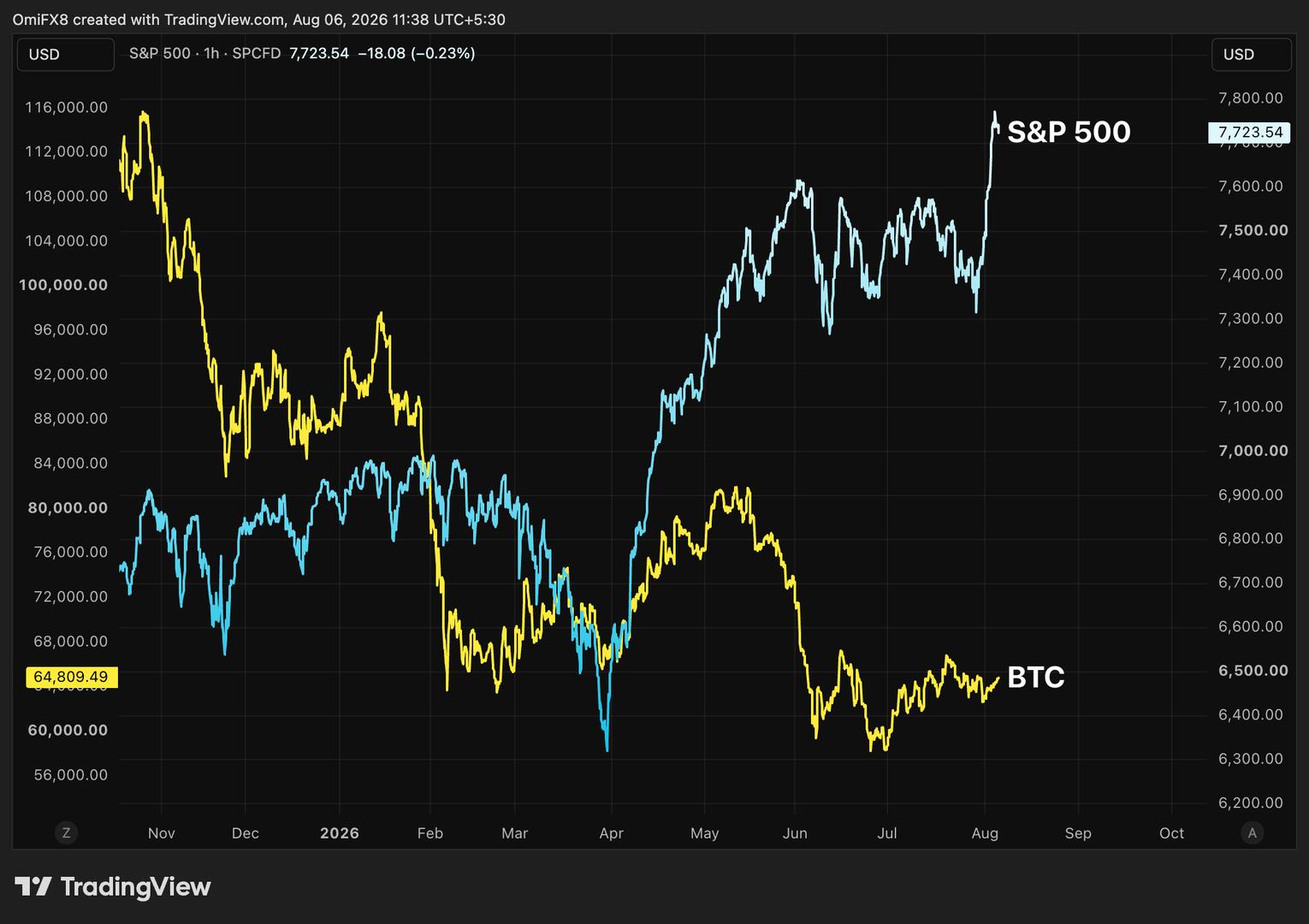
The S&P 500 has added approximately $2 trillion in market value this month, an amount roughly equal to the entire cryptocurrency market cap. Despite this significant rally in equities, Bitcoin has shown little to no upward movement in response. Analysts suggest the disconnect goes beyond simple market dynamics. The divergence highlights a growing gap between traditional financial markets and the crypto sector's current momentum.
Bitcoin has stabilized above the $64,000 mark as traders keep a close eye on market developments. A significant $101 billion worth of SpaceX stock is set to become tradable on Thursday, drawing investor attention. Meanwhile, sentiment in global markets was rattled as the AI trade showed signs of weakness. South Korea's Kospi index reflected this turbulence, dropping 4.4% amid the broader market uncertainty. These converging factors are shaping cautious trader behavior across both crypto and traditional markets.
Blockchain analytics firm CryptoQuant has identified large XRP spot buying orders that suggest major holders are quietly accumulating the token rather than driving a price breakout. Meanwhile, Ether is trading below its realized value, meaning the average holder is currently at a loss on their investment. This deeper level of capitulation in Ether gives it the strongest valuation case among the three major cryptocurrencies — Bitcoin, Ether, and XRP. CryptoQuant's analysis positions ETH as potentially undervalued relative to its historical cost basis compared to its peers.

CASHCAT, the memecoin associated with the launch of Robinhood Chain, has surged 120% over the past week. The token's market capitalization has recovered to approximately $86 million. Meanwhile, Robinhood Chain has accumulated a total value locked of $774 million across its ecosystem. Tokenized assets, which represent the blockchain's core stated purpose, account for a comparatively modest $27.6 million of that total.

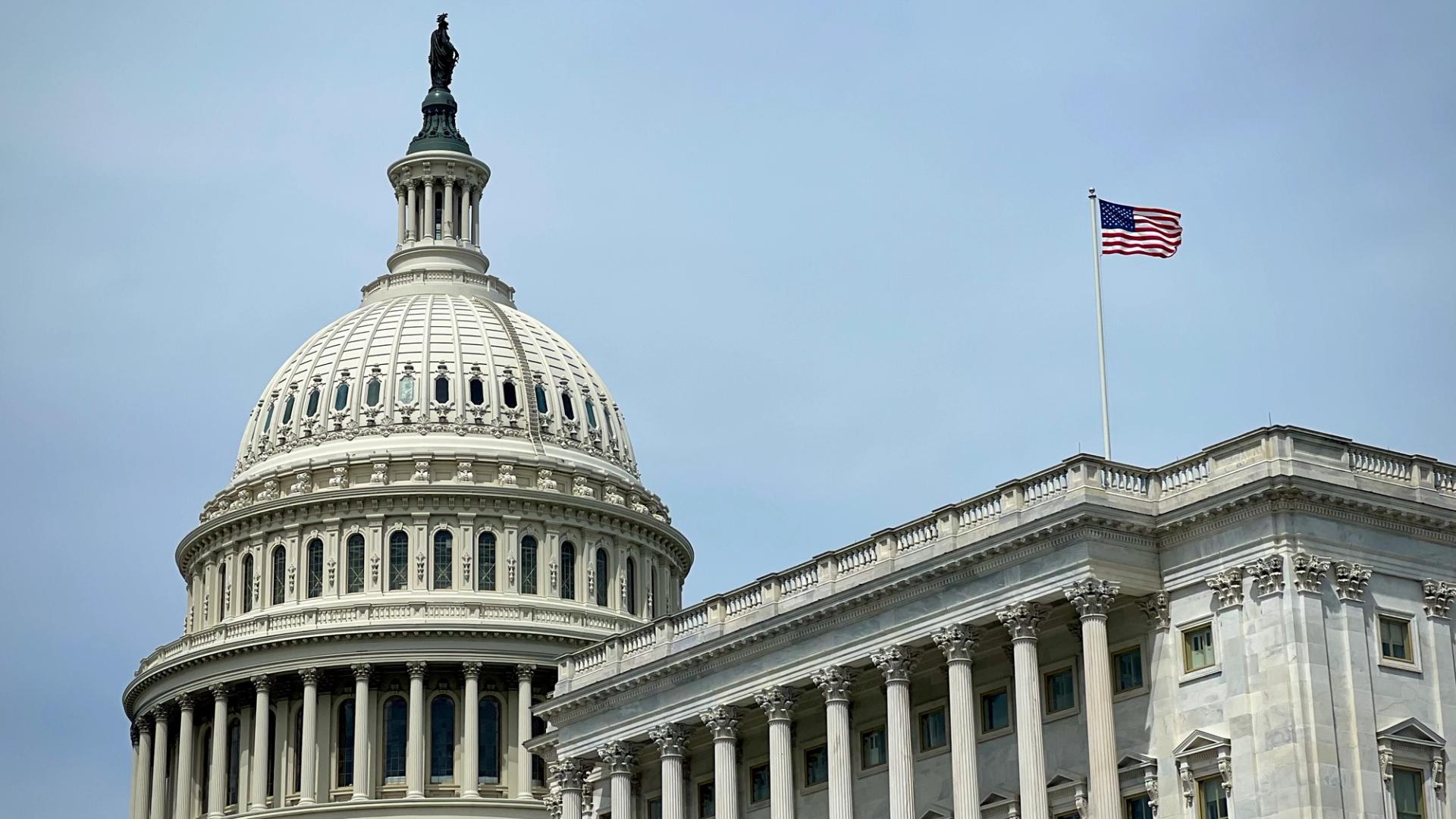
The U.S. Senate has not yet indicated whether it will move forward with the Digital Asset Market Clarity Act. The legislation, which aims to regulate digital asset markets, faces an uncertain timeline on Capitol Hill. With the Senate's summer recess approaching, the window for near-term action is narrowing. Several possible outcomes remain on the table depending on whether lawmakers prioritize the bill before the break.
Crypto firm RedotPay has pledged to strongly contest a lawsuit filed against it by major crypto exchange Binance. The legal action was filed in Hong Kong, where Binance alleges that RedotPay unlawfully poached its customers. RedotPay has publicly stated its intention to defend itself vigorously against the claims. The dispute highlights growing competition and legal tensions within the cryptocurrency industry.

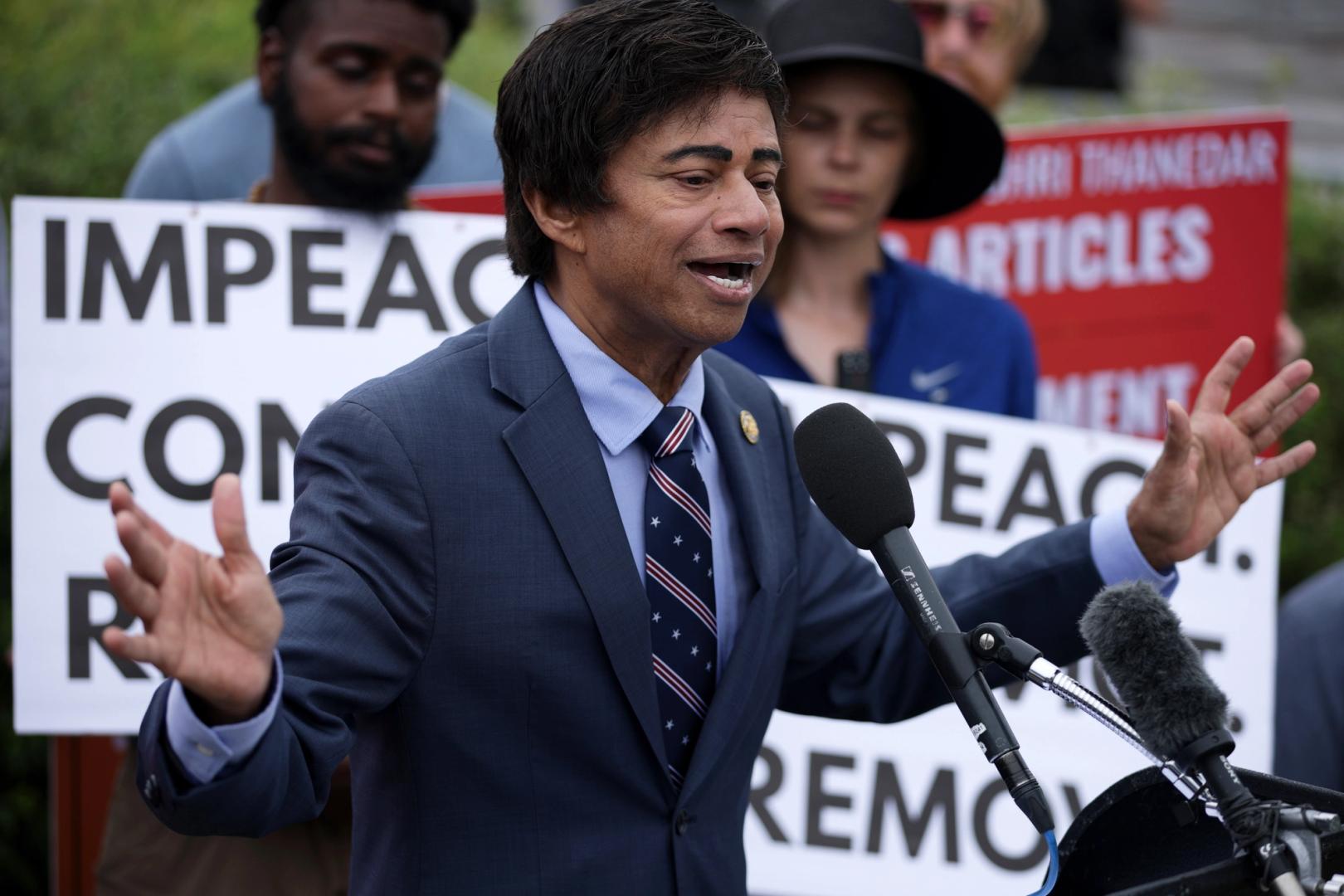
The cryptocurrency industry's top political action committee, Fairshake, suffered a rare defeat after spending $2 million in a Detroit Democratic primary election. The candidate backed by the PAC failed to secure a win in that contest. However, Fairshake-supported candidates achieved victories in other races across the country. Despite the Detroit setback, the overall outcome suggests the number of crypto-friendly lawmakers in Congress is likely to increase following the elections.
A recently disclosed exploit affecting Coldcard hardware wallets has drawn attention from financial analysts tracking the crypto market. Cantor sees the vulnerability as a potential positive for regulated crypto custody providers, who may benefit from increased client demand. Separately, FRNT analysts suggest the breach could push some investors away from self-custody solutions and toward bitcoin ETFs. The incident highlights growing concerns about the security risks associated with personal cryptocurrency storage. Analysts broadly view the flaw as a catalyst that may accelerate institutional and retail adoption of regulated bitcoin exposure products.

Gregory Mall of Lionsoul Global has conducted a backtest examining bitcoin's role within a traditional 60/40 portfolio across different market conditions. The analysis builds on an earlier essay Mall wrote about sizing cryptocurrency risk in investment portfolios. Mall compared three distinct approaches: a direct bitcoin position, a large-cap crypto basket, and a trend-managed allocation sleeve. The backtest was run across bull, bear, and sideways market regimes to assess how each strategy performed under varying conditions. The findings suggest that the method used to hold bitcoin can be just as consequential as the size of the allocation itself.

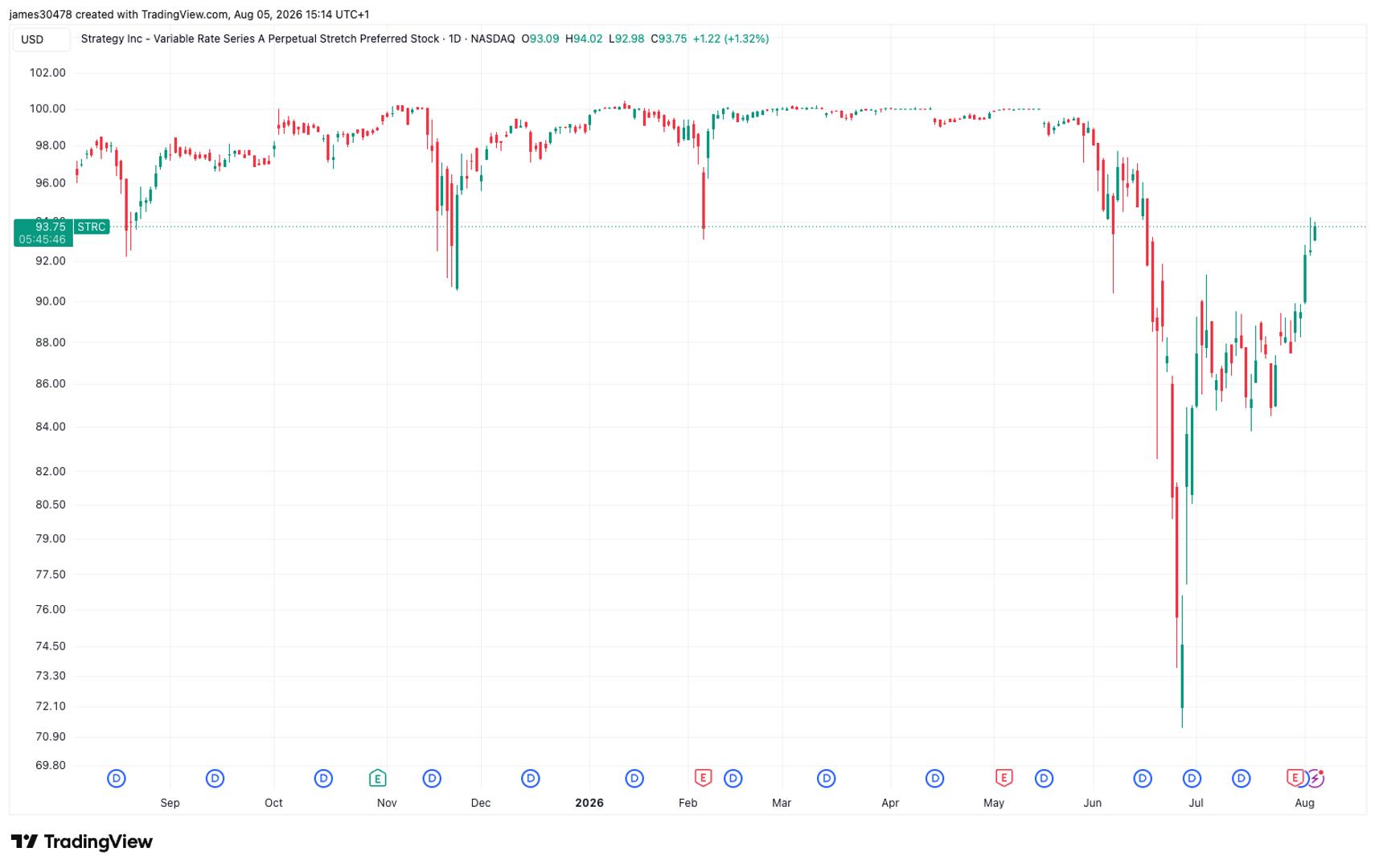
Strategy's preferred stock STRC has rebounded approximately 30% after a period of decline. The recovery has been supported by the company building a substantial $4 billion cash reserve. Strategy also announced a $975 million share repurchase program, which boosted investor confidence. Bitcoin sales contributed to strengthening the company's financial position. The rebound also coincided with a stabilization in bitcoin's price.
Nomura's digital asset subsidiary Laser Digital has made a strategic investment in ZIGChain, estimated to be in the high single-digit millions. The investment is aimed at advancing on-chain private credit operations in the United Arab Emirates. ZIGChain is positioning itself as a blockchain platform to facilitate private credit markets in the region. The backing from Laser Digital signals growing institutional interest in tokenized credit products across the Middle East.

Despite crypto's growing institutionalization, the market continues to react sharply to news headlines and narratives rather than fundamentals. Analysts observe that price movements are frequently triggered by rumor and sentiment rather than underlying asset value. This behavior persists even as major institutional players have entered the space, suggesting that market maturity has not eliminated speculative reflexes. Experts argue that the real trading edge now lies in analyzing positioning data beneath the surface noise. Understanding what market participants are actually doing, rather than reacting to headlines, is increasingly seen as the key to navigating crypto markets.