0
Crypto & Web3CoinDesk ·
Paul Tudor Jones’ investment firm increases stake in BlackRock's bitcoin ETF after year of selling
Calls fell 85.2% to 148,000 underlying shares, while puts slipped 1.4% to 715,000.

Calls fell 85.2% to 148,000 underlying shares, while puts slipped 1.4% to 715,000.
Dubai-based crypto lawyer Irina Heaver and her team analyzed every major crypto investment deal recorded in the first half of 2026. Their findings reveal that $11.2 billion flowed into the crypto sector during this period. Major institutional players including BlackRock, Goldman Sachs, and Persian Gulf sovereign funds were among the key investors. Notably, all recorded investments were directed exclusively toward regulated crypto firms. Analysts suggest this shift signals a broader move away from crypto's traditionally permissionless and decentralized funding culture.

The US crypto regulatory clarity bill narrowly survived a key legislative hurdle in Washington this week, keeping hopes alive for a formal digital asset framework. Strategy, the bitcoin-focused firm, proceeded with a notable asset sale amid shifting market conditions. Mastercard made headlines with a significant $1.8 billion deal tied to the crypto payments space. Meanwhile, Wall Street continued expanding its footprint in digital assets, signaling growing institutional interest. A security scare also triggered the movement of billions of dollars worth of bitcoin between wallets, raising concerns across the industry.
Ethereum advocate Raman has cautioned that Wall Street's growing preference for private, permissioned blockchain networks is fundamentally flawed. Speaking to CoinDesk, Raman argued that centrally controlled systems undermine the core value proposition of blockchain technology. While acknowledging that permissioned networks have a legitimate role in finance, he stressed they must be built on a transparent and open foundation to deliver real benefits. Without that open base layer, he warned, the trend amounts to a 'race to the bottom' that strips away what makes blockchain meaningful.

President Donald Trump is anticipated to personally attend an upcoming White House meeting scheduled for next week. The gathering will bring together chief executives from the cryptocurrency, prediction markets, and artificial intelligence sectors. Sources familiar with the plans confirmed Trump's expected participation in the high-profile event. The meeting signals the administration's continued engagement with emerging technology industries.
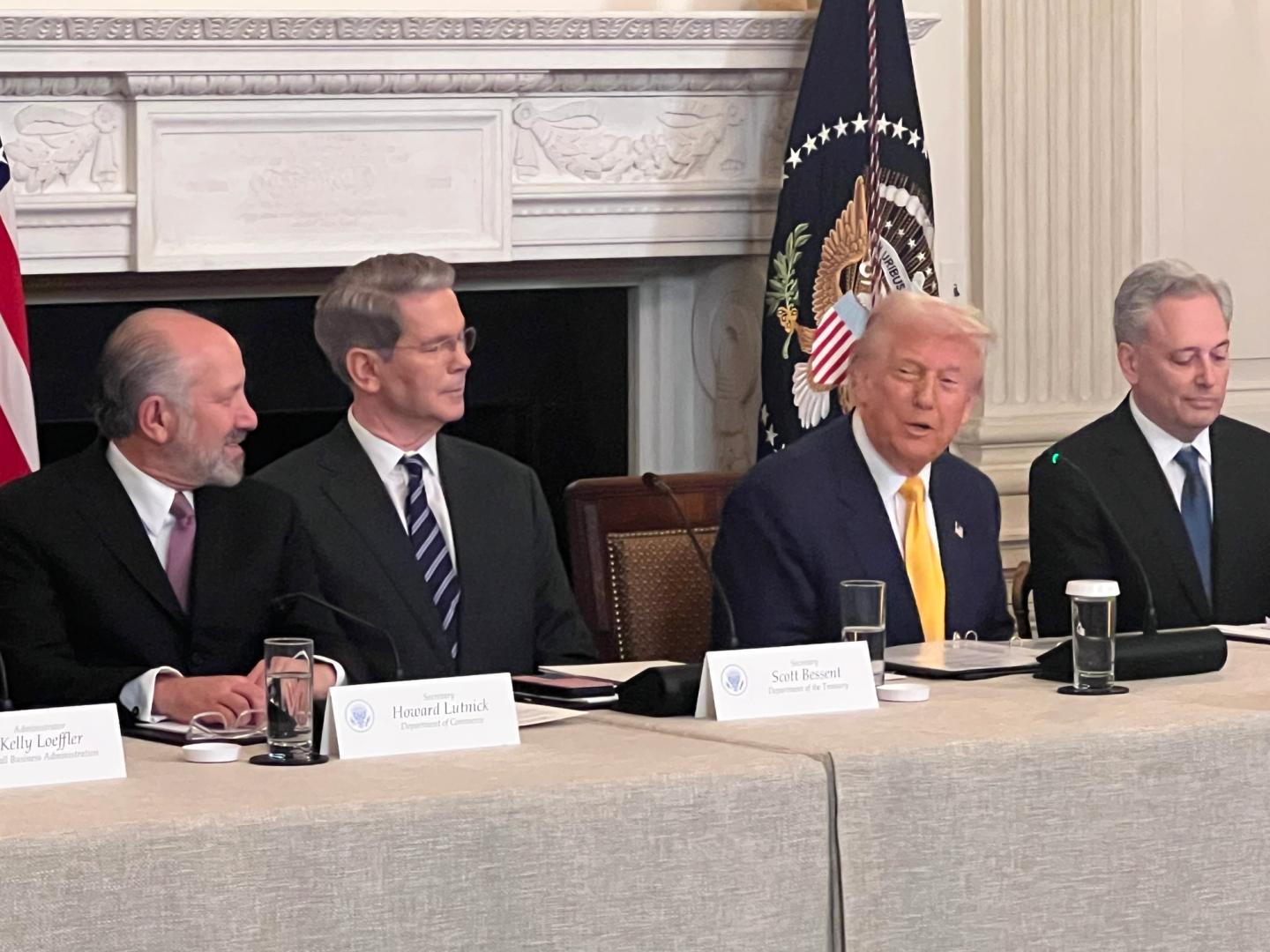
The Office of the Comptroller of the Currency (OCC) granted preliminary conditional approval to World Liberty Trust Co. on Friday. The decision marks a significant regulatory milestone for the crypto venture backed by Donald Trump. The approval is conditional, meaning the company must still meet certain requirements before full banking operations can begin. World Liberty Financial has been positioning itself as a major player in the crypto and decentralized finance space since its launch.
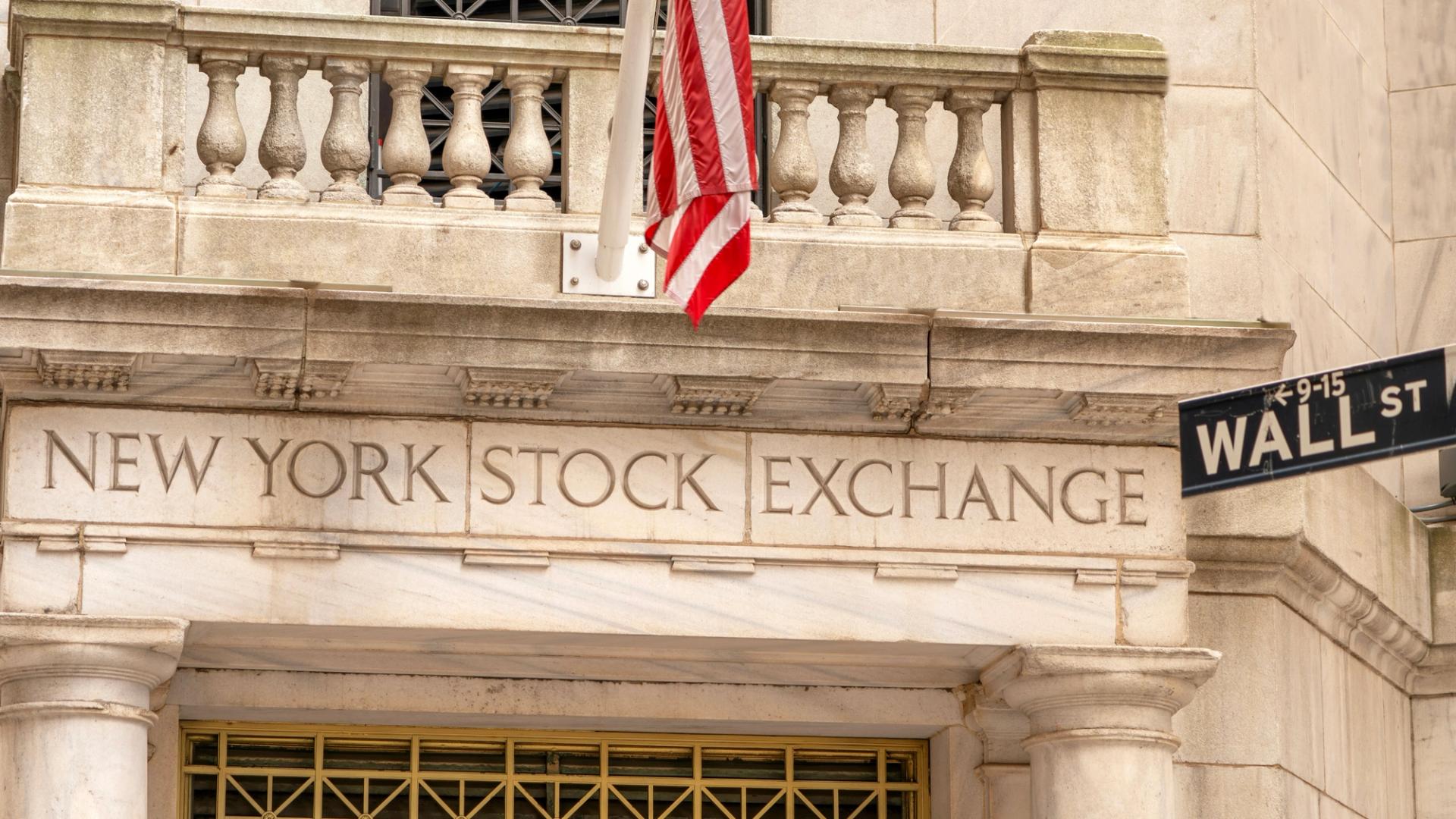
Shares of major crypto firms including Bullish, Coinbase, and Circle fell on Friday following a regulatory setback from the U.S. Securities and Exchange Commission. The SEC's decision to delay action on tokenization has been described as a 'speed bump' for the crypto industry's push into mainstream Wall Street finance. The delay has dampened investor sentiment across companies closely tied to digital asset tokenization efforts. The setback signals that regulatory approval for broader crypto-financial integration may take longer than markets had anticipated.

Bitcoin treasury company Strategy has pushed back against index provider MSCI, arguing that its role should be limited to measuring markets. The company contends that index providers should not have influence over which assets public companies are permitted to hold. Strategy's remarks reflect growing tension between crypto-focused firms and traditional financial index bodies. The dispute centers on whether inclusion criteria set by major index providers effectively restrict corporate treasury decisions.

Israel's largest bank, Bank Leumi, has announced a partnership with Galaxy to offer cryptocurrency trading services to its customers. The bank plans to enable trading in bitcoin, ether, and solana through its existing investment app. The service is expected to go live in early 2027. This move marks a significant step toward mainstream crypto adoption within Israel's traditional banking sector.

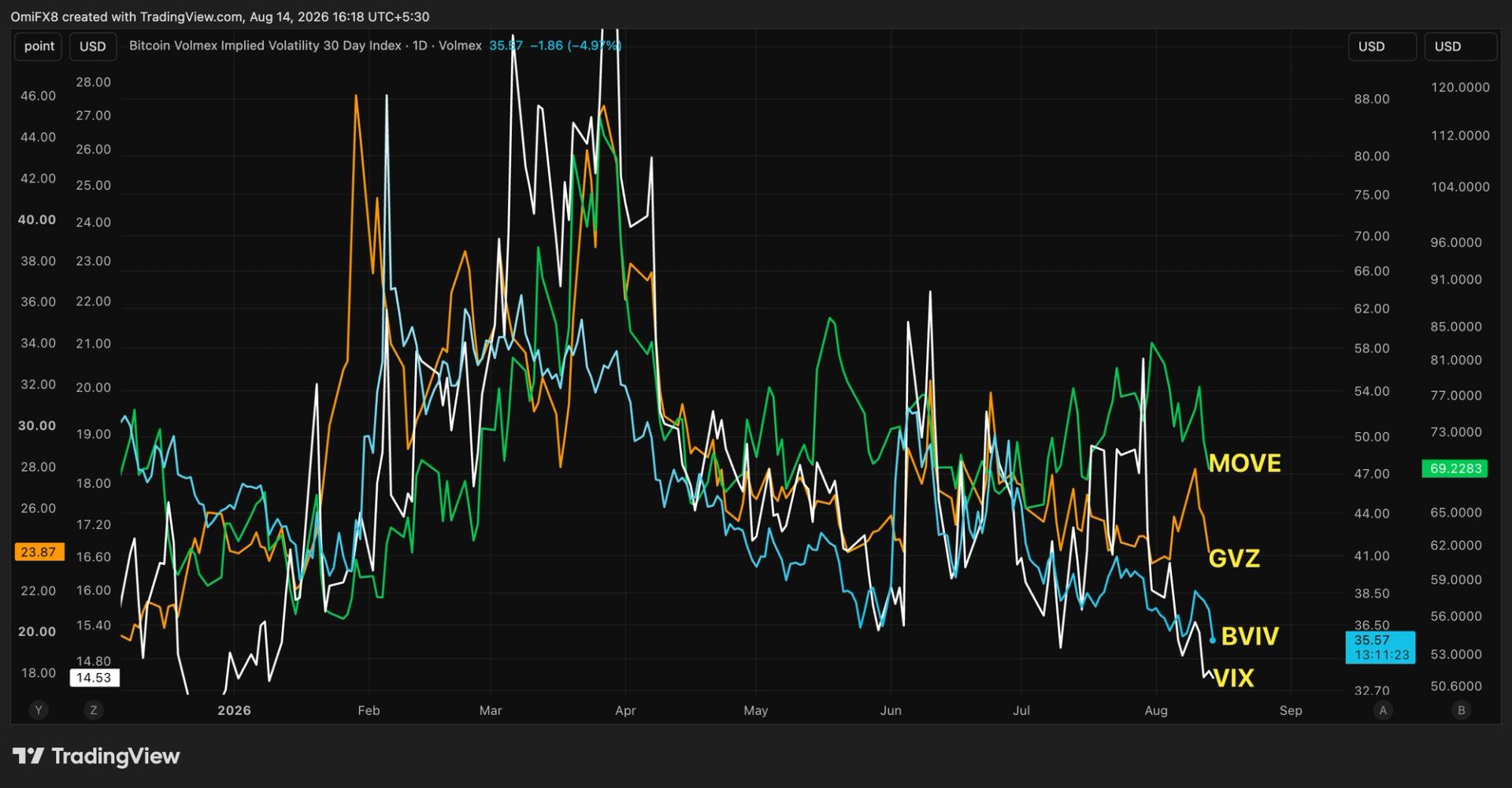
As of August 14, 2026, volatility has eased across both cryptocurrency and traditional financial markets. This relative calm persists even as geopolitical risks stemming from U.S.-Iran tensions continue to linger in the background. Rising sovereign debt levels also remain a concern for global markets, though they have not triggered significant price swings. Traders and analysts are monitoring these underlying risks closely, as they could reignite market turbulence. The current period of stability offers a brief respite for investors navigating an uncertain macroeconomic environment.
World Liberty Financial, a crypto venture linked to the Trump family, has delayed its planned sale of a Maldives resort token. The postponement was prompted by the ongoing Iran war, which has disrupted travel across the region. The token was intended to be tied to a resort property in the Maldives. No new date for the token sale has been announced as of yet.

Bitcoin declined, wiping out all gains recorded in the previous week, as U.S. inflation data failed to trigger any upward momentum in the crypto market. Spot bitcoin ETFs experienced consecutive days of outflows for the first time since late July, marking August's first two-day drawdown. Altcoins also struggled, with most failing to establish a clear price direction amid the broader market weakness. The ETF outflow streak signals a cautious shift in institutional sentiment following a period of relative stability in late July.
Stablecoin payments firm RedotPay has reportedly put its plans for a $1 billion U.S. initial public offering on hold, according to Bloomberg. The company had been considering listing on a U.S. exchange as part of its growth strategy. RedotPay's spokesperson declined to comment on any IPO-related plans when approached for a response. No official explanation has been provided for the reported pause in proceedings.
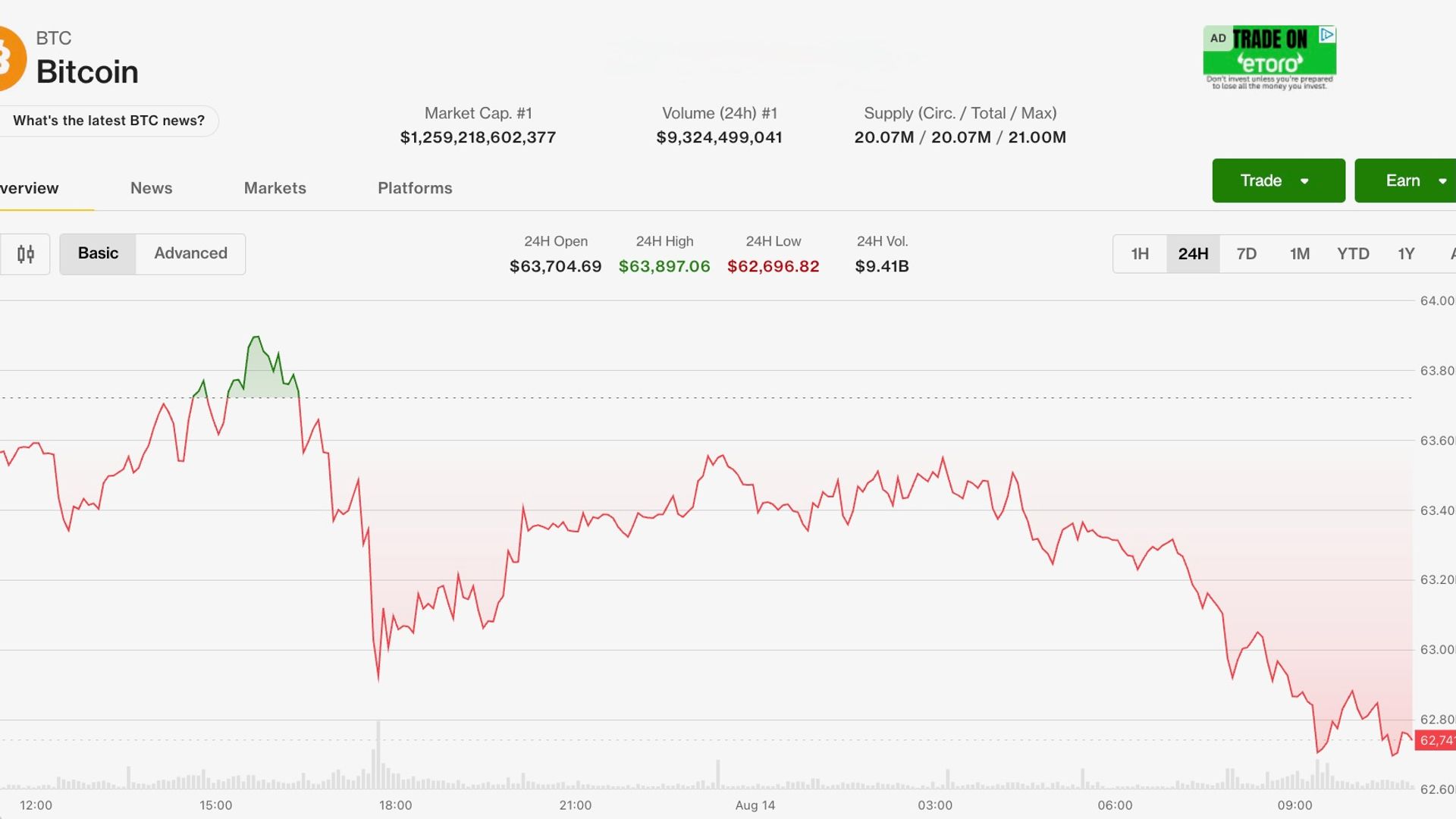
Bitcoin fell below the $63,000 mark as broader macroeconomic pressures weighed on risk assets. WTI crude oil surpassed $82 per barrel, intensifying concerns about persistent inflation. Rising bond yields added further strain, prompting investors to move away from riskier investments. The combination of climbing energy prices and higher yields created a challenging environment for cryptocurrencies and other risk-sensitive assets.

Major cryptocurrencies including Bitcoin and XRP are facing downward pressure amid a worsening regulatory outlook. XRP has fallen close to the $1 mark, a key psychological level for the token. Bitcoin ETF flows have failed to provide meaningful support to prices during this period. Traditional financial markets have also offered little relief to the struggling crypto sector. The combination of regulatory headwinds and weak institutional demand has left top digital assets nursing notable losses.

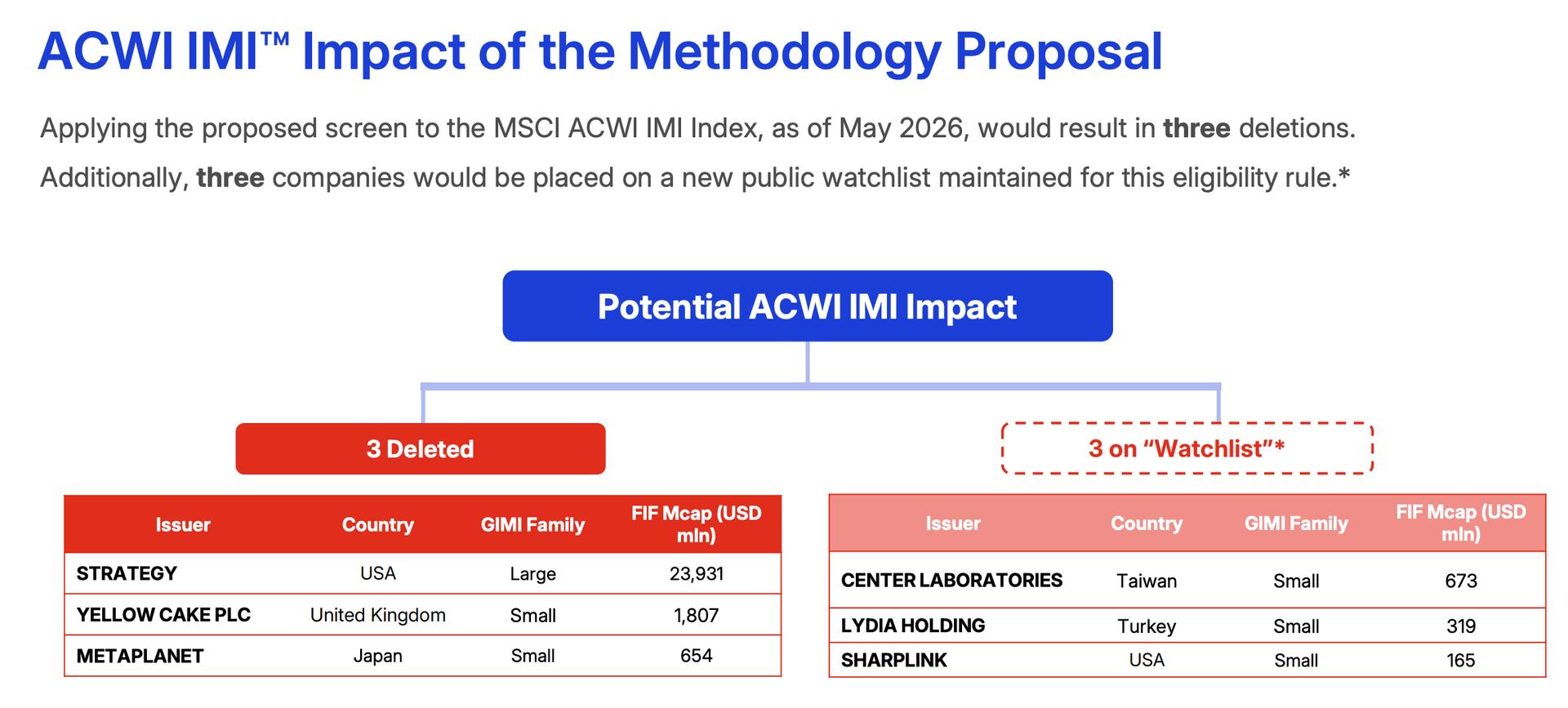
MSCI has launched a new consultation proposing to exclude companies classified as 'non-operating' from its stock indexes. The proposal specifically targets firms whose primary activity revolves around holding assets rather than running traditional business operations. Bitcoin treasury companies Strategy and Metaplanet have both been identified on the proposed deletion list. The move reflects growing scrutiny of corporate entities that have built their models around accumulating cryptocurrency rather than generating operational revenue.
JPMorgan Chase has ended its banking relationship with Polymarket, a popular online predictions platform. The move took place in late 2025, according to a report by the Financial Times. The decision was driven by regulatory concerns held by the bank. Polymarket, which allows users to bet on the outcomes of real-world events, now faces the challenge of finding alternative banking arrangements.
The U.S. Securities and Exchange Commission has decided to delay the release of its so-called innovation exemption related to tokenization. The exemption was initially expected to be unveiled during a scheduled open meeting focused on crypto regulation, referred to internally as 'Reg Crypto.' That meeting has since been canceled, pushing back the exemption's release. The delay comes amid concerns raised by both Wall Street stakeholders and the White House. At least a portion of the exemption had been prepared and was ready for release before the meeting was called off.
The U.S. Securities and Exchange Commission has abruptly postponed a highly anticipated meeting related to its proposed cryptocurrency regulation. The rule, often referred to as Reg Crypto, was expected to be a significant first step in formal crypto oversight by the SEC. No new date has been announced for the rescheduled meeting, leaving the timeline uncertain. The sudden cancellation has extended an already lengthy wait for clarity on major crypto rules in the United States.
Tether, the issuer of the world's largest stablecoin USDT, has completed a long-promised full financial audit by a major accounting firm. KPMG U.S. conducted the examination, reviewing Tether's books and physically verifying assets including gold bars. The audit marks a significant milestone for Tether, which has faced years of scrutiny over the reserves backing its $180 billion in circulating USDT tokens. The completion of a Big Four audit is expected to bolster confidence in Tether's financial transparency among regulators and investors.