0
Crypto & Web3CoinDesk ·
Bitcoin loses touch with the Dollar Index, U.S. stocks ahead of the Fed
Your day-ahead look for Sept. 16, 2026
Your day-ahead look for Sept. 16, 2026
Bitcoin has been trading around the $80,000 mark as uncertainty surrounding the U.S. Federal Reserve's next move keeps markets cautious. Traders are increasingly accumulating stablecoin positions as a defensive strategy while waiting for greater clarity on monetary policy. A widely expected interest rate hike from the Fed has already been factored into market sentiment to some degree. However, analysts suggest that an unexpected decision to hold rates steady could actually pose a greater risk to Bitcoin's price trajectory. Once the Fed's stance becomes clear, sidelined stablecoin capital could flow back into the crypto market.
Two Prime is expanding into onchain finance with the launch of a Bitcoin lending vault backed by $10 million. The vault has been built on the Pareto platform and is aimed at institutional investors. The move marks a strategic push by Two Prime into blockchain-based financial infrastructure. The product is designed to generate yield on Bitcoin holdings through onchain lending mechanisms.

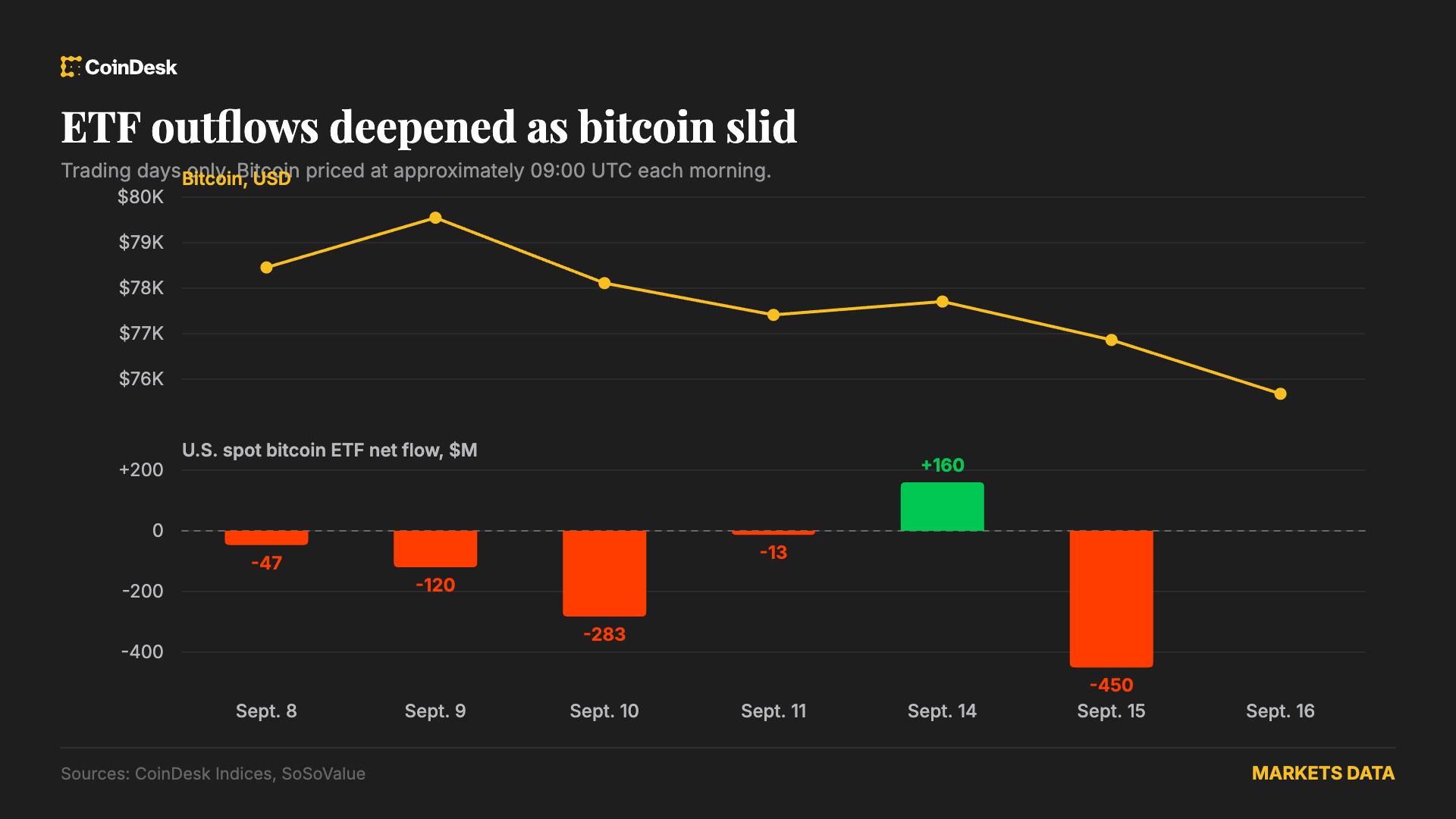
U.S. spot bitcoin ETFs saw outflows of $450 million, their largest single-day withdrawal since June. The losses followed the U.S. Senate's failure to advance the Clarity Act, a key piece of cryptocurrency regulation. The legislative setback triggered sharp declines in regulatory-sensitive digital tokens. Investor confidence appeared rattled by the continued uncertainty surrounding crypto regulatory frameworks in the United States.
Deutsche Bank is preparing to launch a cryptocurrency custody service aimed at institutional clients. The offering will initially support a limited selection of digital assets, including the two largest cryptocurrencies by market cap, bitcoin and ether. Stablecoins such as USDC and EURC will also be included in the debut lineup. The move marks a significant step by one of Europe's largest banks into the digital asset space.
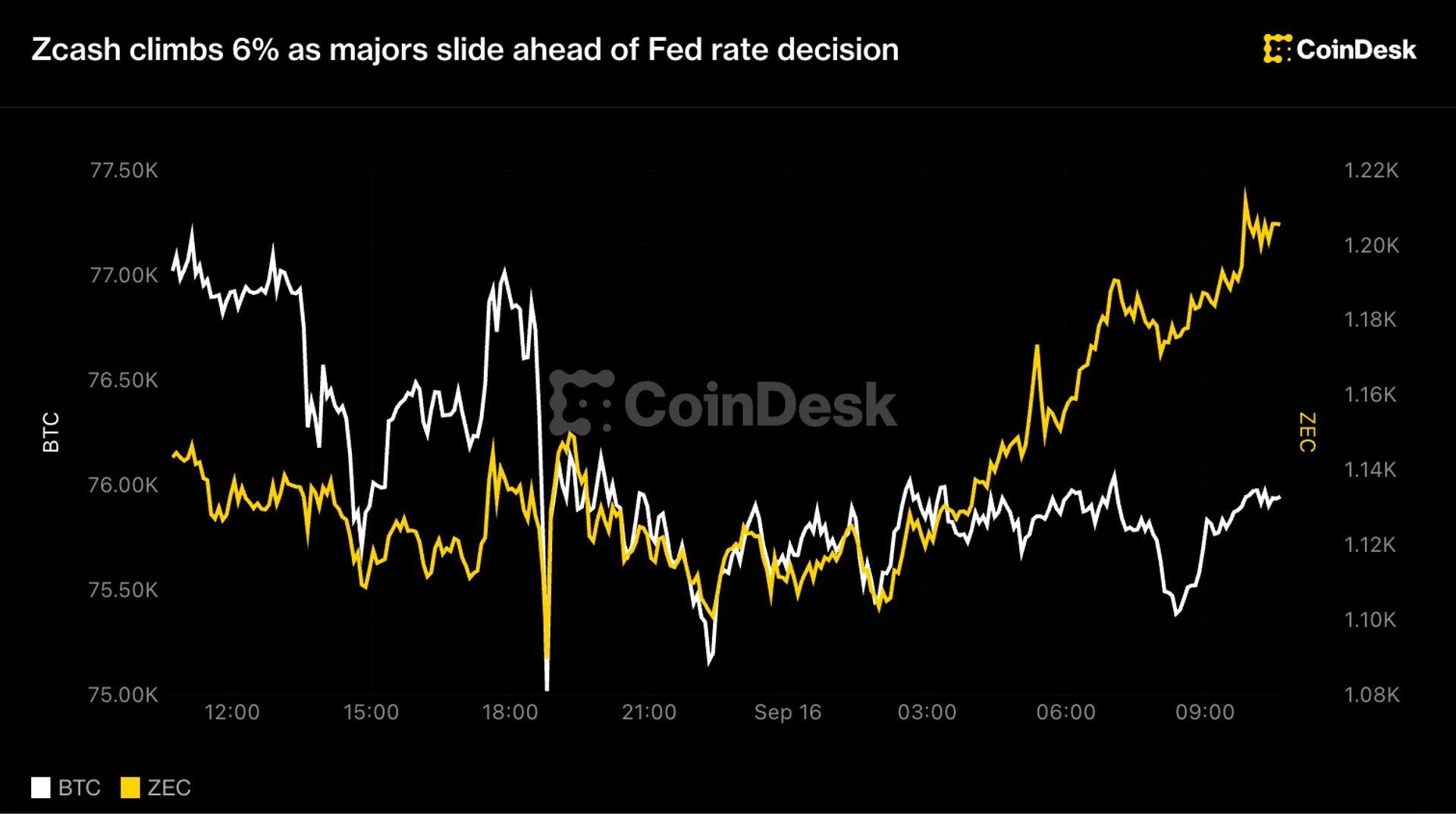
Privacy-focused cryptocurrency Zcash rose 6% while major cryptocurrencies declined ahead of an anticipated Federal Reserve interest rate decision. Zcash has gained approximately 130% over the past 30 days, pushing it close to all-time highs last seen in 2016. Meanwhile, Bitcoin fell to a three-and-a-half-week low, trading below $76,000. The divergence highlights how smaller altcoins can move independently of broader crypto market trends during periods of macroeconomic uncertainty.
Circle, the company behind the USDC stablecoin, has unveiled a new blockchain called Arc designed specifically for payments, tokenized assets, and institutional finance. CEO Jeremy Allaire described the launch as potentially more significant than the creation of USDC itself. The move comes as major banks and payment companies are increasingly entering the stablecoin market. Arc is positioned to serve the growing demand for blockchain infrastructure tailored to financial institutions. The launch signals Circle's ambition to expand beyond stablecoin issuance into broader financial infrastructure.

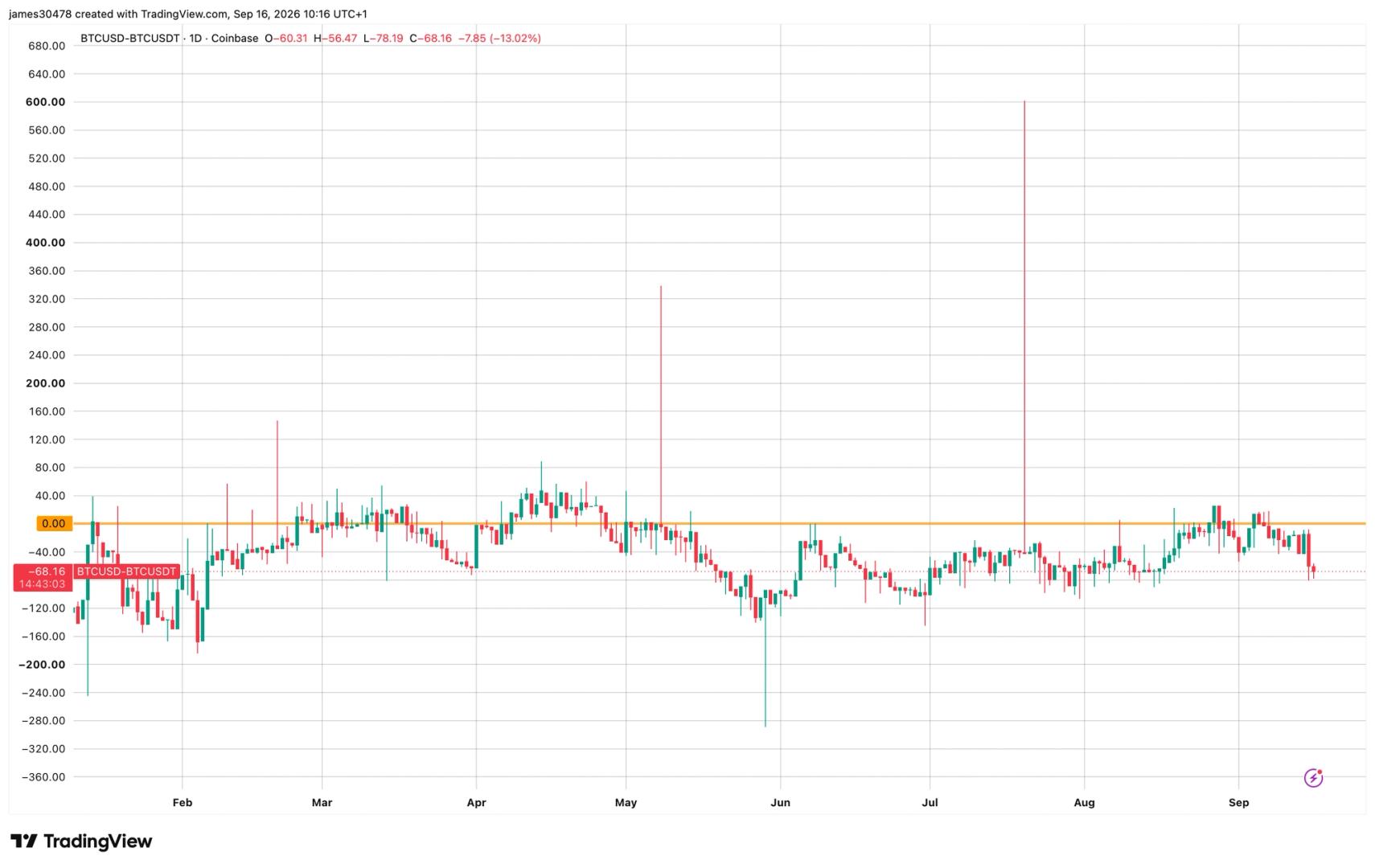
Bitcoin's Coinbase premium has fallen to its lowest level in a month, signaling weakening demand from US-based investors. A legislative setback for the Clarity Act has added to market uncertainty surrounding cryptocurrency regulation. Expectations of a potential Federal Reserve interest rate hike have further dampened investor sentiment. Together, these factors are exerting downward pressure on Bitcoin's price momentum in the US market.
U.S. prosecutors have filed insider trading charges against two Robinhood engineers. The pair are accused of exploiting confidential information about upcoming token listings on the Robinhood platform. Authorities allege they used this non-public data to place trades ahead of public announcements. The trades were reportedly executed through Hyperliquid perpetual futures contracts, allowing them to profit from anticipated price movements.
Ethereum and Coinbase-backed Base blockchain have abandoned efforts to agree on a shared wallet standard following months of negotiations. Ethereum will proceed with its own proposal, EIP-8141, while Base has chosen to adopt EIP-8130 instead. The divergence means the two networks will operate on different transaction systems going forward. This creates a challenge for wallets and applications that function across both networks, which will now need to support two incompatible standards.

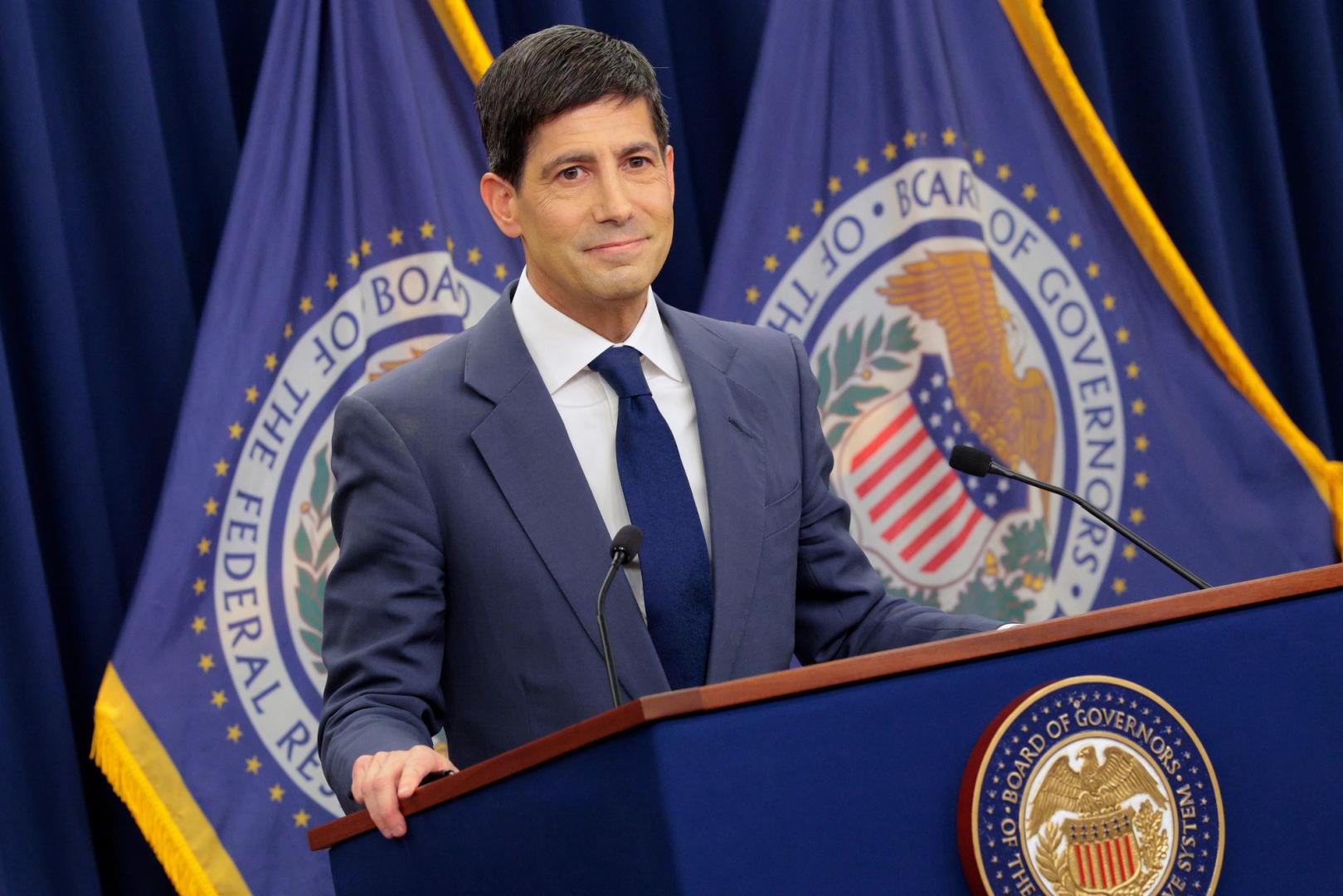
The Federal Reserve's upcoming meeting is shaping up to be a significant challenge for its chair amid intense market pressure. Aggressive market expectations have created a trap that limits the central bank's room to maneuver on policy messaging. A strict stance against forward guidance has further constrained the Fed's ability to communicate flexibly with markets. Failing to deliver a sufficiently hawkish message risks undermining the Fed's credibility as an inflation-fighting institution. Against this backdrop, Bitcoin is being watched as a potential beneficiary of any perceived weakness in the central bank's position.

A Zcash governance vote saw nearly 2.4 million ZEC tokens cast in a community poll on two key network proposals. An overwhelming 99.9% of participating tokens supported reducing block times to 25 seconds, which would significantly speed up transaction processing. Separately, 98.9% voted to maintain the network's existing halving schedule, mirroring Bitcoin's supply-reduction model. The near-unanimous results signal strong community consensus on the future technical and monetary direction of the Zcash network.

Over $570 million in bullish cryptocurrency futures positions were wiped out within a 24-hour period. The liquidations followed the failure of the Clarity Act, which had been anticipated as a positive regulatory development for the crypto market. Bitcoin and Ether long positions suffered the heaviest losses among all digital assets. The event reflects how closely crypto market sentiment is tied to regulatory outcomes in the United States.

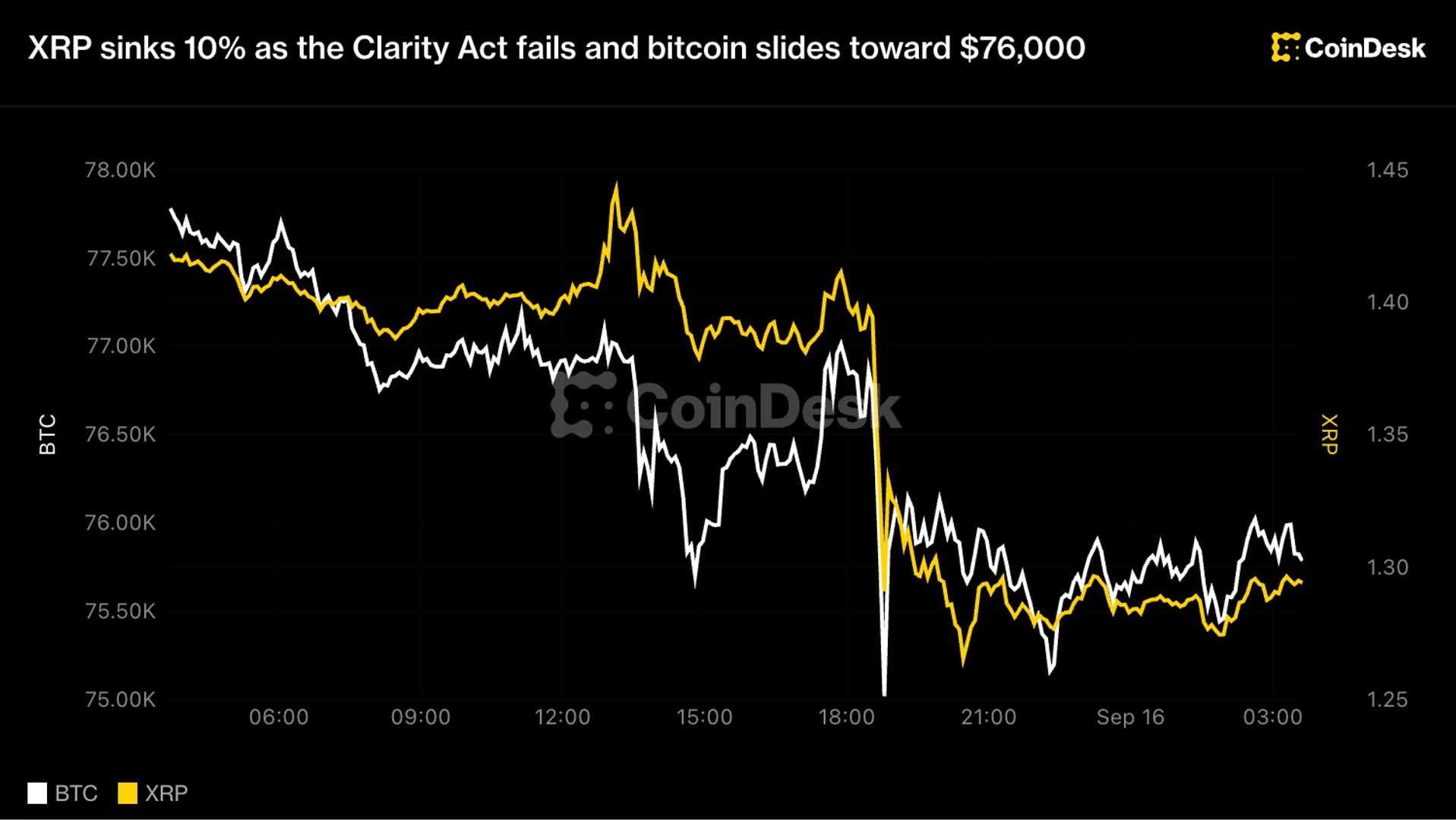
The U.S. Senate rejected a procedural vote on the Clarity Act, falling short by 11 votes in a 49-50 decision. The failed vote dealt a blow to efforts to establish a regulatory framework for the cryptocurrency market. Following the news, XRP led losses among major tokens with a 10% decline. Bitcoin also retreated, sliding toward the $76,000 mark. The broader crypto market saw widespread selling pressure as a result of the legislative setback.
The Clarity Act, a market structure bill that the cryptocurrency industry had placed its highest hopes on, suffered a significant legislative setback. Behind-the-scenes disagreements emerged at the last minute, derailing the bill's progress. Multiple parties were involved in the disputes that ultimately led to the legislation's poor showing. The failure marks a notable blow to the crypto sector's ambitions for regulatory clarity in the United States.
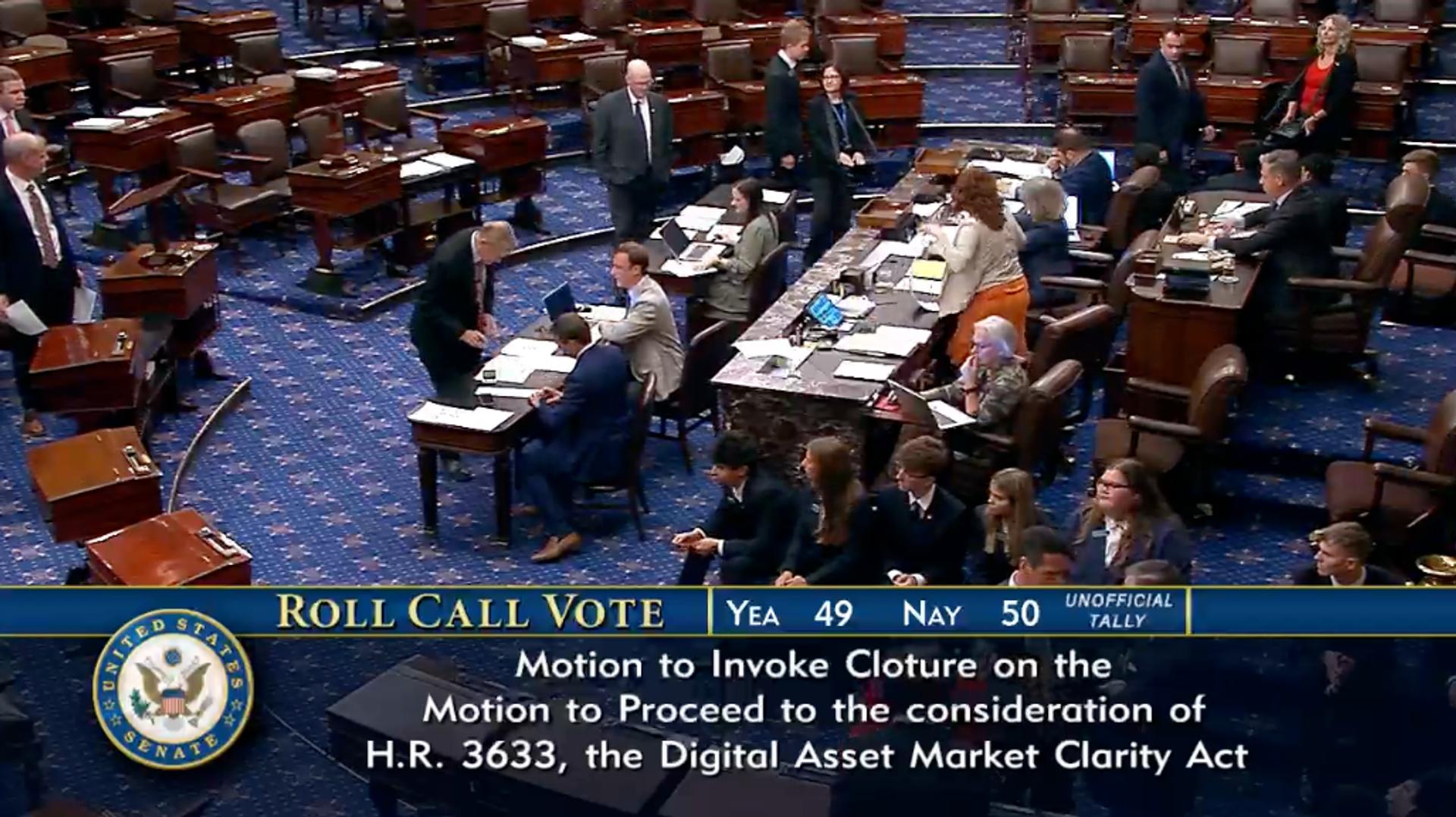
Major cryptocurrency-related stocks fell sharply after the U.S. Senate voted against advancing a key market structure legislation. The bill, known as the Clarity Act, had been anticipated by the crypto industry as a significant regulatory milestone. Companies including Coinbase, Circle, and Galaxy were among the hardest hit in the broad selloff. The Senate's failure to move the bill forward has raised uncertainty about the near-term regulatory outlook for the digital assets sector.

A key piece of U.S. cryptocurrency legislation has failed to advance in the Senate after falling short of the required 60-vote threshold. The bill, known as the Clarity Act, was considered one of the most significant regulatory proposals for American crypto markets. Its defeat marks a setback for the crypto industry, which had been pushing for clearer federal rules governing digital assets. The failure to pass cloture means the legislation cannot proceed to a final vote in its current form.
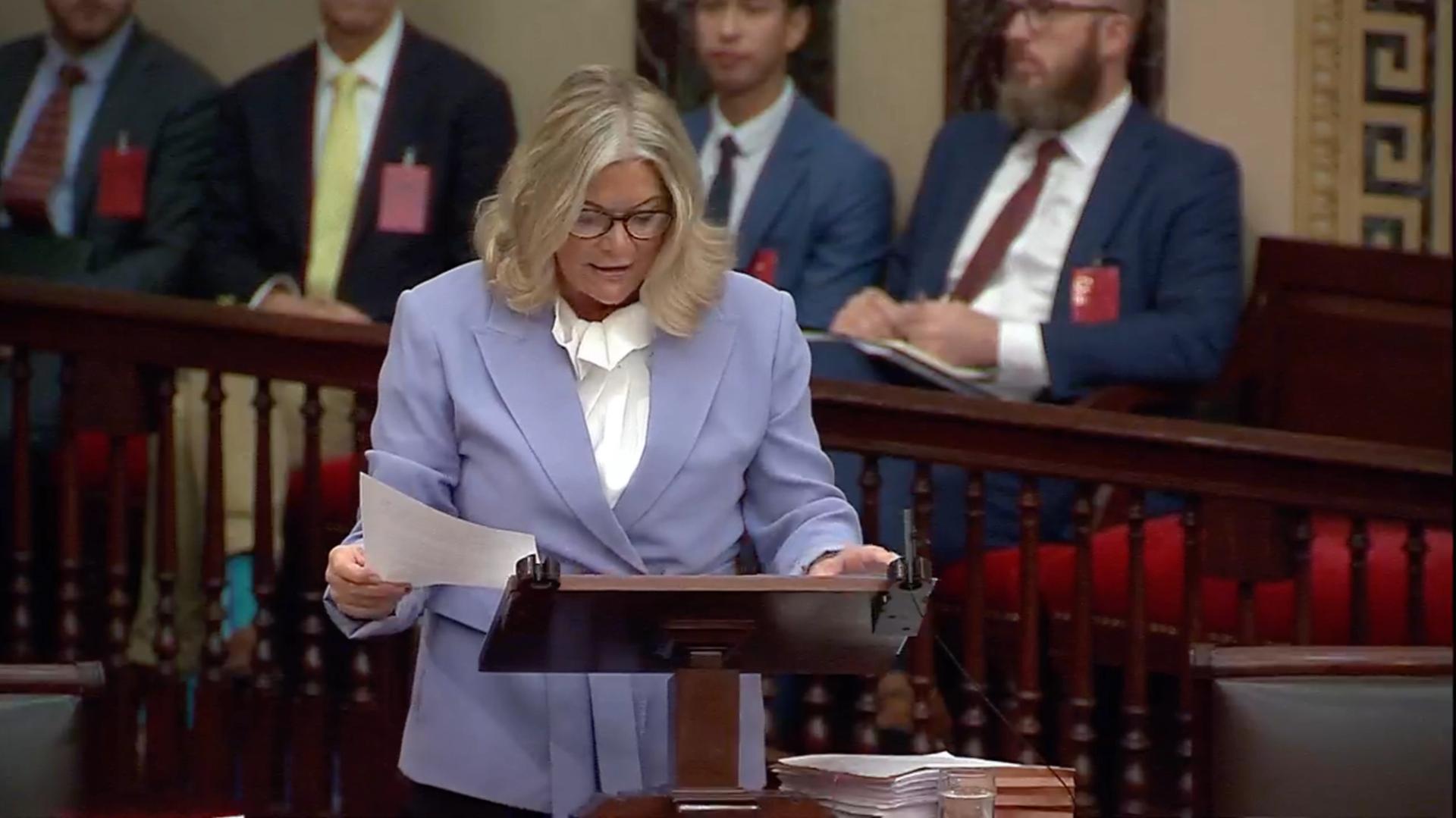
The Crypto Clarity Act, a bill aimed at establishing a regulatory framework for U.S. cryptocurrency markets, has failed in the Senate. The legislation could not secure the 60 votes required to overcome the chamber's procedural hurdle. The defeat marks a significant setback for years of efforts to bring regulatory clarity to the crypto industry in the United States. The bill's failure leaves the U.S. crypto market without the comprehensive federal oversight framework its proponents had sought.
Solana-based DeFi lending protocol Kamino Finance has appointed Michael Weisz, co-founder of investment platform Yieldstreet, as its new Chief Executive Officer. The company is establishing a new headquarters in New York as part of a broader strategic expansion. Kamino is moving to grow its presence in the tokenized assets space, signaling a push toward traditional finance markets. The appointment reflects the protocol's ambition to bridge decentralized finance with Wall Street.

The Crypto Clarity Act, a market structure bill for cryptocurrency regulation, is heading toward a likely defeat in the U.S. Senate. The legislation has not gathered sufficient votes to clear its first procedural hurdle, which is scheduled for Tuesday. Both parties have entrenched in their positions, making a breakthrough appear unlikely. Without a significant last-minute shift in Senate support, the bill is expected to fall short of the threshold needed to advance.