SShortSingh.
Back to feed

Webb Telescope Reveals How a Planet Survived Its Star's Death

0
·1 views

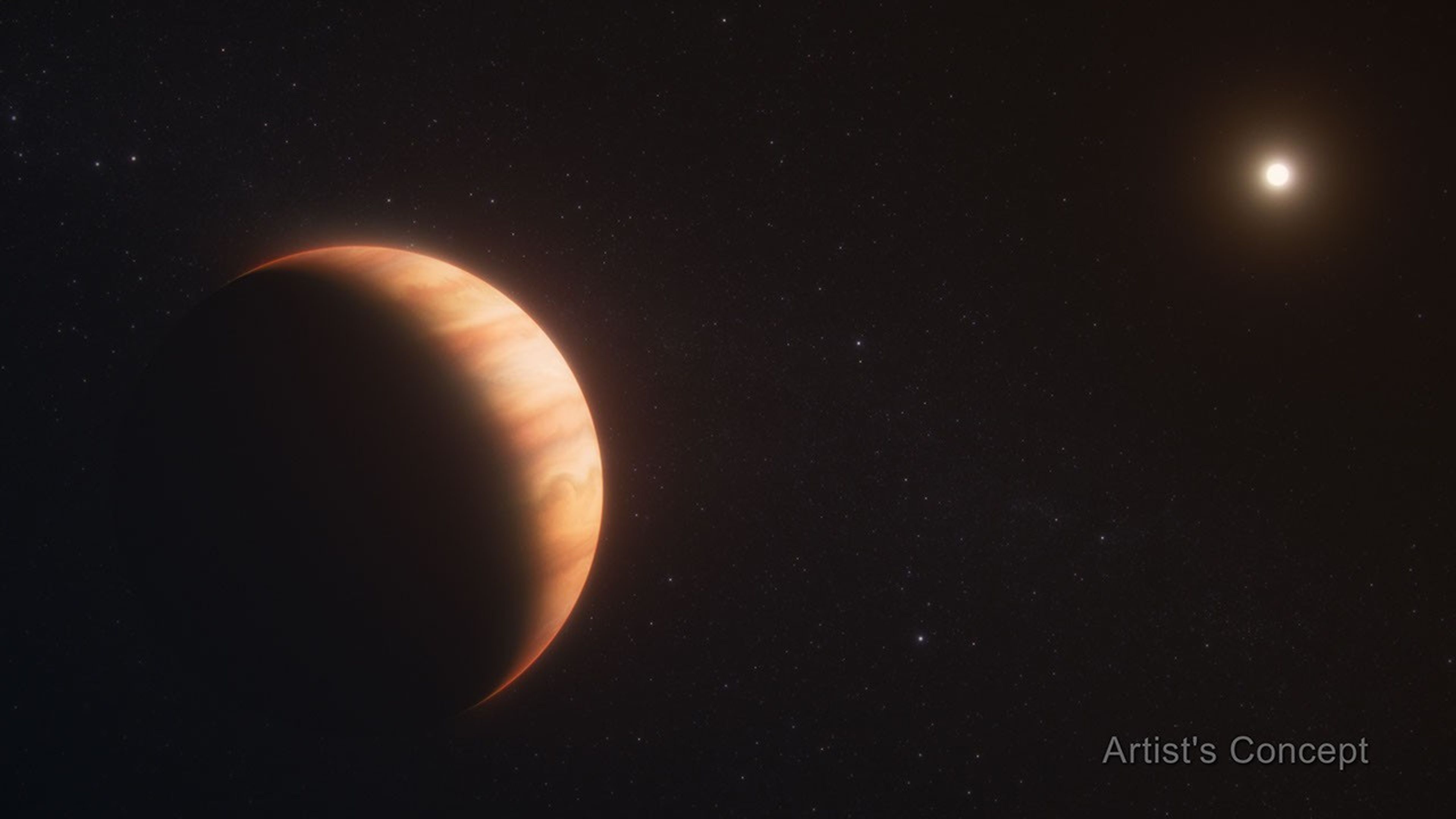
NASA's James Webb Space Telescope has provided new insights into what happens to planetary systems when their host stars die. The study focuses on a Sun-like star that, billions of years ago, expanded dramatically near the end of its life cycle. Researchers are examining how at least one planet managed to survive this violent stellar transformation. The findings offer a rare glimpse into the possible far-future fate of our own solar system.

Read the full story at NASA

This is an AI-generated summary. ShortSingh links to the original source for the complete article.

Discussion (0)

Log in to join the discussion and vote.

Log in

Related stories

0
SpaceNASA ·

NASA Recruiting Volunteers for One-Year Simulated Moon and Mars Mission in 2027

NASA is looking for research volunteers to participate in a yearlong simulated deep space mission set to begin no earlier than August 2027. Participants will live and work in artificial interplanetary environments at Johnson Space Center in Houston, Texas. The simulation is designed to replicate the isolated conditions astronauts would face during actual crewed missions to the Moon or Mars. Data gathered from volunteers will help NASA better understand the physical and psychological challenges of long-duration deep space travel.

0
SpaceNASA ·

Robotic Spacecraft LINK to Boost NASA Swift Observatory Orbit in Historic Mission

A robotic spacecraft named LINK, developed by Katalyst Space, is scheduled to launch no earlier than July 2, 2025, at 5:09 a.m. EDT from Kwajalein Atoll in the Marshall Islands. The mission marks the first time a spacecraft will attempt to raise the orbit of an existing space observatory. The target is NASA's Neil Gehrels Swift Observatory, a long-operating space telescope. The LINK spacecraft will perform autonomous orbital servicing, a capability considered a milestone in space technology.

0
SpaceNASA ·

NASA Curiosity Rover Explores Light-Toned Polygon Terrain on Mars

NASA's Curiosity rover spent sols 4934 to 4940 investigating a distinctive terrain unit on Mars, as reported by Senior Research Scientist William Farrand of the Space Science Institute. The planning period covered two cycles, with the first occurring on a Monday while the rover was positioned within an area that orbital imagery had identified as light-toned. From earlier vantage points, the terrain had appeared smooth, but the rover's arrival revealed more complex surface features. Scientists conducted observations to better understand the composition and structure of this polygon-marked landscape.

0
SpaceNASA ·

Astrophysicist Ray Jayawardhana Takes Over as Caltech's 10th President

Ray Jayawardhana has officially begun his tenure as the 10th president of the California Institute of Technology. His appointment, along with his role as the Sonja and William Davidow Presidential Chair and professor of astronomy, was announced on January 6. Jayawardhana takes over from Thomas Rosenbaum, who led Caltech for over a decade since 2014. Founded in 1891, Caltech is a leading science and engineering institution that also manages major NASA research facilities.

Webb Telescope Reveals How a Planet Survived Its Star's Death · ShortSingh