SShortSingh.
Back to feed

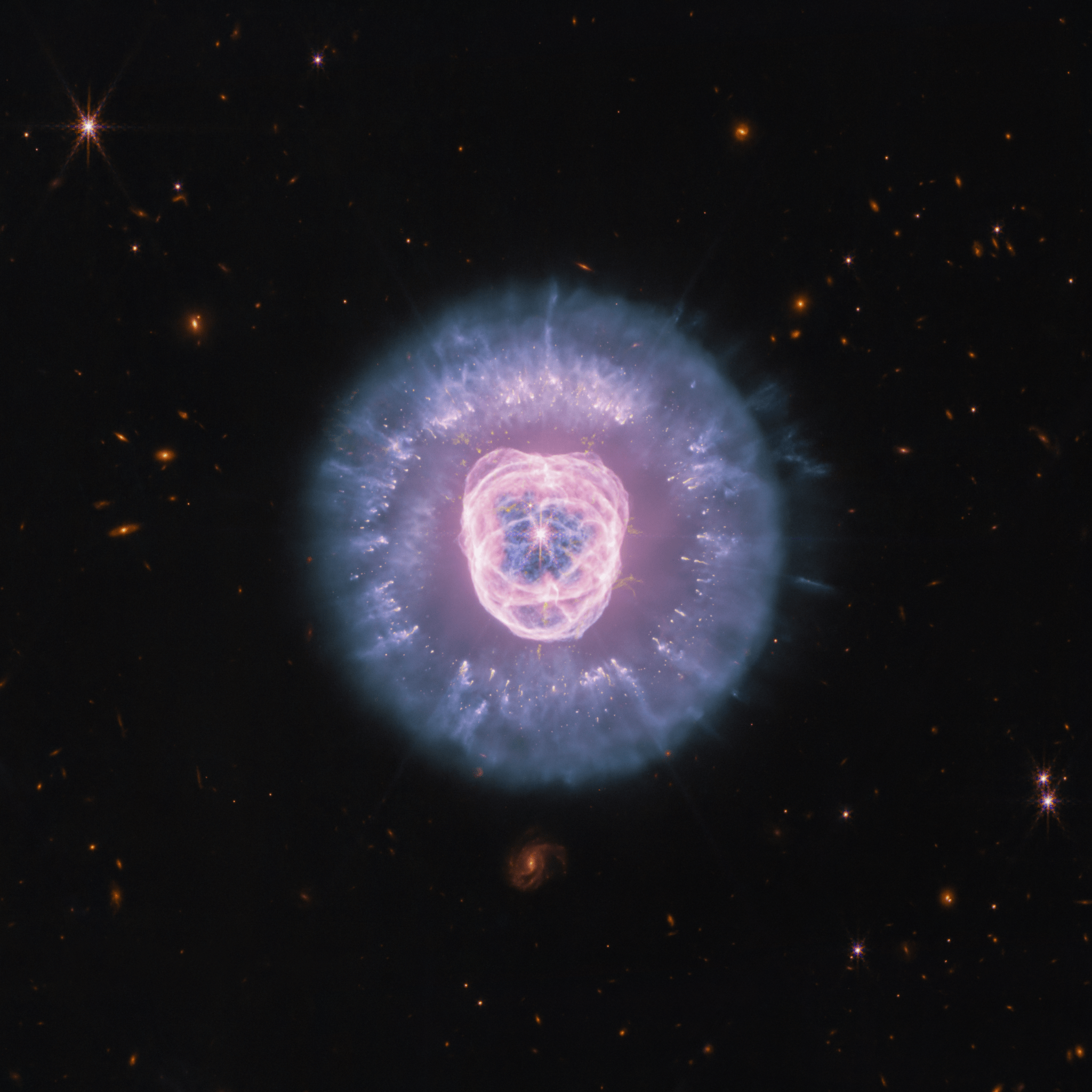
Webb Telescope Captures Detailed New Images of NGC 2392, the Lion Nebula

0
·1 views

NASA's James Webb Space Telescope has captured high-resolution images of NGC 2392, commonly known as the Lion Nebula. The images were publicly released on August 10, 2026. Webb's advanced imaging capabilities allowed for a clear and detailed view of the nebula's distinctive 'mane' structure. The Lion Nebula is one of many deep-space objects being studied through Webb's ongoing observational program. NASA and ESA are credited among the agencies behind the image release.

Read the full story at NASA

This is an AI-generated summary. ShortSingh links to the original source for the complete article.
Discussion (0)

Log in to join the discussion and vote.

Log in

Related stories

0
SpaceNASA ·

NASA Telescopes Combine to Reveal New Details of Tarantula Nebula

NASA has released a striking composite image of 30 Doradus, commonly known as the Tarantula Nebula, by layering observations from multiple space telescopes. The resulting image resembles overlapping sheets of colored cellophane, showcasing the nebula in vivid detail. Located in the Large Magellanic Cloud, a small galaxy neighboring the Milky Way, the nebula is a well-known star-forming region. The multi-wavelength approach allows scientists to uncover new information about how stars form in this cosmic environment.

0
SpaceNASA ·

NASA Engineer Outlines Challenges of Building a Permanent Moon Base

NASA is working toward establishing a sustained human presence on the lunar surface, requiring advanced technologies and cross-disciplinary expertise. On July 30, Shatel Bhakta, principal systems engineer for NASA's Moon Base Program, spoke at a NASA Stories event held at the Ion. His presentation focused on the challenges and opportunities involved in constructing a base near the lunar south pole. Bhakta outlined the complex work needed to support longer astronaut stays and increasingly sophisticated lunar operations.

0
SpaceNASA ·

ISS Research in 2026 Paves the Way for NASA Moon and Mars Missions

The International Space Station has remained an active scientific hub throughout 2026, with astronauts conducting a wide range of experiments aimed at supporting future deep-space exploration. The research conducted aboard the ISS is intended to lay the groundwork for missions to the Moon and Mars. NASA's Artemis II mission, which took place in April 2026, marked the first crewed lunar flyby in over 50 years. The milestone flight represents a significant step in NASA's broader goal of returning humans to the Moon and eventually sending them to Mars.

0
SpaceNASA ·

NASA Curiosity Rover Climbs Toward Ancient Martian Erosional Supersurface

NASA's Curiosity rover is investigating a significant geological feature within Gale Crater's sedimentary record, believed to be an ancient erosional supersurface. The feature marks a past transition from a net depositional environment to an erosional one, offering clues about Mars's geological history. Planetary scientist Lucy Lim from NASA's Goddard Space Flight Center reported on the mission's progress as of July 31, 2026. The rover has been ascending toward this large-scale discontinuity to gather closer observations of the rock record. Scientists hope the data collected will shed light on the environmental shifts Mars underwent billions of years ago.