SShortSingh.
Back to feed

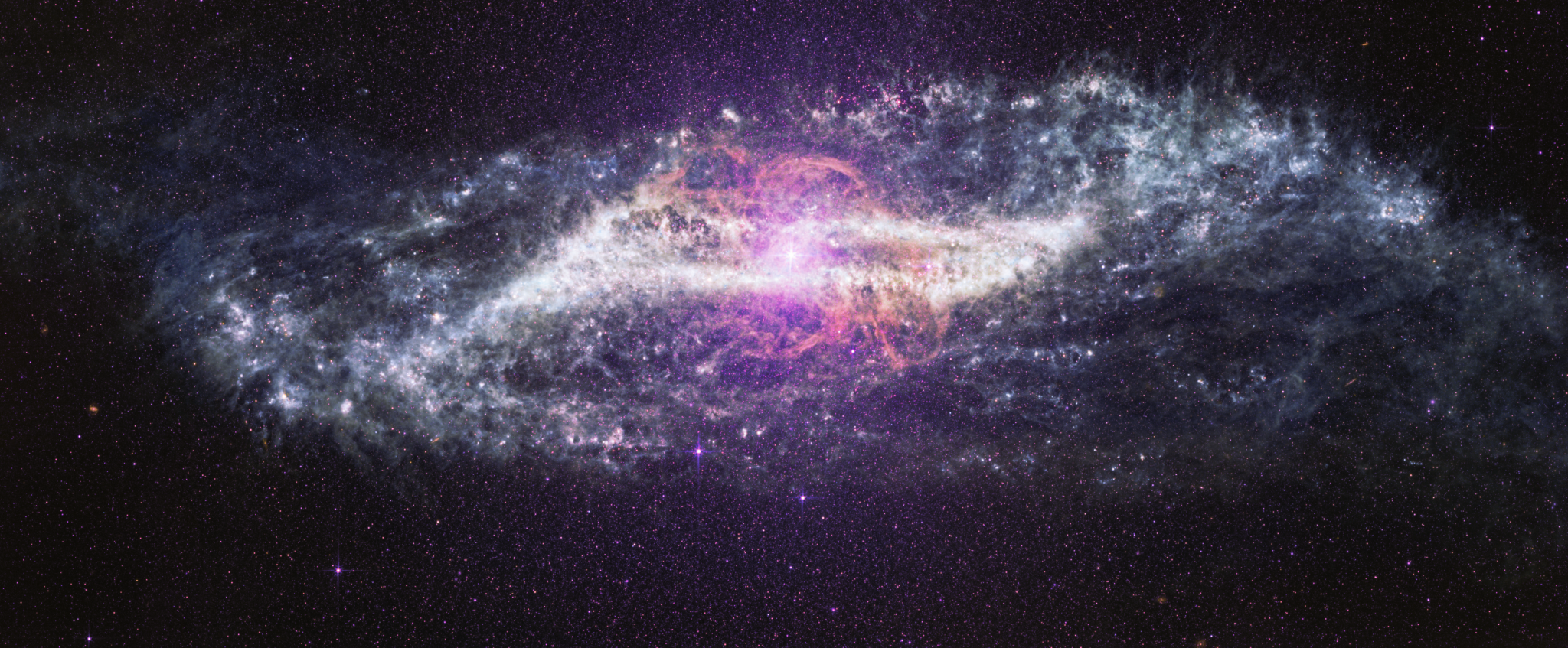
Webb Telescope Captures Detailed Mid-Infrared View of Active Galaxy Centaurus A

0
·1 views

NASA's James Webb Space Telescope used its Mid-Infrared Instrument (MIRI) to image Centaurus A, a nearby but unusually active galaxy. The image, captured on July 6, 2026, reveals dusty structures and hidden activity within the galaxy system. Centaurus A lies approximately 11 million light-years from Earth, making it relatively close by cosmic standards. Despite its proximity, it stands out from most neighboring galaxies due to its high level of activity. The MIRI observations offer new insight into the forces shaping this distinctive galactic system.

Read the full story at NASA

This is an AI-generated summary. ShortSingh links to the original source for the complete article.

Discussion (0)

Log in to join the discussion and vote.

Log in

Related stories

0
SpaceNASA ·

NASA Astronaut Deniz Burnham Assigned to ISS Expedition 76 Mission

NASA has assigned astronaut Deniz Burnham to her first International Space Station mission as a flight engineer on Expedition 76. She will travel to the station aboard the Roscosmos Soyuz MS-30 spacecraft alongside Russian cosmonauts Dmitri Petelin and Konstantin Borisov. The mission is scheduled to launch in March 2027 from the Baikonur Cosmodrome in Kazakhstan. The three crew members will spend an extended period aboard the ISS as part of the joint mission.

0
SpaceNASA ·

NASA Johnson Space Center Interns Gain Hands-On Experience on Real Missions

Interns at NASA's Johnson Space Center are working directly on active projects alongside professional engineers, scientists, and communicators. The students are contributing meaningfully to human spaceflight missions rather than performing purely observational roles. Through this experience, they are building practical skills aimed at preparing them for careers in the competitive aerospace industry. NASA highlighted these interns to showcase how the next generation of talent is being developed within its ranks.

0
SpaceNASA ·

NASA APOD Features Red Sun Phenomenon Caused by Wildfire Smoke

NASA's Astronomy Picture of the Day (APOD) for July 30 showcased a striking image of the Sun appearing red due to wildfire smoke in the atmosphere. The daily feature highlights a different astronomical image or photograph each day, accompanied by explanations from professional astronomers. Wildfire smoke particles scatter shorter wavelengths of light, allowing longer red wavelengths to pass through and giving the Sun its unusual crimson appearance. The APOD program aims to educate the public about astronomy and cosmic phenomena by presenting visually compelling images with scientific context.

0
SpaceNASA ·

NASA Captures New Zealand's Stewart Island in Stunning Satellite View

Stewart Island, also known as Rakiura, is New Zealand's third-largest island and a celebrated natural wilderness. The island is renowned for its rich birdlife and distinctive forest ecosystems. Its remote beaches and pristine landscapes make it a standout destination for nature enthusiasts. The island also offers rare opportunities for clear views of the night sky, adding to its appeal as an unspoiled natural retreat.

Webb Telescope Captures Detailed Mid-Infrared View of Active Galaxy Centaurus A · ShortSingh