The 3 catalysts that could define bitcoin's next move
0
·38 views
Your day-ahead look for Aug. 26, 2026
This is an AI-generated summary. ShortSingh links to the original source for the complete article.
Your day-ahead look for Aug. 26, 2026
This is an AI-generated summary. ShortSingh links to the original source for the complete article.
Brooklyn prosecutors and the FBI have taken down a large cryptocurrency fraud network that focused on Russian-speaking victims. According to the allegations, the operation drew people in through Russian-language Facebook advertisements and posed as financial advisers. The scheme is said to have stolen tens of millions of dollars from its targets. Victims were then approached a second time with false offers to recover their lost funds.

Crypto hardware wallet maker Ledger has unveiled a plan to transform its device into a smartphone. The device, called Atom, is designed to run everyday apps such as WhatsApp and Instagram. Users will be able to switch between standard smartphone functions and a secured mode dedicated to managing digital assets. The move comes as the company faces pressure in the market.

Bitcoin, copper, stocks and bond yields all declined in the latest market session while gold moved higher. The CoinDesk day-ahead preview for October 15, 2026 frames these moves as the market backdrop for the coming trading day. The source text provided is brief and does not detail specific drivers behind the moves. Readers seeking the reasons for these shifts would need the full CoinDesk report.

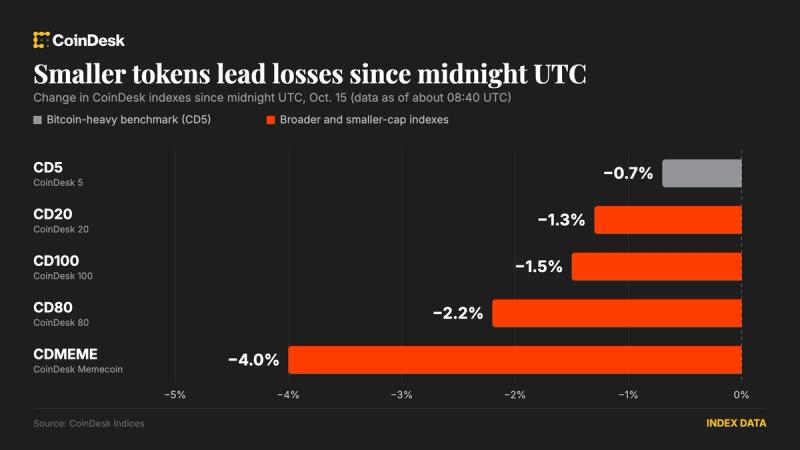
Bitcoin slipped to just above the $80,000 level amid a sharp decline in Asian equity markets. South Korea's Kospi index dropped 8% in the session. The CoinDesk 80 index fell 2.2%, and nearly all members of the CoinDesk 100 recorded losses. Only six CoinDesk 100 constituents managed to avoid declines.
Discussion (0)
Log in to join the discussion and vote.
Log in