SShortSingh.
Back to feed

Study finds maximum reasoning effort in AI models can cost far more and sometimes solve fewer tasks

0
·6 views

A paper posted to arXiv in October 2026 examined how the reasoning-effort setting in frontier AI models affects cost and performance across eight models and four benchmarks. On tasks that every effort level solved, the highest setting cost up to 42 times more than the lowest. In some cases, higher effort also caused models to fail tasks that lower effort had completed, such as GPT-5.6-sol's drop from 76 to 73 solved Terminal-Bench tasks. The researchers found that starting at low effort and escalating only after a verified failure outperformed fixed maximum effort on both success rate and cost. The study was authored by researchers from Johns Hopkins, Together AI and Cornell.

Read the full story at DEV Community

This is an AI-generated summary. ShortSingh links to the original source for the complete article.
Discussion (0)

Log in to join the discussion and vote.

Log in

Related stories

0
ProgrammingGitHub Blog ·

GitHub Unveils Vision for End-to-End Software Delivery at Universe 2026

GitHub used its Universe 2026 event to present its strategy for becoming the most comprehensive end-to-end software delivery system in the world. The company's announcement centers on evolving every layer of its platform stack. The available material is brief and does not detail specific products, features, or timelines. Further specifics would be found in the full GitHub Blog post.

0
ProgrammingGitHub Blog ·

GitHub's 2026 Octoverse report shows record developer activity as agents spread across industries

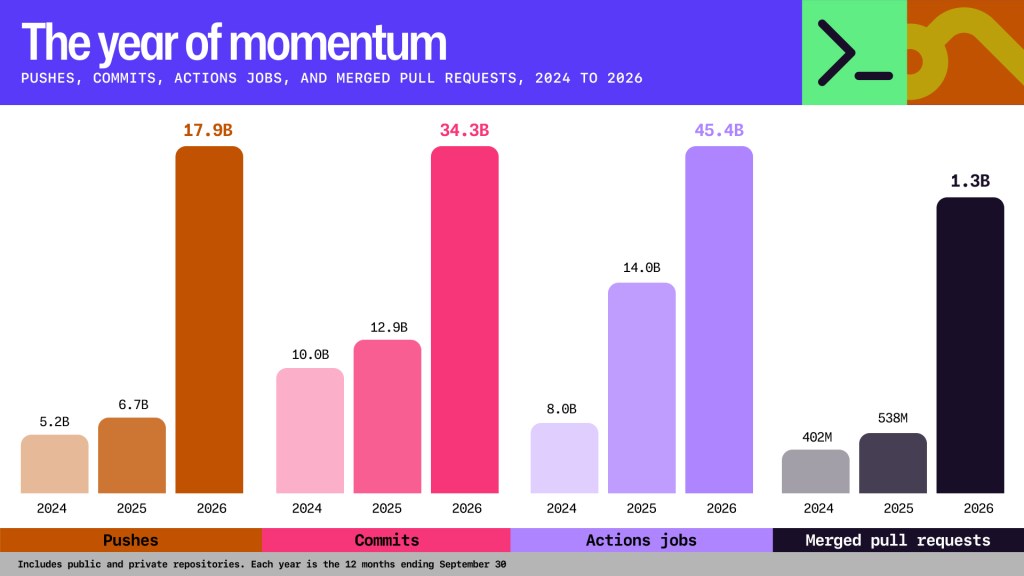
GitHub has released its 2026 Octoverse report, which tracks activity on its platform over the past year. The report says commits and pushes reached new highs, indicating a record year of growth. According to the report, this expansion reached every industry, field, and type of builder. The findings tie the surge in activity to developers building with agents. The source article is brief, so details beyond these headline-level points are not covered here.

0
ProgrammingHacker News ·

Billionaires Reportedly Spend 0.07% of Wealth to Avoid a 5% Tax

A news item circulating on Hacker News reports that billionaires spend roughly 0.07% of their wealth on avoiding a 5% tax. The claim is drawn from an article published on the dsrupt.news website. The available source material includes only the headline, the article link, and community discussion metrics, so the full details of the analysis are not confirmed here. The figures and methodology behind the claim have not been independently verified in this summary. Readers are encouraged to consult the original article for context and supporting data.

0
ProgrammingDEV Community ·

Understanding the Dependency Inversion Principle through an order checkout example

The author closes a series on SOLID principles by tackling the Dependency Inversion Principle, which says high-level business logic should not depend on low-level implementation details. Using a simple order checkout in TypeScript, they show how OrderService directly instantiates a Postgres repository and a Stripe client, leaving the core logic tied to replaceable infrastructure. This coupling makes testing hard, forces environment-specific branches for scenarios like free trials, and risks real charges during local runs. The fix is to have OrderService define its own interfaces for storage and payment, so that concrete implementations plug into it rather than the reverse. The article frames this as flipping the dependency arrows so the most important code depends on abstractions it owns.