SShortSingh.
Back to feed

New Military Launch Competition Entrant Is Not a Traditional Launch Company

0
·1 views

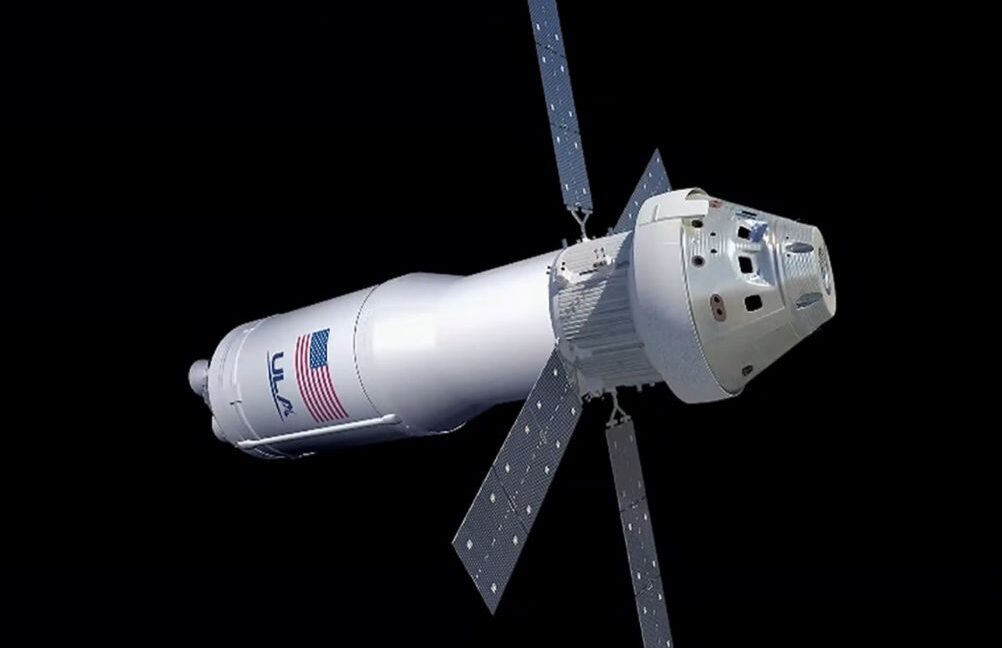
A new and unconventional player has entered the US military's launch competition, raising eyebrows among industry observers. Unlike traditional competitors, this entrant does not operate as a conventional launch company, making its participation unexpected under the program's existing framework. The military's Phase 3 launch competition was not originally designed with this type of entrant in mind, according to those familiar with the program. The development highlights how the evolving space industry is challenging the boundaries of established government procurement structures. Officials and insiders have acknowledged that the program's rules may not have anticipated this kind of participation.

Read the full story at Ars Technica

This is an AI-generated summary. ShortSingh links to the original source for the complete article.
Discussion (0)

Log in to join the discussion and vote.

Log in

Related stories

0
TechnologyThe Verge ·

PocketMage Crowdfunds a Modern Clamshell PDA with E-Paper and OLED Screens

Talisman Design is crowdfunding a new handheld device called the PocketMage on Crowd Supply, reviving the personal digital assistant concept popularized by devices like the Palm Pilot. The clamshell gadget combines a tactile physical keyboard with both an e-paper and an OLED display in a compact, pocketable form factor. Two preorder tiers are available: a fully assembled model priced at $235 and a cheaper $185 option that requires some self-assembly. Buyers can also choose between two accent colors, parchment gray or royal purple.

0
TechnologyThe Verge ·

Sony RX10 V superzoom returns after 9 years with stacked sensor, priced at $2,300

Sony has announced the RX10 V, reviving its superzoom camera line nearly nine years after the previous model. The camera retains the 24-600mm equivalent f/2.4-4 Zeiss Vario-Sonnar 25x zoom lens found in its two predecessors. It features a new 20.1-megapixel 1-inch stacked sensor that enables blackout-free continuous burst shooting at up to 30fps, an improvement over the prior model's 24fps. Targeted at action, sports, and wildlife photographers, the RX10 V is priced at $2,299.99 — significantly higher than the RX10 IV's $1,700 launch price in 2017. The camera is set to go on sale in early August.

0
TechnologyThe Verge ·

Comcast splits from NBCUniversal after 15 years, ending its content-plus-pipes bet

Comcast has announced it will split into two separate companies — a broadband-focused entity and a standalone NBCUniversal entertainment company — ending a 15-year-old merger. The move follows Comcast's earlier spinoff of cable news assets like CNBC and MSNBC into a new company called Versant. Analysts view the breakup as an admission that combining media content with internet distribution, a strategy known as 'content plus pipes,' never delivered a clear business advantage. Similar mergers by AT&T, Verizon, and AOL all ended in failure, suggesting the strategy has consistently struggled across the industry. Both the new Comcast and NBCUniversal entities now face significant competitive challenges and uncertain futures as standalone businesses.

0
TechnologyThe Verge ·

Meta launches Muse Spark 1.1 API to challenge rivals in AI coding tools

Meta has released Muse Spark 1.1, an upgraded AI model aimed at developers working with coding software, accessible via the new Meta Model API. The company describes the update as a significant improvement over its first-generation Muse Spark model, which launched in April. Key enhancements include advanced bug detection and fixing, stronger support for end-to-end agentic workflows across multi-agent systems, and native multimodal capabilities covering images, videos, and documents. The release marks Meta's continued push to compete in the rapidly growing AI development tools market. Developer feedback from the initial model informed many of the improvements included in version 1.1.