SShortSingh.
Back to feed

NASA Works to Set Safe Dust Exposure Limits for Future Mars Crews

0
·1 views

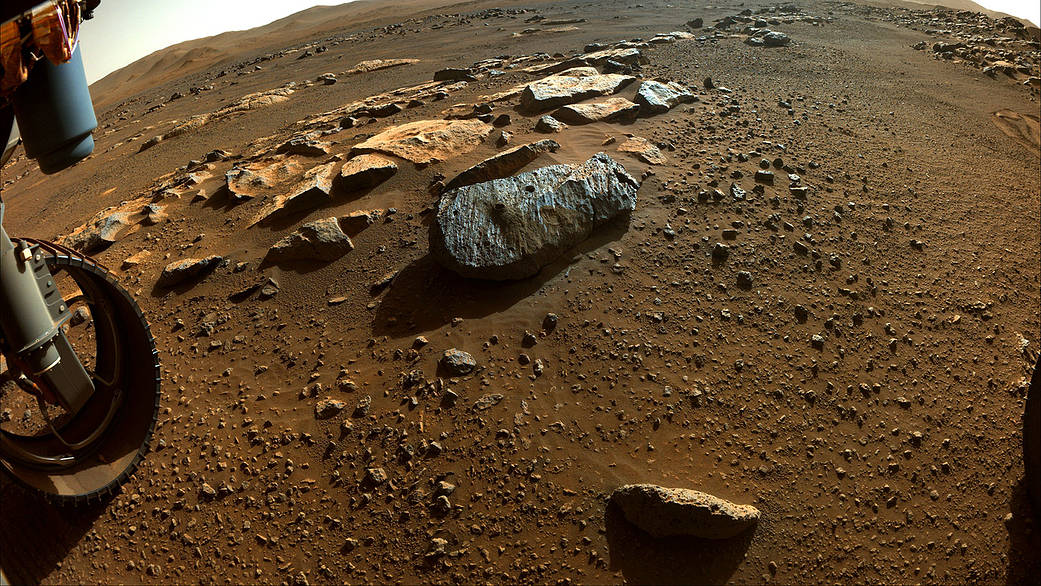
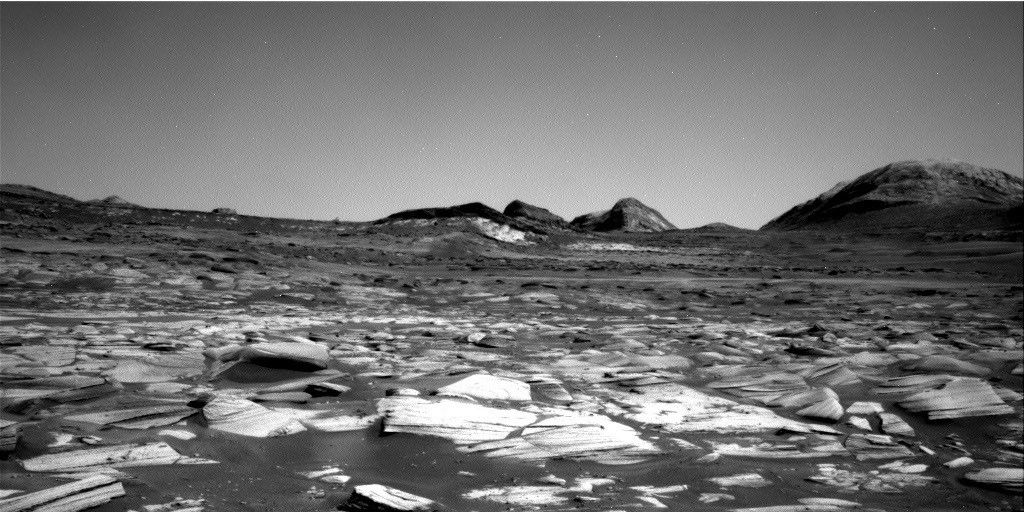
NASA is developing crew exposure limits for Martian dust ahead of future human missions to Mars. The fine particulate environment on Mars poses persistent health risks that are not yet fully understood. Since no actual Martian airborne dust samples have been returned to Earth, researchers are drawing on lunar dust toxicology studies, Martian soil simulants, and data collected by rovers and landers. This geochemical and mineralogical data forms the foundation for assessing the potential health implications of prolonged dust exposure on Mars.

Read the full story at NASA

This is an AI-generated summary. ShortSingh links to the original source for the complete article.

Discussion (0)

Log in to join the discussion and vote.

Log in

Related stories

0
SpaceNASA ·

NASA Selects 2026 NIAC Phase I Projects Including Venus Rover and Sun-Dimming Concepts

NASA has announced its 2026 selections for the NASA Innovative Advanced Concepts (NIAC) Phase I program, funding early-stage research into bold space technologies. One project, led by Saptarshi Bandyopadhyay at JPL, proposes using a controllable dust cloud to reduce solar insolation in a concept called DimSun. Another JPL proposal by David Bugby, named CANVAS, aims to develop a mobile, survivable architecture capable of operating on the surface of Venus. A third selection from the University of Central Florida, led by Anish Damodaran, seeks to advance submillimeter space interferometry using photonic technologies. The NIAC program supports visionary research that could eventually shape future NASA missions.

0
SpaceNASA ·

NASA Explores Spacecraft-Based Astrometry to Detect Low-Frequency Gravitational Waves

Researchers at Brookhaven Science Associates are developing a new method to detect gravitational waves at low frequencies using precision astrometry. The approach relies on the fact that gravitational waves passing near Earth cause a tiny but coordinated apparent shift in the positions of all objects across the sky. The proposed innovation involves deploying optically independent spacecraft to measure these minute positional changes with high precision. This astrometric technique offers an alternative observational strategy to existing gravitational wave detection methods. The project aims to open a new window into low-frequency gravitational wave astronomy.

0
SpaceNASA ·

NASA Proposes Optical VLBI Technique to Image Surface Features of Exoplanets

NASA researcher Paul Stankus of Brookhaven Science Associates is working toward capturing visible-light images of Earth-like exoplanets orbiting nearby stars. The project aims to resolve actual surface features — such as continents — on distant worlds, a capability far beyond current technology. The approach involves two key innovations, the first being a new type of nulling interferometer called 'dynamic hierarchical nulling,' which combines multiple telescope inputs to suppress overwhelming starlight. The second stage applies optical Very Long Baseline Interferometry (VLBI) principles to achieve the extreme resolution needed for exoplanet surface mapping. If successful, the technique could mark a landmark advance in humanity's ability to directly study potentially habitable worlds beyond our solar system.

0
SpaceNASA ·

NASA Explores High-Speed Flyby Spacecraft to Map Minerals Across Solar System

NASA is evaluating a new concept for reconnaissance spacecraft capable of mapping mineral resources on planetary bodies during rapid flybys, without landing or collecting samples. The proposal, led by Pablo Sobron Sanchez of the SETI Institute, relies on Raman spectroscopy to identify minerals at high speed from orbit. Target bodies include the Moon, asteroids, and the moons of Mars, where ice, ilmenite, ores, and volatile-bearing minerals would be surveyed. The concept aims to expand NASA's resource assessment capabilities across the solar system in a cost-effective and efficient manner.