SShortSingh.
Back to feed

NASA's Voyager Twins Used a Rare Planetary Alignment to Tour the Giant Planets

0
·4 views

In 1977 NASA launched the twin spacecraft Voyager 1 and Voyager 2. The missions took advantage of a planetary alignment that occurs roughly once every 175 years, involving Jupiter, Saturn, Uranus, and Neptune. By using six gravity assists between the planets, the Grand Tour enabled close-up observations of the gas and ice giants. The flybys also captured images and data on several of their moons. The article is part of NASA's November night sky notes series.

Read the full story at NASA

This is an AI-generated summary. ShortSingh links to the original source for the complete article.

Discussion (0)

Log in to join the discussion and vote.

Log in

Related stories

0
SpaceNASA ·

NASA's Astronomy Picture of the Day Features Haunting Image of Cepheus Flare

NASA's Astronomy Picture of the Day for October 30, 2026 spotlights a striking view of the Cepheus Flare region. The feature is part of the agency's long-running daily series that pairs a cosmic image with an explanation written by a professional astronomer. The article provided is only a partial excerpt, so specific details about the image's instruments, distances, and scientific context are not fully available here. The series aims to make the universe accessible to the public through visually compelling photography and clear explanations.

0
SpaceNASA ·

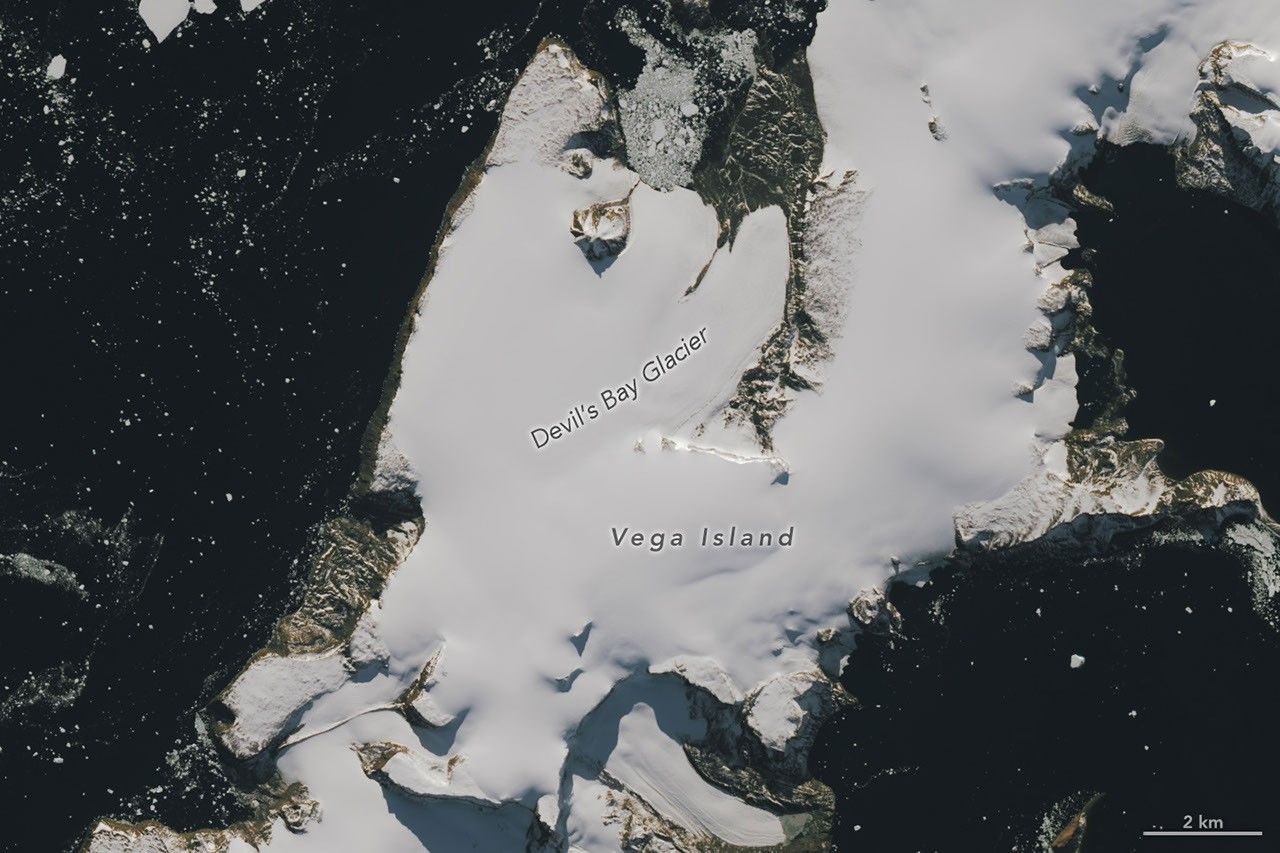
Icy Skull-Shaped Formation Spotted on Antarctica's Vega Island

A striking ice formation on Vega Island in Antarctica has taken on the appearance of a skull. The unusual shape stands out against the frozen landscape and has drawn attention for its eerie resemblance. The article describes the sight as one that could unsettle viewers, though it offers few details beyond the visual impression. No further specifics about the formation's size, cause, or date of observation are provided in the source material.

0
SpaceNASA ·

Map Pinpoints 13 Possible Mars Origins for Ancient Meteorite Teghaza 001

A new global map of Mars marks 13 locations whose mineralogy and chemistry resemble those of Teghaza 001, one of the oldest Martian meteorites ever recovered on Earth. Scientists acknowledge they can never be certain where a Martian meteorite began. Still, the meteorite carries chemical clues that connect it to highlands in Mars's southern hemisphere. The map is intended to narrow the search for the rock's likely source region. The findings help researchers better understand the planet's ancient geology.

0
SpaceNASA ·

Ancient Martian Meteorite Teghaza 001 Used to Date Its Rock

A slice of Teghaza 001, among the oldest Martian meteorites ever recovered on Earth, was used by scientists to determine the age of the rock. Reflected-light images of the sample act as a road map, guiding researchers to the minerals they want to study. These images help direct analysis by different instruments. The accompanying figures show the same view with annotations marking points of interest. The article is a NASA description of the sample and the imaging methods used to study it.