SShortSingh.
Back to feed

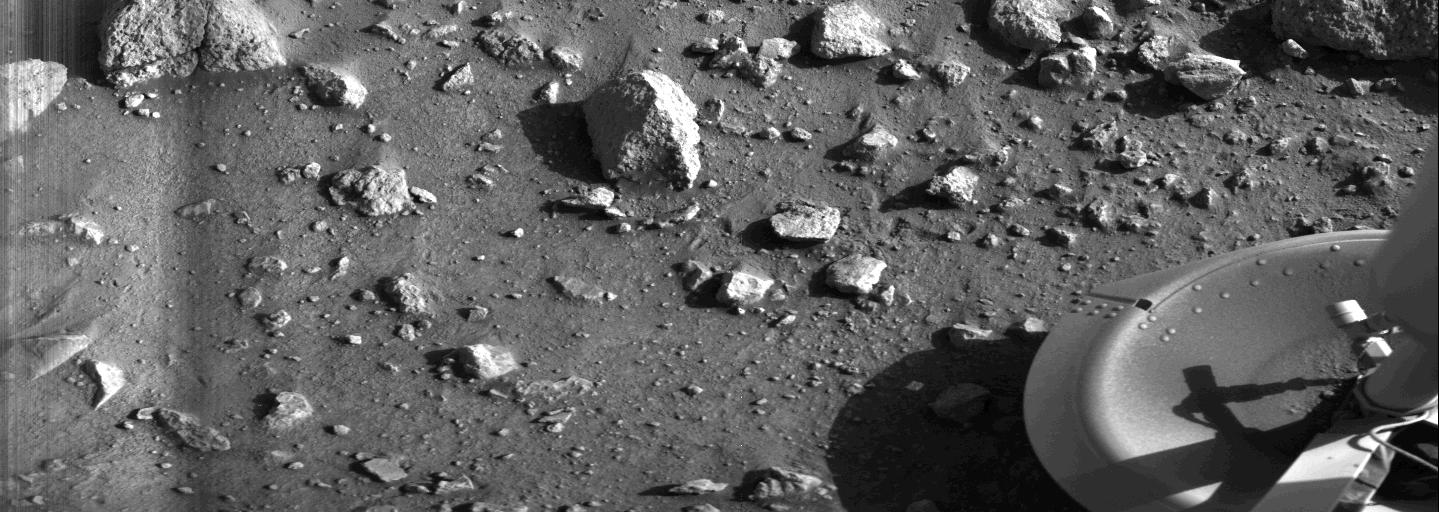
NASA's Viking 1 Captures First-Ever Images of Mars Surface in 1976

0
·4 views

On July 20, 1976, NASA's Viking 1 lander successfully touched down on Mars at 5:12 a.m. PDT, marking a historic milestone in space exploration. Mission controllers at NASA's Jet Propulsion Laboratory celebrated as the spacecraft safely navigated through Mars's thin atmosphere. Approximately 40 minutes after landing, the lander began transmitting its first image of the Martian surface to scientists on Earth. The grainy picture appeared gradually on monitors, offering humanity its first direct visual glimpse of the Martian landscape.

Read the full story at NASA

This is an AI-generated summary. ShortSingh links to the original source for the complete article.

Discussion (0)

Log in to join the discussion and vote.

Log in

Related stories

0
SpaceNASA ·

NASA and GE Aerospace Fly Megawatt Hybrid-Electric Engine at Farnborough Airshow

NASA and GE Aerospace have successfully demonstrated a megawatt-class hybrid-electric engine in flight, marking a significant milestone in aviation propulsion technology. The experimental engine was mounted to a Saab 340B aircraft for the demonstration. The flight took place at the Farnborough International Air Show in the United Kingdom. The collaboration aims to advance fuel-saving aircraft power systems that could influence future generations of commercial aviation.

0
SpaceNASA ·

NASA Prepares to Launch Six New Airborne Earth Science Campaigns

NASA is gearing up to begin a series of six new airborne science missions focused on studying Earth. The campaigns will be conducted using aircraft equipped with scientific instruments to gather data about our planet. The first of these missions is scheduled to take flight this summer. These airborne campaigns are part of NASA's broader efforts to monitor and better understand Earth's systems and environment.

0
SpaceNASA ·

NASA Langley's Pivotal Role in Viking Mars Landings Marked at 50-Year Anniversary

Fifty years ago, NASA's Viking 1 and 2 spacecraft achieved the first successful landings on Mars, marking a landmark moment in planetary exploration. The missions were significantly supported by engineers and scientists at NASA's Langley Research Center, located in Hampton, Virginia. The Langley team provided critical technical leadership that helped transform an ambitious concept into a fully operational mission. Their contributions were instrumental in ensuring the landers safely reached the Martian surface. The Viking missions fundamentally changed humanity's understanding of Mars and set the foundation for future robotic exploration of the planet.

0
SpaceNASA ·

Glaciers and Human Activity Shaped Seattle's Distinctive Landscape

Seattle, Washington, features a terrain of hills and basins that has been formed over time by natural and human forces. Glacial activity played a primary role in carving out the city's characteristic topography. Beyond natural processes, human intervention has further modified the landscape over the years. NASA highlighted Seattle's unique geography, drawing attention to how both geological and man-made factors have defined the region's physical character.