SShortSingh.
Back to feed

NASA's Roman Space Telescope Travels to L2 Orbit During Commissioning Phase

0
·1 views
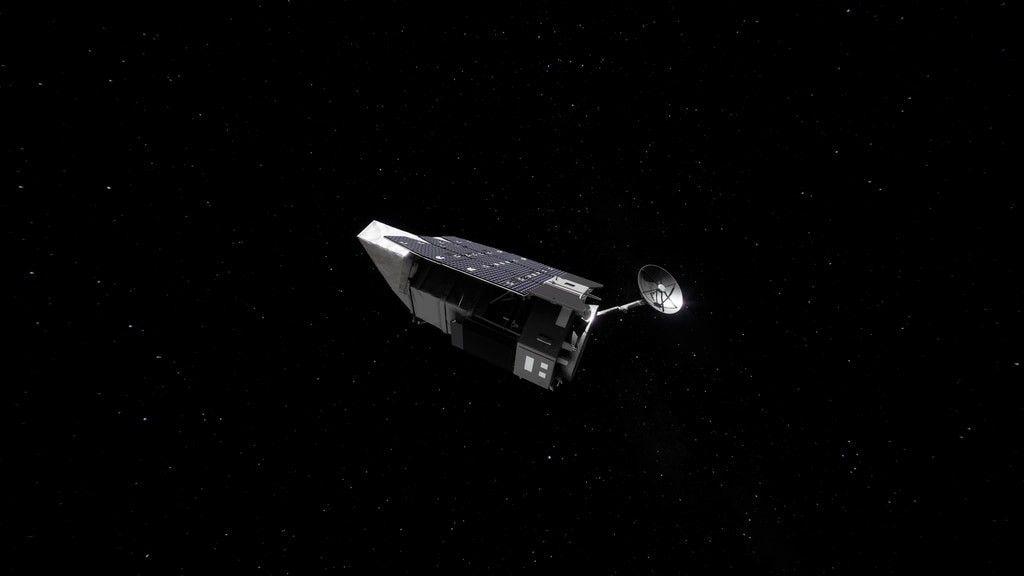
NASA's Nancy Grace Roman Space Telescope is currently on a three-month journey from Earth to the Sun-Earth Lagrange Point 2 (L2). During this transit, the spacecraft is undergoing a commissioning process in which its systems are being powered on, adjusted, and calibrated. The commissioning phase allows scientists and engineers to verify that Roman is functioning as expected before it begins formal science operations. This critical preparation period ensures the telescope is fully ready to carry out its planned astronomical observations.

Read the full story at NASA

This is an AI-generated summary. ShortSingh links to the original source for the complete article.
Discussion (0)

Log in to join the discussion and vote.

Log in

Related stories

0
SpaceNASA ·

NASA's Nancy Grace Roman Space Telescope Launches Aboard SpaceX Falcon Heavy

NASA's Nancy Grace Roman Space Telescope lifted off on a SpaceX Falcon Heavy rocket from Kennedy Space Center in Florida on August 30, 2026. The telescope is named after NASA's first chief astronomer, Nancy Grace Roman. Designed for wide-field astronomy, Roman offers a significantly larger field of view than the Hubble Space Telescope. Its primary mission will involve surveying billions of stars and galaxies across the universe.

0
SpaceNASA ·

NASA's Roman Space Telescope Launches, Opening New Era of Cosmic Exploration

NASA's Nancy Grace Roman Space Telescope launched on August 31, 2026, marking a significant milestone in space astronomy. The event was commemorated as NASA's Astronomy Picture of the Day (APOD), a daily feature showcasing notable cosmic images with expert commentary. Roman is NASA's next-generation wide-field infrared observatory, designed to study dark energy, exoplanets, and the large-scale structure of the universe. The telescope is expected to dramatically expand humanity's view of the cosmos, capturing images far wider than those possible with the Hubble Space Telescope.

0
SpaceNASA ·

NASA Inaugurates New Deep Space Station 23 Antenna at Goldstone Complex

NASA officially opened Deep Space Station 23, a newly completed antenna at the Goldstone Deep Space Communications Complex near Barstow, California, on August 25, 2026. The ribbon-cutting ceremony brought together senior leadership from NASA Headquarters, the Jet Propulsion Laboratory, and the Deep Space Network. The new antenna is part of the DSN Aperture Enhancement Project, managed by JPL's Germaine Aziz. Deep Space Station 23 expands the network's capacity to communicate with spacecraft exploring the far reaches of the solar system. The addition strengthens NASA's ability to send and receive data from deep space missions around the globe.

0
SpaceNASA ·

NASA Brings New 34-Meter Deep Space Antenna Online at Goldstone, California

NASA has activated Deep Space Station 23 (DSS-23), a newly completed antenna at the Goldstone complex near Barstow, California. The structure stands 34 meters (114 feet) tall and operates as a multifrequency beam-waveguide antenna. It forms part of NASA's Deep Space Network, the global communications infrastructure used to stay in contact with distant spacecraft. The addition of DSS-23 is intended to expand the network's overall capacity and strengthen deep space communications. NASA expects the antenna to serve those purposes for decades to come.

NASA's Roman Space Telescope Travels to L2 Orbit During Commissioning Phase · ShortSingh