SShortSingh.
Back to feed

NASA's Roman Space Telescope Launches on Million-Mile Journey to Final Orbit

0
·58 views

NASA's Nancy Grace Roman Space Telescope successfully launched on August 30 at 7:26 a.m. EDT from Kennedy Space Center in Florida. The telescope lifted off aboard a SpaceX Falcon Heavy rocket from Launch Complex 39A. Roman is now on a three-month journey spanning approximately one million miles to reach its designated orbit. Once operational, the telescope is expected to help scientists uncover some of the universe's least understood phenomena.

Read the full story at NASA

This is an AI-generated summary. ShortSingh links to the original source for the complete article.
Discussion (0)

Log in to join the discussion and vote.

Log in

Related stories

0
SpaceNASA ·

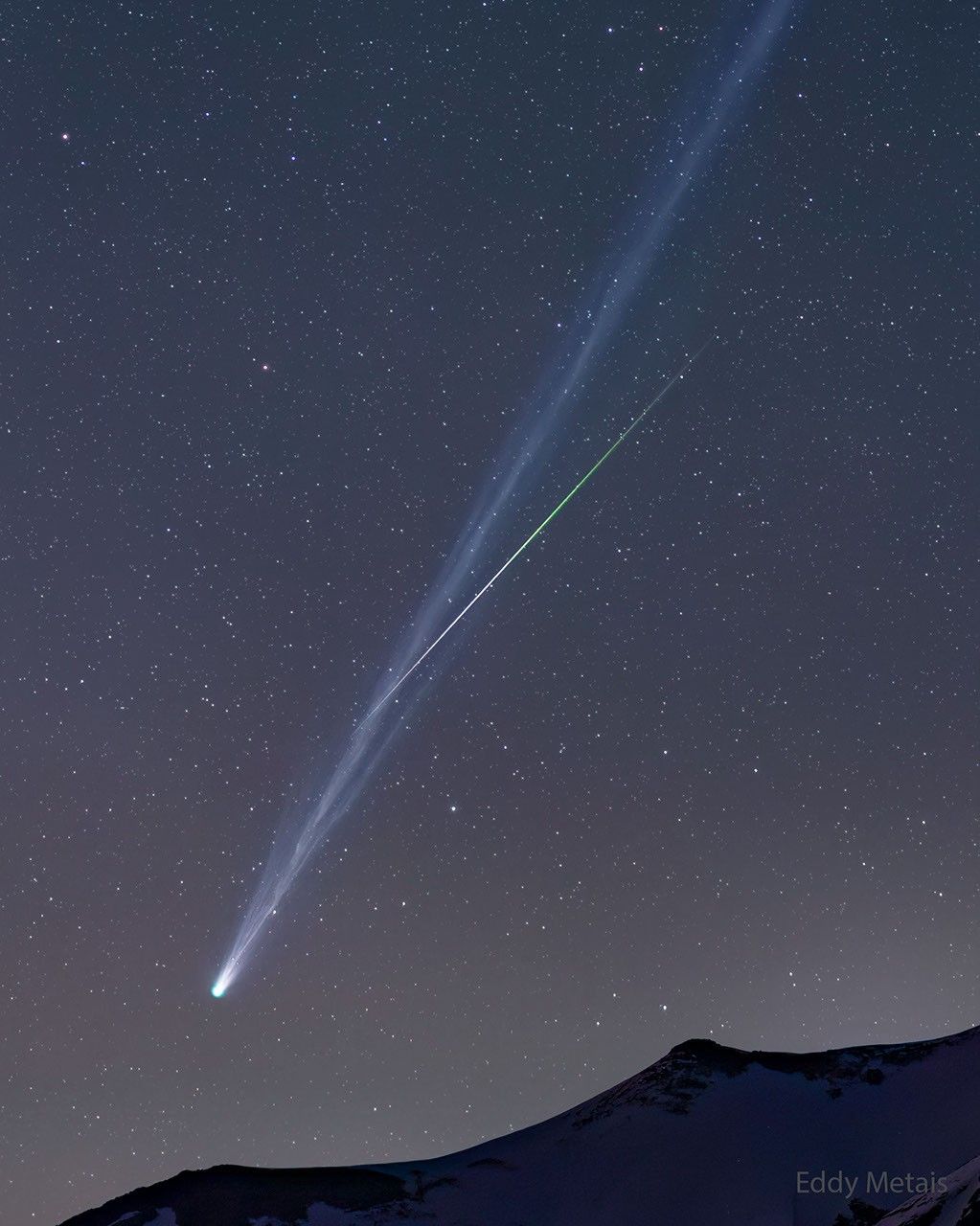
Comet PanSTARRS and a Rainbow Meteor Captured in APOD Image

NASA's Astronomy Picture of the Day for November 3, 2026 features an image pairing Comet PanSTARRS with a rainbow-colored meteor. The post is part of APOD's daily series, which pairs a featured cosmic photograph with a brief explanation from a professional astronomer. The source text provided is truncated, so further specifics about the photographer, location, and capture conditions are not available. The entry highlights the comet alongside the atmospheric meteor phenomenon shown in the picture.

0
SpaceNASA ·

NASA's Johnson Space Center Marks 65 Years of Human Spaceflight Leadership

NASA's Johnson Space Center in Houston is celebrating its 65th anniversary. The center was founded with a mission to focus on human spaceflight. Since its founding, it has supported the nation's crewed programs, from Project Mercury to Artemis. Johnson now serves as NASA's Center of Excellence for Human Spaceflight. The anniversary is being marked by looking back at the center's history alongside its current work.

0
SpaceNASA ·

NASA Note Says Measured Hammer-Tap Inputs Remain Valid Despite Irregular Force Shapes

A NASA technical brief from Langley Research Center addresses instrumented hammer testing. It argues that such tests do not need to follow an idealized single half-sine force waveform. The authors note that crest ripples and separated contacts are acceptable as long as the full force and response are measured accurately. According to the brief, a change in force shape alters the excitation but does not by itself make the test record invalid. Contact details for lead contact Joel W. Sills are provided for further information.