SShortSingh.
Back to feed

NASA FarmFlux Mission to Study Agricultural Emissions Over Colorado Farmlands

0
·1 views

NASA is conducting low-altitude research flights over Colorado as part of its FarmFlux mission, aimed at studying emissions from agricultural lands and animal farms. The mission will deploy over a dozen sensors to measure pollutants including ozone, methane, ammonia, and particulates. Researchers are focused on understanding how these emissions interact with Earth's atmosphere, an area considered significantly understudied. The project is jointly led by NASA's Goddard Space Flight Center in Greenbelt, Maryland, alongside Colorado-based partners.

Read the full story at NASA

This is an AI-generated summary. ShortSingh links to the original source for the complete article.

Discussion (0)

Log in to join the discussion and vote.

Log in

Related stories

0
SpaceNASA ·

Croatia Becomes 74th Nation to Sign NASA's Artemis Accords

Croatia officially joined the Artemis Accords on Wednesday, becoming the 74th country to sign the international space cooperation agreement. The signing ceremony took place in Zagreb, Croatia's capital city. Representatives from NASA and the U.S. Department of State were present at the event. NASA Deputy Matt Anderson welcomed Croatia's participation in the accords. The Artemis Accords establish shared principles for peaceful and transparent civil space exploration.

0
SpaceNASA ·

NASA Picks PRIMA Far-Infrared Telescope as First Probe Explorer Mission

NASA announced on Wednesday that PRIMA, the PRobe far-Infrared Mission for Astrophysics, has been selected to advance to the next phase of development. The space telescope is designed to study the history and evolution of the universe using far-infrared observations. PRIMA holds the distinction of being the first mission chosen under a newly created category called Probe Explorers, part of NASA's long-running Explorers Program. The selection marks a significant step forward in expanding NASA's astrophysics capabilities with a new tier of missions.

0
SpaceNASA ·

Hubble Telescope Hunts for Predicted Reappearance of Supernova Athena

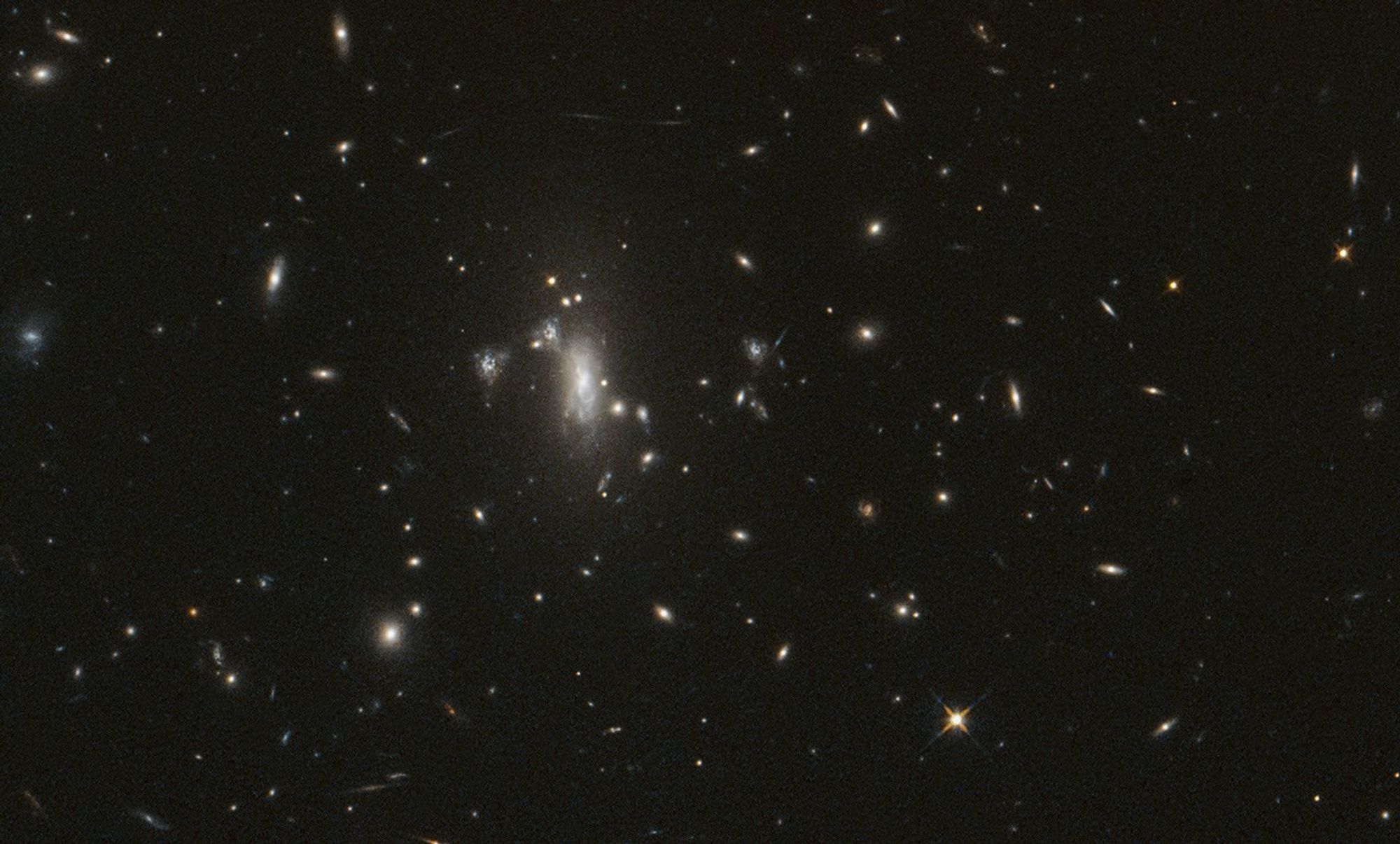
NASA's Hubble Space Telescope captured an image of massive galaxy cluster MACS J0417 on September 19, 2026. The cluster acts as a gravitational lens, bending and magnifying light from distant objects behind it. Supernova Athena was originally discovered by NASA's James Webb Space Telescope in 2025. Due to the gravitational lensing effect, the supernova is predicted to reappear within a forecasted window, prompting Hubble to monitor the region. Scientists are using this milestone observation to track the elusive cosmic event.

0
SpaceNASA ·

Arctic Sea Ice Hits 2026 Annual Low, Ties for 10th Smallest on Record

Arctic sea ice reached its 2026 annual minimum extent on September 12, according to NASA and the National Snow and Ice Data Center at the University of Colorado Boulder. The ice covered approximately 1.78 million square miles, or 4.6 million square kilometers. This figure ties the extents recorded in 2008, 2010, and 2025, placing 2026 among the ten lowest minimums in the satellite observation record. Scientists track the annual minimum each year as a key indicator of long-term changes in the Arctic climate system.

NASA FarmFlux Mission to Study Agricultural Emissions Over Colorado Farmlands · ShortSingh