SShortSingh.
Back to feed

NASA Deploys Automated Mini-Labs on ISS to Boost Research Efficiency

0
·1 views

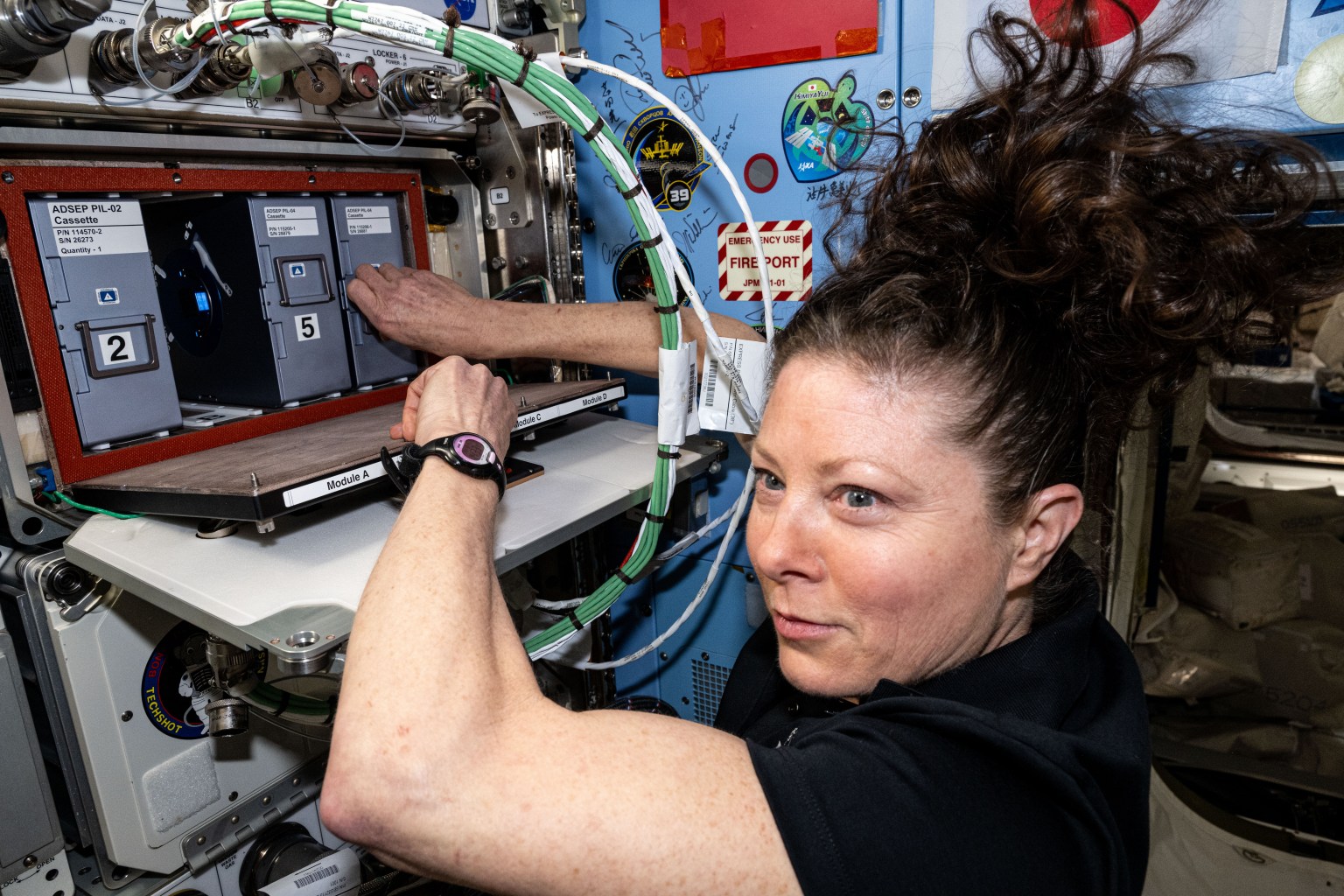
The International Space Station simultaneously hosts hundreds of scientific experiments, many of which can take hours to complete. Because astronaut time is limited and valuable, researchers have sought ways to reduce crew involvement in routine lab work. Fully automated devices known as ADvanced Space Experiment Processors, or ADSEPs, have been developed by Redwire to address this challenge. These compact facilities are designed to conduct space science experiments independently, minimizing the need for direct astronaut intervention. The technology aims to increase the volume and efficiency of research carried out aboard the station.

Read the full story at NASA

This is an AI-generated summary. ShortSingh links to the original source for the complete article.
Discussion (0)

Log in to join the discussion and vote.

Log in

Related stories

0
SpaceNASA ·

Perseverance Rover Captures Earth Disappearing Behind Mars Moon Phobos

NASA's Perseverance Mars rover has photographed Earth vanishing behind Phobos, the larger of Mars' two moons. In the images, Earth appears as a small point of light in the Martian sky before being eclipsed by the crescent-shaped moon. This marks the first time such an event has been recorded from the surface of another planet. The milestone adds to Perseverance's growing catalog of unique astronomical observations made from Mars.

0
SpaceNASA ·

NASA APOD Highlights Mysterious Spokes Observed on Saturn's B Ring

NASA's Astronomy Picture of the Day (APOD) for August 5, 2026 features an image highlighting the enigmatic spoke formations on Saturn's B Ring. The spokes are transient, radially aligned features that appear and disappear across the ring's surface, puzzling astronomers since their discovery by Voyager spacecraft. The featured image and accompanying explanation were prepared by a professional astronomer as part of APOD's daily mission to showcase compelling cosmic phenomena. APOD, a long-running NASA education initiative, publishes a new space image each day along with a scientific explanation for the public. The spoke phenomenon on Saturn continues to be a subject of active research, with scientists studying their formation and behavior.

0
SpaceNASA ·

Brazil's Lençóis Maranhenses: A Desert That Fills With Freshwater Every Year

Lençóis Maranhenses National Park in Brazil presents a striking natural paradox, appearing to be a desert while behaving very differently. The coastal park features an expansive dune field that resembles a typical arid desert landscape. However, the area fills with freshwater lagoons on a seasonal basis each year. This unusual phenomenon sets it apart from true deserts, which receive little to no rainfall. NASA has highlighted the park as a remarkable example of nature defying expectations.

0
SpaceNASA ·

NASA to Observe Falcon 9 Rocket Stage Impact Near Moon's Einstein Crater

NASA and SpaceX are tracking a spent Falcon 9 upper stage from a commercial mission that is expected to crash into the Moon on Wednesday, August 5. The rocket part is predicted to impact near the Einstein and Bell craters on the lunar surface. Scientists plan to use ground-based telescopes and space-based instruments to observe the event. The impact presents no threat to Earth, and NASA intends to collect valuable lunar data from the collision.

NASA Deploys Automated Mini-Labs on ISS to Boost Research Efficiency · ShortSingh