SShortSingh.
Back to feed

NASA Backs Utah Research into High-Efficiency Nuclear Power for Deep Space

0
·1 views

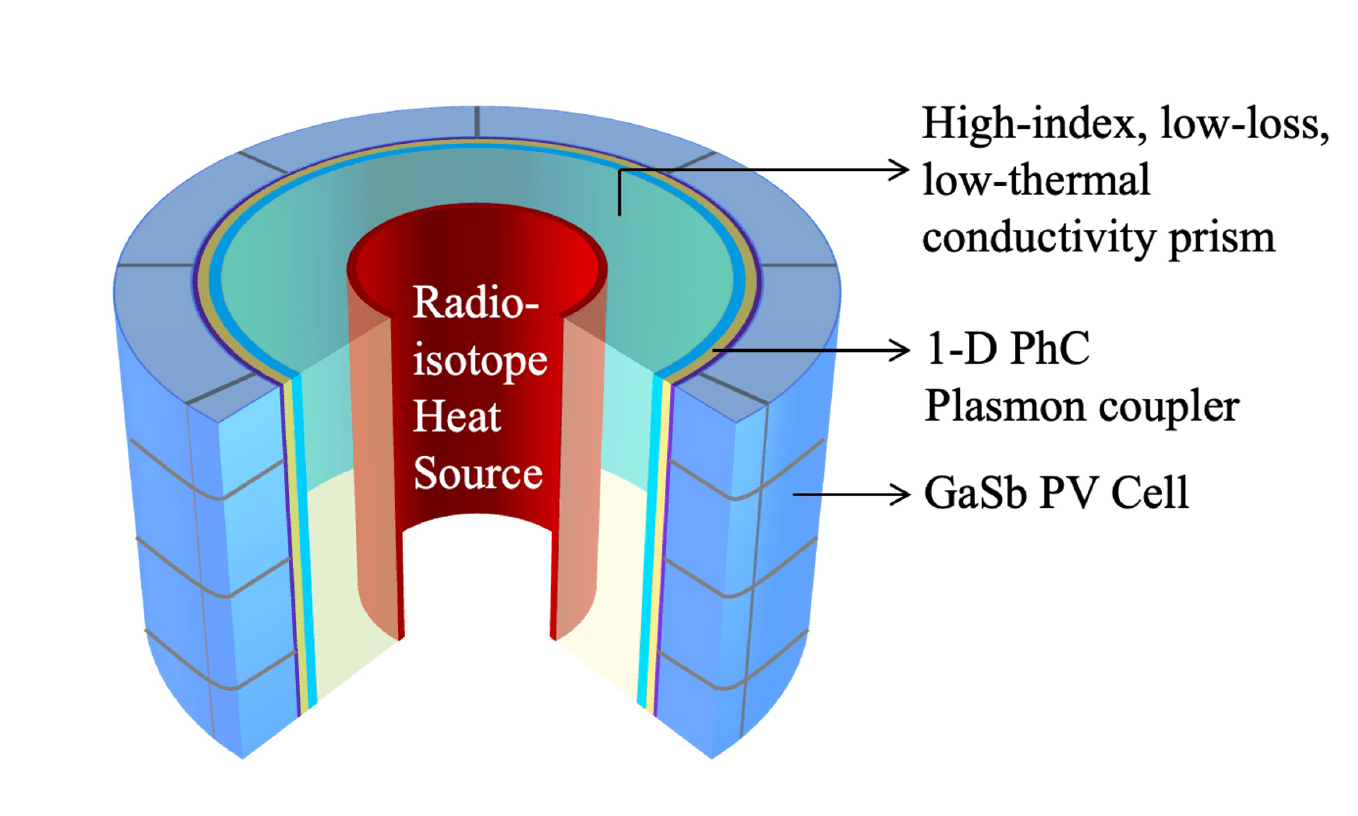
The University of Utah has received NASA backing to develop a new power system called the Plasmon-Enhanced Radioisotope Thermophotovoltaic (PRTPV) generator. The technology is designed to outperform existing Radioisotope Thermoelectric Generators (RTGs) currently used on deep-space missions. The proposed system targets a specific power output of 17 W/kg and a thermal-to-electric conversion efficiency exceeding 40%. These figures would represent a significant leap over the performance of conventional RTG technology. The advancement could make the PRTPV generator a viable power source for future interstellar missions.

Read the full story at NASA

This is an AI-generated summary. ShortSingh links to the original source for the complete article.

Discussion (0)

Log in to join the discussion and vote.

Log in

Related stories

0
SpaceNASA ·

NASA Holds Media Briefing July 29 Ahead of Roman Telescope August Launch

NASA will host a virtual media briefing on Wednesday, July 29, at 2 p.m. EDT to preview the Nancy Grace Roman Space Telescope mission. The telescope is scheduled to launch from Kennedy Space Center in Florida on Sunday, August 30. The event will be streamed live across multiple platforms. The briefing aims to give journalists and the public an advance look at the mission's goals and details ahead of liftoff.

0
SpaceNASA ·

NISAR Satellite Data Now Public, Captures Antarctic Ice Movement

NASA and ISRO have made data from the NISAR satellite publicly available starting July 20. The joint US-India Earth observation satellite carries two radar instruments — an L-band and an S-band radar — whose processed data files are being released on an ongoing basis. The data is intended to help researchers and other users monitor changes across Earth's surface, including ice movement. Among the early findings, the satellite's imagery has revealed a hummingbird-shaped pattern in Antarctica, highlighting the instrument's high resolution and capability.

0
SpaceNASA ·

NASA Langley Hosts Symphony Event to Mark US 250th Anniversary

NASA's Langley Research Center held its 'Stars, Stripes, and Supernovas – Symphony Under the Stars' event on July 16 to celebrate the 250th anniversary of the United States. The outdoor gathering brought together NASA employees, their families, and local community members for a shared evening of live music. The event featured orchestral performances as its centerpiece entertainment. It was organized as both a patriotic commemoration and a community-building occasion for those connected to the Langley facility.

0
SpaceNASA ·

NASA Selects 2026 NIAC Phase I Projects Including Venus Rover and Sun-Dimming Concepts

NASA has announced its 2026 selections for the NASA Innovative Advanced Concepts (NIAC) Phase I program, funding early-stage research into bold space technologies. One project, led by Saptarshi Bandyopadhyay at JPL, proposes using a controllable dust cloud to reduce solar insolation in a concept called DimSun. Another JPL proposal by David Bugby, named CANVAS, aims to develop a mobile, survivable architecture capable of operating on the surface of Venus. A third selection from the University of Central Florida, led by Anish Damodaran, seeks to advance submillimeter space interferometry using photonic technologies. The NIAC program supports visionary research that could eventually shape future NASA missions.

NASA Backs Utah Research into High-Efficiency Nuclear Power for Deep Space · ShortSingh