SShortSingh.
Back to feed

NASA and GE Aerospace Fly Megawatt Hybrid-Electric Engine at Farnborough Airshow

0
·29 views
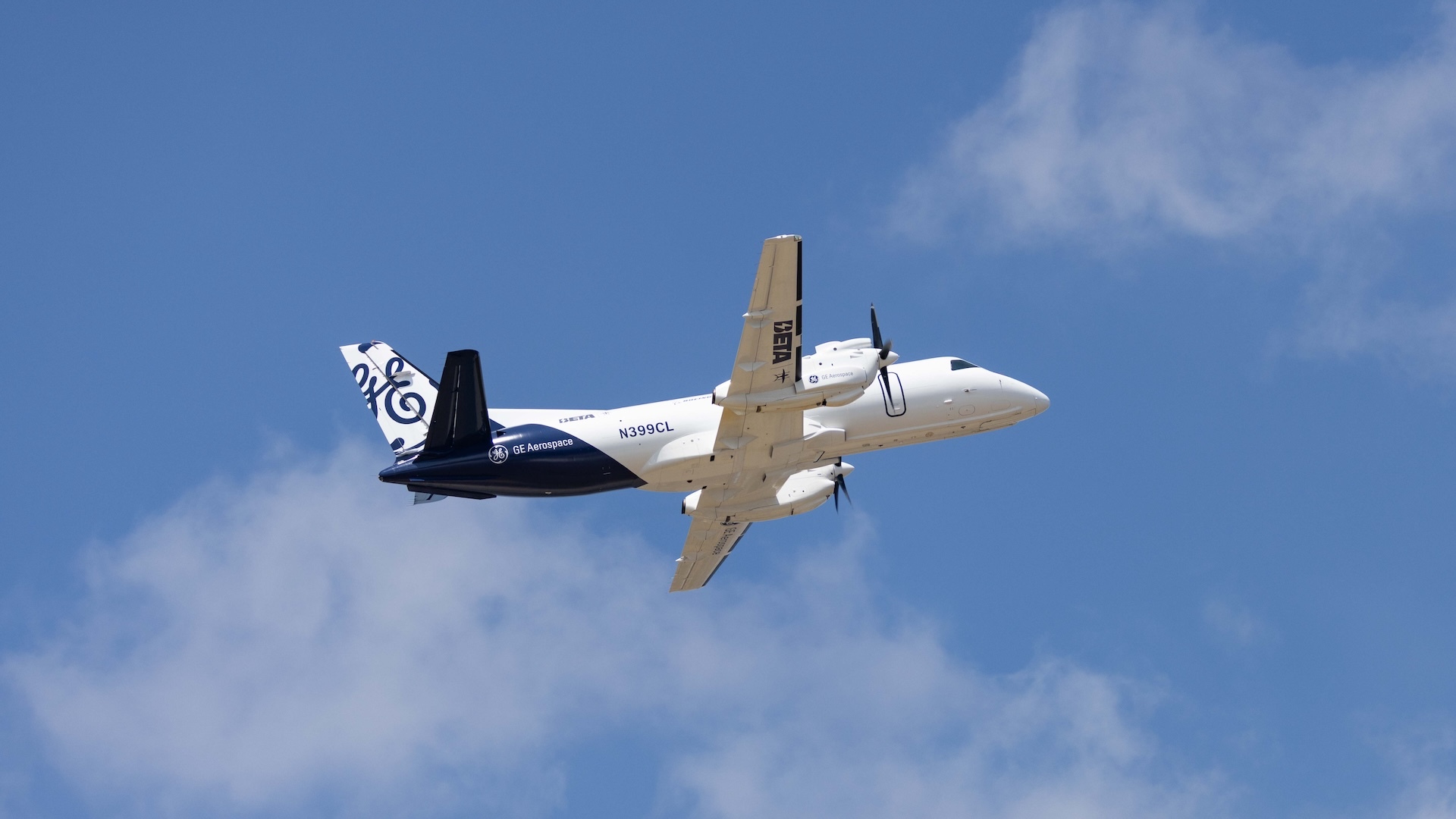
NASA and GE Aerospace have successfully demonstrated a megawatt-class hybrid-electric engine in flight, marking a significant milestone in aviation propulsion technology. The experimental engine was mounted to a Saab 340B aircraft for the demonstration. The flight took place at the Farnborough International Air Show in the United Kingdom. The collaboration aims to advance fuel-saving aircraft power systems that could influence future generations of commercial aviation.

Read the full story at NASA

This is an AI-generated summary. ShortSingh links to the original source for the complete article.

Discussion (0)

Log in to join the discussion and vote.

Log in

Related stories

0
SpaceNASA ·

NASA Awards $300,000 Top Prize in Mars Food Systems Design Challenge

NASA announced the winners of its Deep Space Food Challenge: Mars to Table on Thursday, recognizing innovative designs for integrated space food systems. The top prize of $300,000 went to Chinyere Ukeje of Philadelphia, Pennsylvania, for a concept called the Adaptive Nourishment Infrastructure (ANI). The competition tasked participants with developing solutions capable of providing safe and nutritious meals for deep space missions. The challenge was part of NASA's broader effort to address food sustainability for future crewed missions to Mars.

0
SpaceNASA ·

NASA Carbon-Capture Tech Finds New Life in Brewing Industry

Technology originally developed by NASA for carbon capture on Mars missions is now being adapted for use in commercial breweries. The system works by capturing and reusing carbon dioxide, a gas naturally produced during fermentation and essential for carbonating beer. Breweries have traditionally relied on externally sourced CO2, making them vulnerable to supply chain disruptions and price fluctuations. By repurposing NASA's carbon-capture innovation, breweries can recycle their own CO2 on-site, reducing costs and improving sustainability. The technology is reportedly spreading across the brewing industry as more producers explore its practical and environmental benefits.

0
SpaceNASA ·

NASA Tests Lunar Landing Guidance System Using Drone in California

NASA researchers from Johnson Space Center in Houston have developed an advanced guidance and navigation system called SPLICE, which stands for Safe and Precise Landing – Integrated Capabilities Evolution. The technology was tested using an Alta-X drone near NASA's Armstrong Flight Research Center in Edwards, California, on August 27, 2026. The experiment successfully simulated a lunar descent scenario, demonstrating the system's potential for future Moon landings. SPLICE is designed to enable safer and more precise landings on the Moon and potentially other celestial bodies.

0
SpaceNASA ·

US-India Satellite Films Lava Spreading from Kamchatka Volcano After 8.8 Quake

A joint US-India Earth observation satellite captured time-lapse footage of an eruption at Krasheninnikov, a twin volcano located on Russia's Kamchatka Peninsula along the Pacific coast. The volcanic activity appears to have been triggered by a powerful 8.8-magnitude earthquake that struck the nearby ocean on July 30, 2025. The quake seemingly reawakened one of the two volcanoes in the pair, which had not erupted for some time. Lava was observed spreading outward from the volcano's northern crater following the seismic event.