SShortSingh.
Back to feed

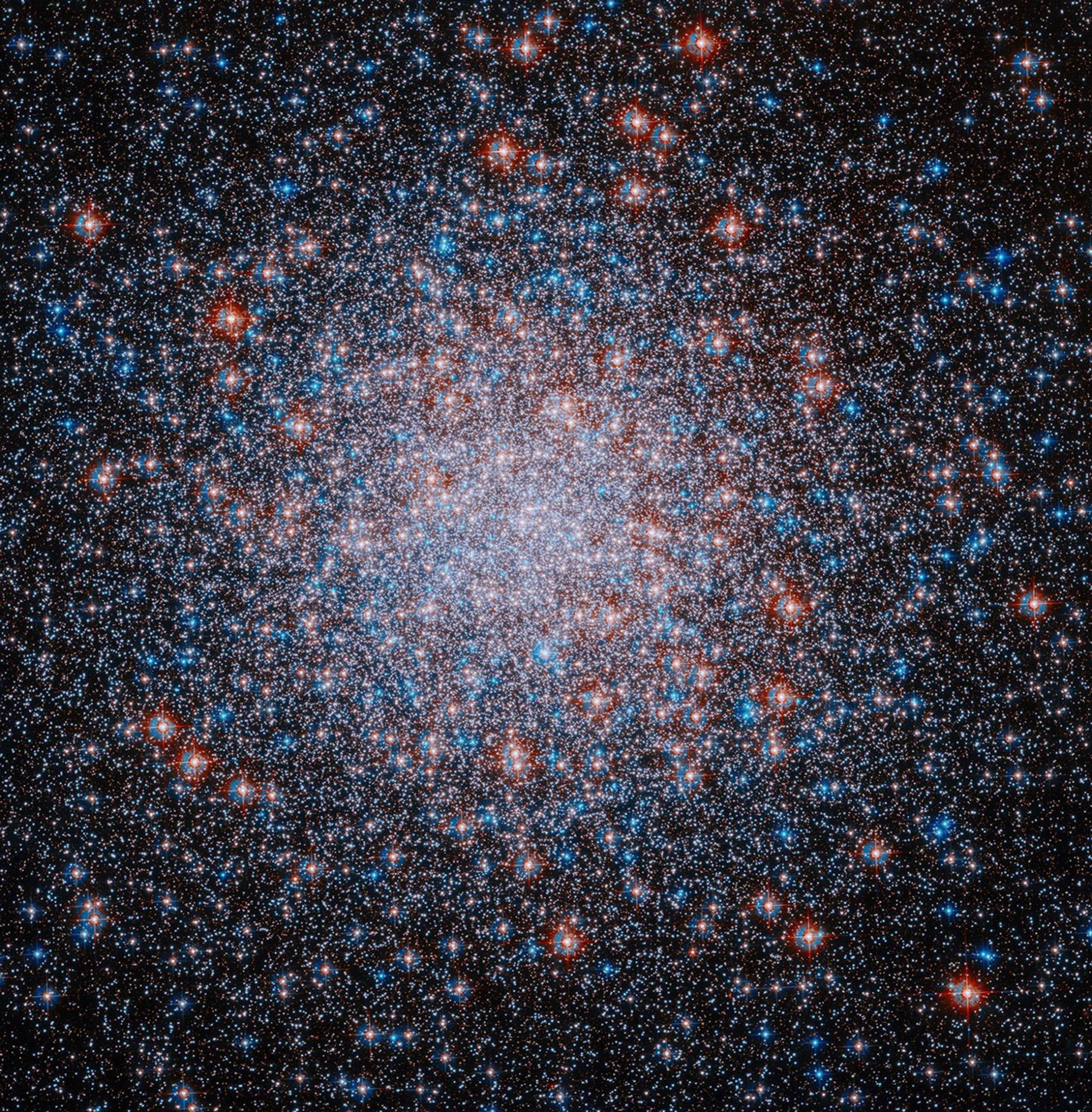
Hubble Images M3, One of the Milky Way's Most Massive Star Clusters

0
·1 views

NASA's Hubble Space Telescope has captured a detailed image of Messier 3 (M3), one of the largest and most massive globular clusters in the Milky Way galaxy. Globular clusters are dense, spherical groupings of stars held together by gravity. The stars within these clusters are ancient, having formed around the same time from the same gas cloud, making them roughly the same age. Approximately 150 globular clusters are known to exist within the Milky Way.

Read the full story at NASA

This is an AI-generated summary. ShortSingh links to the original source for the complete article.

Discussion (0)

Log in to join the discussion and vote.

Log in

Related stories

0
SpaceNASA ·

Cottonwood Fire Burns Over 150 Square Miles in Utah

A wildfire known as the Cottonwood Fire has scorched more than 150 square miles in Utah. The blaze swept through portions of a ski resort area during its spread. NASA documented the extent of the fire's destruction. The fire represents a significant wildfire event affecting both natural land and recreational infrastructure in the region.

0
SpaceNASA ·

NASA Transfers 105 Acres of Woodland at Goddard Campus to Federal Wildlife Refuge

NASA has ceremonially handed over approximately 105 acres of forested land at its Goddard Space Flight Center in Greenbelt, Maryland, to the neighboring Patuxent Research Refuge. The transfer took place on Tuesday and was managed by the U.S. Fish and Wildlife Service. The land, previously designated as NASA Goddard's Area 400, will now be administered as part of the federal refuge. The addition makes the site part of the largest contiguous block of unfragmented forest in the region.

0
SpaceNASA ·

NASA's New Horizons Spacecraft Exits Year-Long Hibernation in Good Health

NASA's New Horizons spacecraft has successfully come out of its longest hibernation period to date, lasting nearly a year. Flight controllers at the Johns Hopkins Applied Physics Laboratory in Laurel, Maryland, confirmed the spacecraft's healthy status on June 23. The probe is now prepared to begin transmitting scientific data it collected in the distant Kuiper Belt, the region of the solar system that lies far beyond Pluto. New Horizons continues to serve as a key tool for studying the outer reaches of our solar system.

0
SpaceNASA ·

Artemis II Crew Dedicates Apollo 14 Moon Tree at Johnson Space Center

The four-member Artemis II crew took part in a dedication ceremony for an Apollo 14 Moon tree at the Lunar Receiving Park, located at NASA's Johnson Space Center, on June 25, 2026. The tree is a second-generation loblolly pine, descended from seeds that were originally flown to the Moon aboard the Apollo 14 mission. The original Apollo Moon trees were grown from seeds carried on that historic mission decades ago. The ceremony marks a symbolic connection between NASA's past lunar program and its ongoing Artemis efforts to return humans to the Moon.

Hubble Images M3, One of the Milky Way's Most Massive Star Clusters · ShortSingh