SShortSingh.
Back to feed

GitHub: Canvases Improve Visibility and Control in AI Agent Workflows

0
·2 views
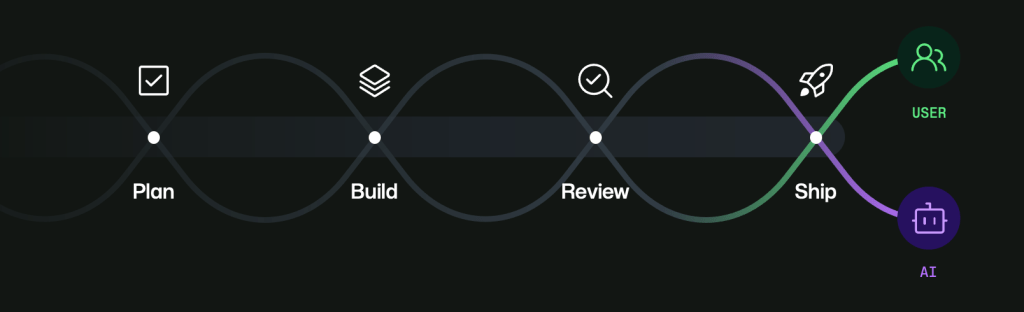
GitHub has shared insights on how canvases can enhance agentic workflows in software development. While chat interfaces are effective for expressing intent, the outputs of agent-driven tasks often become difficult to track in a scrolling conversation. Canvases offer a structured visual layer that makes agent activity more transparent and easier to guide. This approach also contributes to cost efficiency by giving users better oversight and control over automated processes.

Read the full story at GitHub Blog

This is an AI-generated summary. ShortSingh links to the original source for the complete article.

Discussion (0)

Log in to join the discussion and vote.

Log in

Related stories

0
ProgrammingDEV Community ·

Why React.memo Often Fails to Prevent Re-renders and How to Fix It

React.memo prevents a component from re-rendering by performing a shallow, reference-based comparison of its props between renders. Because JavaScript treats two objects or functions with identical contents as unequal if they are different instances in memory, inline object literals and arrow functions passed as props create new references on every parent render, causing memo's comparison to always fail. This means wrapping a component in React.memo has no effect if its props include unstabilized objects or functions. The solution is to use useCallback for function props and useMemo for object props, which preserve the same reference across renders as long as dependencies remain unchanged. With stable references in place, React.memo's shallow comparison can correctly identify unchanged props and skip unnecessary re-renders.

0
ProgrammingDEV Community ·

Java Beginner Breaks Down JVM, JDK, Bytecode and Core Execution Concepts

A Java learner documented eight foundational questions that arose while studying the language's execution model, covering terms like bytecode, JVM, JDK, JRE, and WORA. When a Java source file is compiled using javac, it produces platform-neutral bytecode stored in a .class file rather than machine-specific code. This bytecode is then executed by the Java Virtual Machine, which is available on multiple platforms including Windows, Linux, and macOS. Because the same bytecode runs on any platform with a compatible JVM, Java achieves its well-known 'Write Once, Run Anywhere' portability. The article also clarifies the distinct roles of the JDK, JRE, and JVM within the Java ecosystem and explains why the main() method signature is required as the program's entry point.

0
ProgrammingDEV Community ·

How to Build a Secure Node.js Chatbot Backend That Validates Streaming AI Reviews

A technical guide outlines how to build a Node.js backend that enforces authentication, schema validation, and stream ownership when handling AI-generated code reviews. The approach distinguishes between streaming progress events for responsiveness and a single validated terminal result that alone counts as a completed review. Developers are advised to track runs through a state machine — from accepted to streaming to validated — and alert on runs that fail to reach the validated state within a set deadline. To prevent duplicate processing, each review request should carry a client-generated idempotency key tied to the authenticated user and a digest of the submitted code diff. The core principle is that transport activity, such as bytes arriving over a stream, does not equal business completion, and partial model output should never be treated as authoritative.

0
ProgrammingDEV Community ·

Why Database and Message Broker Consistency Is a Hard Distributed Systems Problem

In distributed backend systems, updating a database and publishing a message to a broker like RabbitMQ are two separate operations with no shared atomicity guarantee. If the database write succeeds but the broker publish fails — due to a crash, network drop, or temporary unavailability — downstream services never learn about the event. Reversing the order creates the opposite problem: the message goes out, but the database update fails, leaving the system in a contradictory state. Neither sequence alone is safe, and simply retrying the full request can introduce duplicate processing. This gap between the two systems is a core challenge in distributed architecture, often surfacing only in production under real failure conditions.