SShortSingh.
Back to feed

Git 2.55 Released: Key Features and Changes Highlighted by GitHub

0
·1 views
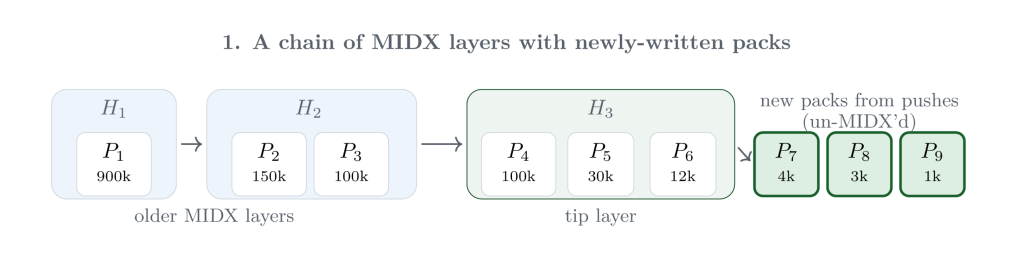
The open source Git project has officially released version 2.55 of its widely used version control system. GitHub published a breakdown of the most notable features and changes introduced in this latest release. The update continues the project's tradition of incremental improvements to the core tooling relied upon by developers worldwide. GitHub's highlights serve as a guide for users looking to understand what has changed since the previous version.

Read the full story at GitHub Blog

This is an AI-generated summary. ShortSingh links to the original source for the complete article.

Discussion (0)

Log in to join the discussion and vote.

Log in

Related stories

0
ProgrammingDEV Community ·

How Message Brokers Keep Property Management Systems Reliable at Scale

Modern Property Management Systems (PMS) rely on queueing and message-broker layers to handle continuous data exchange between internal modules and external services. These systems receive, store, and route operational events — such as bookings, calendar updates, and cleaning tasks — ensuring they are processed in order and never lost. Distributed workers handle tasks like syncing availability, generating guest notifications, and updating dashboards in real time, while retry mechanisms and dead-letter queues manage failures. Multi-tenant isolation further prevents data conflicts across large property portfolios with multiple managers. Free platforms like PMS.Rent use this architecture to deliver enterprise-level reliability and automation without additional cost.

0
ProgrammingDEV Community ·

Developer Builds AI-Ready Hotel Management System Using Vercel and Amazon Aurora

A developer built Innward, a B2B Property Management System (PMS), as an entry for the Hack the Zero Stack hackathon using Vercel v0 and Amazon Aurora PostgreSQL. The platform targets the hospitality industry's reliance on outdated software by offering dynamic pricing, competitor rate benchmarking, and relational data management. Innward uses IAM-based authentication via AWS RDS Signer to generate short-lived database tokens, eliminating static passwords and strengthening security. A custom CSS Grid-based reservation timeline and a Playwright-powered background scraper for competitor rates were among the notable technical features built. To handle Vercel's 300-second execution limit, the developer implemented a checkpoint-based algorithm that resumes data sync tasks across scheduled cron runs.

0
ProgrammingDEV Community ·

Why Human Judgment Matters More Than Ever as AI Speeds Up Freelance Work

As AI tools accelerate software development, a freelance developer argues that faster execution raises the stakes for clear thinking, not lowers them. AI can write code, explain errors, and generate checklists, but it cannot determine whether the right problem is being solved in the first place. Without deliberate scoping, prompting AI with a broad idea can produce an over-engineered result that is technically impressive but practically useless. The author notes that the freelancer's role has shifted from researching and assembling solutions to directing, reviewing, and verifying AI output. The key lesson is that AI reduces execution friction while transferring greater responsibility for scope and judgment to the human in charge.

0
ProgrammingDEV Community ·

How Intraday Forecasting Lets Call Centers Predict End-of-Day Performance

Contact centers typically receive end-of-day performance metrics — such as dials, connects, and conversion rates — only the following morning, too late to influence outcomes. Intraday forecasting systems address this by continuously recording conversion data throughout the day and retraining a predictive model each morning using historical intraday patterns. As the day progresses, the model updates on a regular schedule, incorporating real-time data to narrow its prediction window until a reliable closing estimate emerges by mid-afternoon. This shifts management from a backward-looking posture — comparing current performance to yesterday — to a forward-looking one, where remaining hours can be actively managed against a projected close. Robust implementations go beyond simple point estimates, producing confidence intervals that account for atypical days such as post-holidays, understaffed shifts, or mid-day changes in campaign list quality.

Git 2.55 Released: Key Features and Changes Highlighted by GitHub · ShortSingh