SShortSingh.
Back to feed

Curiosity Rover Plans Wind-Sediment Study After Marking Major Mars Milestones

0
·33 views
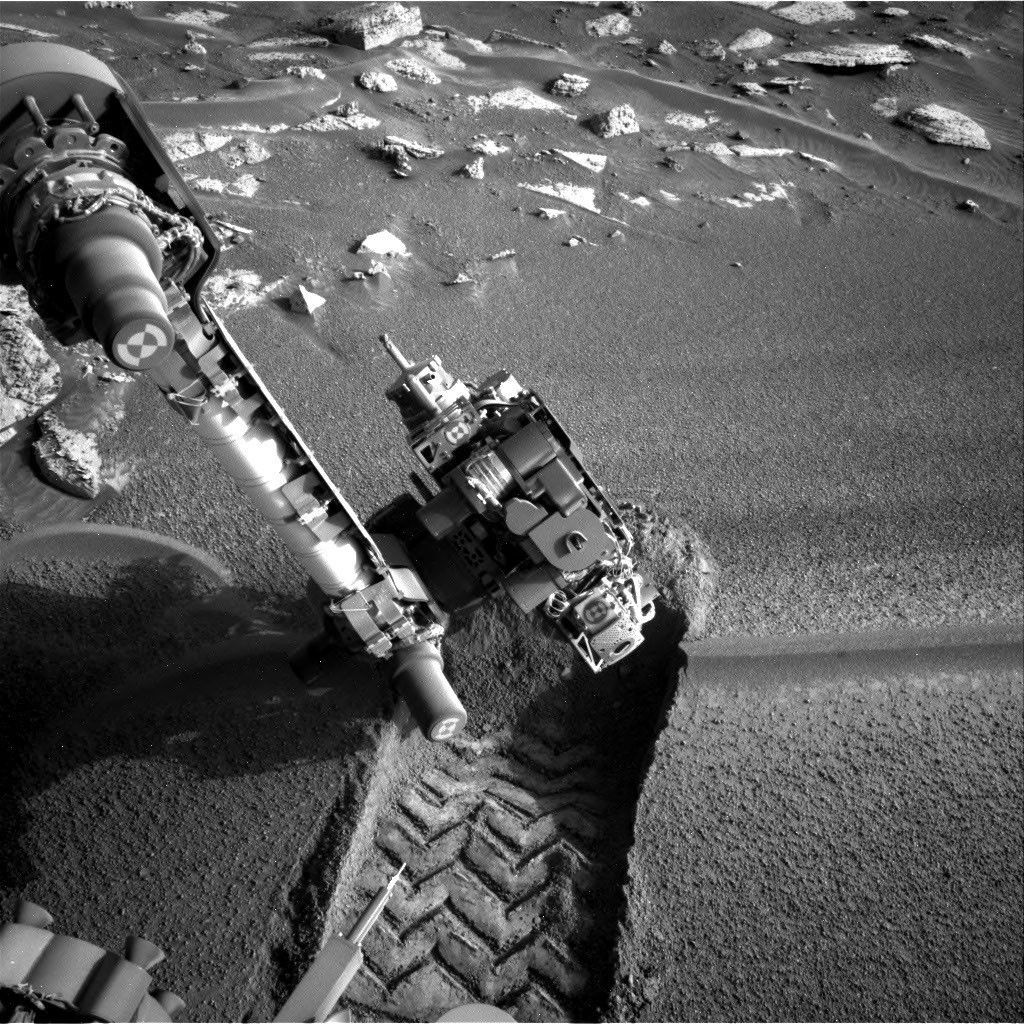
NASA's Curiosity rover is conducting complex scientific planning to study wind-blown sediments on Mars, according to a mission update authored by University of Calgary professor Benjamin Tutolo. The planning session covered sols 5002 through 5009, with Earth planning taking place on September 4, 2026. The update follows a period of significant milestones for the mission, including 14 years of operation on Mars, completing 5,000 sols, and ascending one kilometer in elevation since landing. The Curiosity team has been celebrating these achievements as the rover continues its scientific work on the Martian surface.

Read the full story at NASA

This is an AI-generated summary. ShortSingh links to the original source for the complete article.

Discussion (0)

Log in to join the discussion and vote.

Log in

Related stories

0
SpaceNASA ·

NASA's Astronomy Picture of the Day Shows Saturn's Moon Enceladus in Silhouette

NASA's Astronomy Picture of the Day for November 5, 2026 features an image titled "Enceladus in Silhouette." The photograph shows Saturn's icy moon Enceladus appearing as a dark shape against a bright backdrop. The entry is part of NASA's daily series, which pairs each image with a short explanation written by a professional astronomer. The source text provided is truncated, so further specifics about the image's origin and scientific details are not included here.

0
SpaceNASA ·

Cyprus: Ancient Seafloor Exposed on the Mediterranean's Third-Largest Island

Cyprus, the third-largest island in the Mediterranean Sea, is notable for exposing a segment of ancient ocean floor. The island is also known for its large population of cats. The original report is a short NASA feature highlighting these two distinct characteristics. The article is brief and does not provide further detail on the geology or the cat population. Readers seeking more depth would need to consult the full NASA source.

0
SpaceNASA ·

NASA Unveils X-70 Fractal Experimental Aircraft for Flight Research

On Wednesday, NASA revealed its newest experimental aircraft, the X-70 Fractal, at the UP.Summit held at the Kennedy Space Center in Florida. The crewed platform is built to be highly adaptable and high-performing, intended to speed up the development and testing of advanced aviation technologies. A key feature is its rapidly reconfigurable flight-control system, which gives researchers new ways to explore flight dynamics. The aircraft is positioned as a tool for accelerating aviation innovation within NASA's research program. The remainder of the original article was truncated, so further details are not covered here.

0
SpaceNASA ·

NASA Outlines Plan to Speed Up Artemis and Return Americans to the Moon by 2028

On October 23, NASA Administrator Jared Isaacman and other agency leaders presented an update on the agency's strategy for returning Americans to the lunar surface. They detailed progress on previously announced plans to accelerate the Artemis program. The timeline targets an Artemis III test flight in 2027, with a crewed Moon landing following. The update reaffirms the goal of putting Americans back on the Moon in 2028.