SShortSingh.
Back to feed

Australian Police Release Footage of Final Bid to Find Peter Falconio's Body

0
·1 views
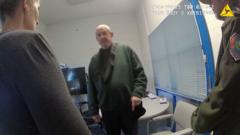
Australian police have released bodycam footage marking the 25th anniversary of Peter Falconio's murder. The video shows investigators questioning Bradley Murdoch, the man convicted of killing Falconio, in one of the last attempts to learn where the body was hidden. Falconio, a British backpacker, was killed in the Australian outback in 2001, but his remains have never been found. Murdoch was convicted of the murder but has consistently refused to disclose the location of the body. The release of the footage highlights the ongoing efforts by authorities to bring full closure to the case.

Read the full story at BBC World

This is an AI-generated summary. ShortSingh links to the original source for the complete article.

Discussion (0)

Log in to join the discussion and vote.

Log in

Related stories

0
WorldBBC World ·

Spain wildfire kills at least 12, including suspected British victims

A severe wildfire in Spain has killed at least 12 people, making it one of the deadliest blazes the country has faced. At least four British nationals are believed to be among those who lost their lives. Authorities are still working to contain the fire as 23 people remain unaccounted for. Emergency services continue battling the blaze while search efforts are ongoing for the missing.

0
WorldBBC World ·

US demands Iran halt attacks on Strait of Hormuz ships ahead of Oman talks

The United States is seeking a firm commitment from Iran to cease attacks on vessels passing through the Strait of Hormuz. Negotiations between the two countries are set to resume on Saturday in Oman. Senior US officials, including Vice-President JD Vance, are expected to participate in the talks. The diplomatic engagement signals ongoing efforts by Washington to address maritime security tensions with Tehran.

0
WorldBBC World ·

Nigeria's Fake Presidential Council Secured Nearly $1M Budget Before Exposure

A fraudulent presidential council in Nigeria managed to obtain a budget of almost $1 million before authorities uncovered it as illegitimate. The council was reportedly established using a forged letter of appointment, according to the Nigerian government. The case has raised serious questions about oversight and accountability within government administrative processes. However, some observers and officials suggest there may be deeper institutional failures beyond a simple forgery. The scandal has prompted wider scrutiny of how such a body was able to operate and access public funds undetected.