SShortSingh.
Back to feed

Astronauts Photograph Smoke-Covered Cascade Volcanoes from Space Station

0
·1 views
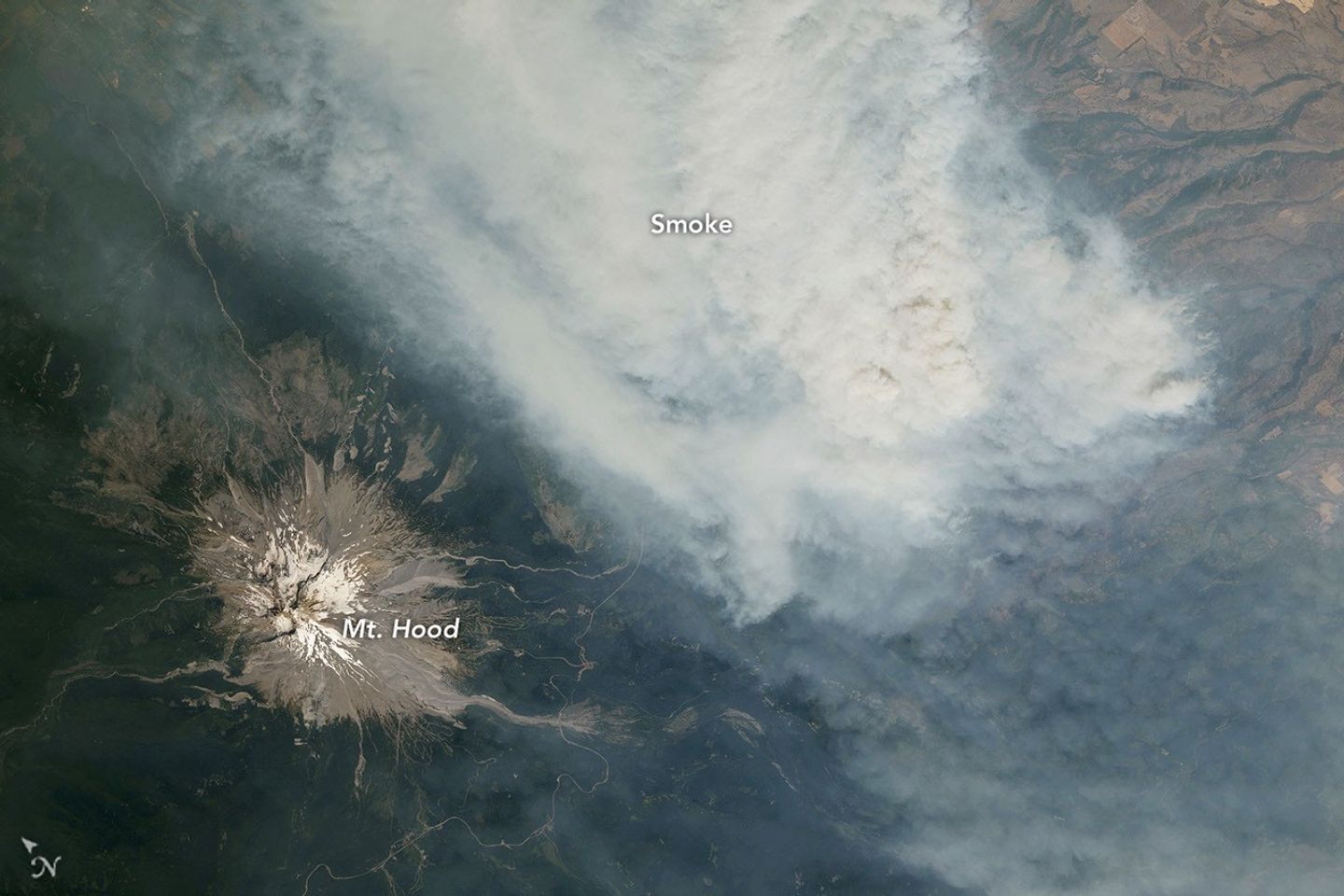
Astronauts aboard the International Space Station captured images of Mount Hood and Mount Rainier during the summer of 2026. The photographs show both iconic Pacific Northwest volcanoes obscured by thick wildfire smoke. The smoke had spread widely across the Pacific Northwest region at the time the images were taken. NASA released the photos as a striking visual record of the seasonal wildfire conditions affecting the area.

Read the full story at NASA

This is an AI-generated summary. ShortSingh links to the original source for the complete article.
Discussion (0)

Log in to join the discussion and vote.

Log in

Related stories

0
SpaceNASA ·

Perseid Meteor Shower Lights Up Skies Through End of August

The Perseid meteor shower, one of the brightest and most popular annual meteor showers, is currently active and visible in the night sky. The celestial event began building in intensity since early July and will continue through the end of August. The Perseids are known for producing a spectacular display of meteors visible to the naked eye. Dark sky locations, such as national monuments and parks, offer some of the best viewing conditions for the shower.

0
SpaceNASA ·

Total Solar Eclipse to Pass Over Spain on August 13, 2026

A total solar eclipse is set to occur on August 13, 2026, with Spain positioned along its path of totality. NASA's Astronomy Picture of the Day (APOD) featured the event, highlighting it as a significant celestial occurrence. During a total solar eclipse, the Moon completely blocks the Sun's disk, briefly turning day into darkness along a narrow ground track. Such events attract widespread interest from astronomers, researchers, and sky-watchers around the world. The 2026 eclipse represents a notable opportunity for observers across Spain and surrounding regions to witness the phenomenon firsthand.

0
SpaceNASA ·

NASA Data Guides Commercial Plans to Mine Resources on the Moon

Lunar Station Corp. is leveraging NASA data to identify and map valuable resources on the Moon, including water, iron, and titanium. These materials are considered essential for sustaining long-term human presence and operations in lunar environments. The location of these resources will directly determine where future missions land and how mining operations are conducted. Extracting and processing lunar resources will require specialized equipment tailored to the harsh conditions of the Moon's surface. The collaboration reflects a growing push to make commercial lunar resource utilization a practical reality.

0
SpaceNASA ·

Total Solar Eclipse to Cross Spain and Parts of Europe in August 2026

A total solar eclipse is set to occur on August 12, 2026, sweeping across several regions including Greenland, Iceland, northern Russia, the Atlantic Ocean, and Spain. The phenomenon occurs when the Moon passes directly between the Sun and Earth, completely blocking the Sun's face. Spain is among the notable landmasses in the eclipse's path, with the town of San Millán de los Caballeros being one of the viewing locations. A total solar eclipse is a relatively rare event for any given location, making this a significant astronomical occasion for affected regions.

Astronauts Photograph Smoke-Covered Cascade Volcanoes from Space Station · ShortSingh