SShortSingh.
Back to feed

Astronaut photographs Lake Pelku from the International Space Station

0
·4 views
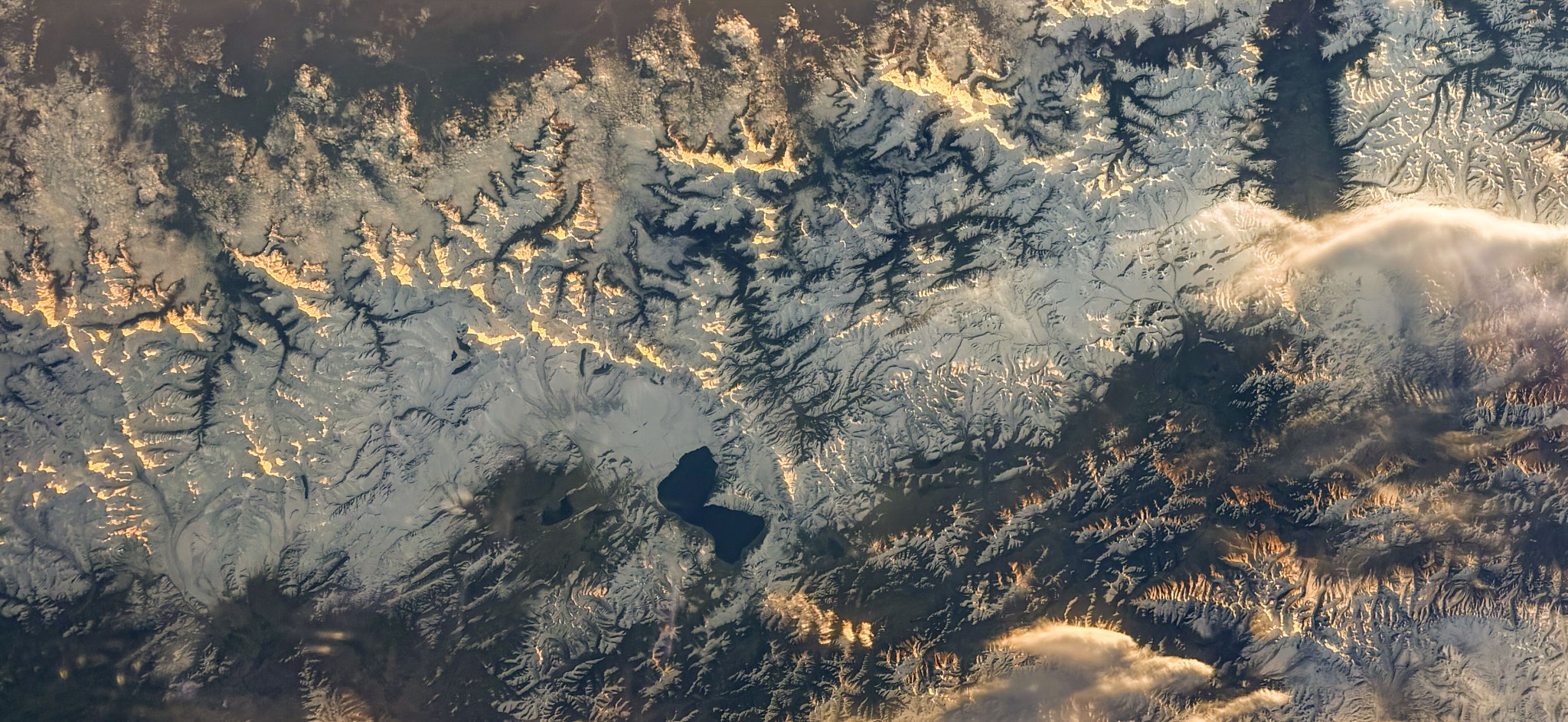
An astronaut aboard the International Space Station took a photograph of Lake Pelku, which appears near the center of the image. The picture was captured as the station orbited above Asia. The station offers a unique vantage point for observing Earth, using both crew-operated and automated instruments. Crew members have produced hundreds of thousands of images over time. These photographs document real-time changes and phenomena on the planet's surface.

Read the full story at NASA

This is an AI-generated summary. ShortSingh links to the original source for the complete article.

Discussion (0)

Log in to join the discussion and vote.

Log in

Related stories

0
SpaceNASA ·

NASA Invites Public Ideas on Life and the World in 2075

NASA's Transformational Tools and Technologies program is collecting public views on everyday life today and how society might evolve by 2075. The challenge seeks conceptual rather than technical proposals across four defined topics. Contributors are asked to explore how future aviation or aerospace systems could shape daily life. A prize of $20,000 is offered for selected submissions.

0
SpaceNASA ·

NASA Fermi Data Enables Method Finding Hard-to-Detect Pulsars Far Faster

Open data from NASA's Fermi mission supported an international research team in creating a new technique for locating pulsars. The method is reported to be roughly a million times faster than earlier approaches. The advance focuses on pulsars that have been difficult to detect with conventional methods. Because the underlying data is openly available, researchers beyond the original team can use the approach as well.

0
SpaceNASA ·

NASA Tests RS-25 Engine at Stennis Ahead of Future Artemis Missions

NASA conducted a test of RS-25 engine No. 10001 on November 18 at the Fred Haise Test Stand at Stennis Space Center near Bay St. Louis, Mississippi. Teams fired the developmental engine for its full planned run of 200 seconds, or three minutes and 20 seconds. The engine is a developmental unit and will not fly on a mission. The test data will still help engineers evaluate the hardware's performance. The work supports NASA's preparations for upcoming Artemis missions.

0
SpaceNASA ·

Voyager 1 Becomes First Spacecraft Stationed One Light-Day From Earth

NASA's Voyager 1, the farthest-flying spacecraft ever launched, has now traveled a distance of one light-day from Earth. The probe reached this milestone after more than 49 years of continuous flight. A light-day, the distance light covers in 24 hours, amounts to roughly 16.1 billion miles or 25.9 billion kilometers. The spacecraft crossed that threshold at 2:16 a.m. PST (5:16 a.m. EST) on November 18.